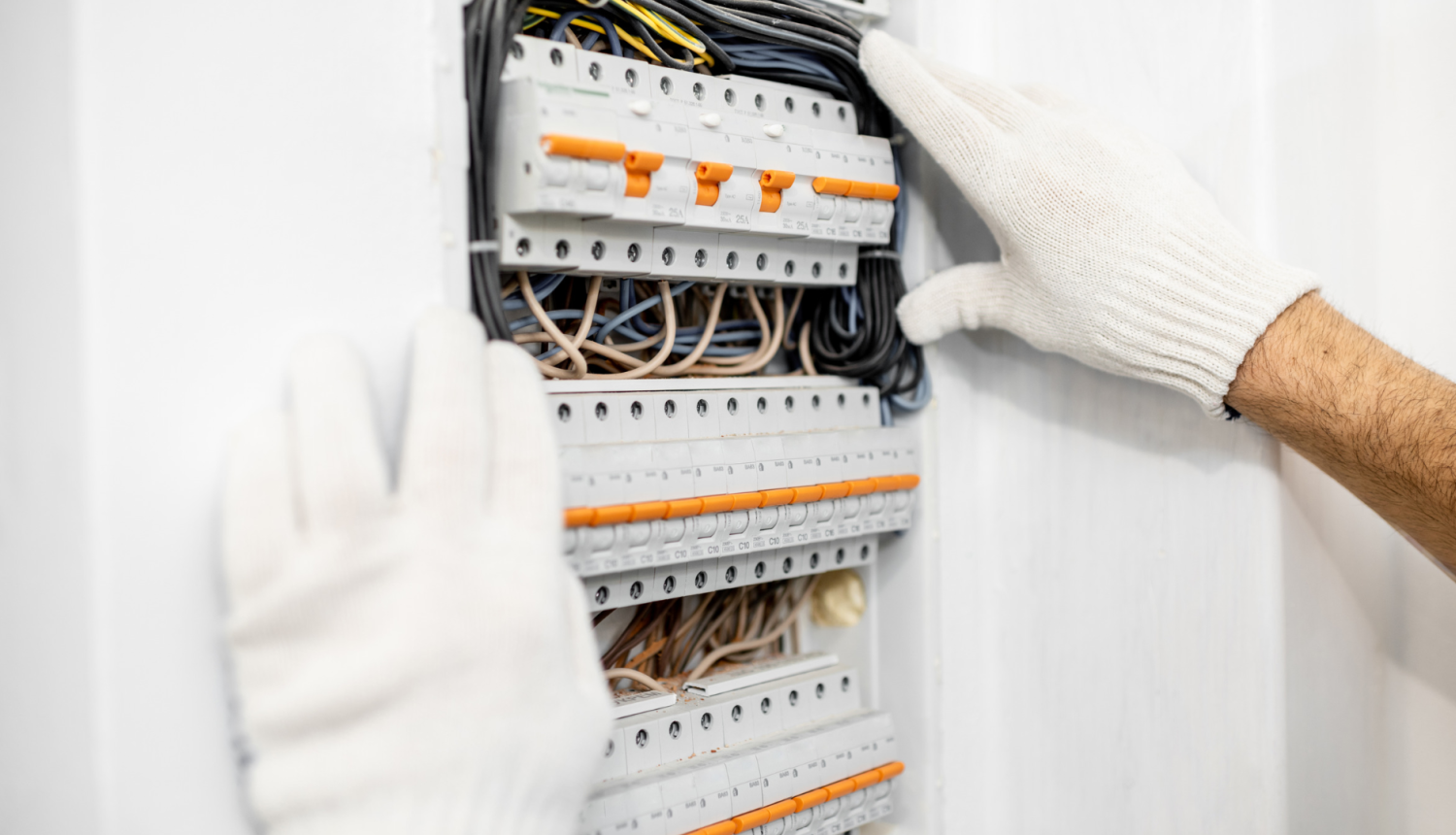
We usually start thinking about electricity only when it is unavailable. However, behind the simple act of switching on a light lies a complex system that must adapt to many changing factors every second. As more solar panels, electric vehicles, batteries and other technologies enter the energy system, predicting electricity generation and consumption becomes increasingly complex. This is precisely where artificial intelligence (AI) can play an increasingly important role, helping to analyse situations more quickly, identify potential risks and support more stable operation of the energy system. Although we mostly do not see these processes in everyday life, we experience the results every time we switch on a light and electricity is available exactly when we need it.
The importance of AI in the energy sector is growing alongside the increasing complexity of the system itself. Renewable energy sources, batteries, electric vehicles, heat pumps and other technologies, whose operation is influenced by both weather conditions and people's habits, are playing an increasingly important role. At the same time, electricity generation and consumption must remain balanced at every moment.
Traditional methods of energy system analysis are still necessary, but AI offers additional opportunities, as it can quickly process large amounts of data, identify patterns and draw specialists' attention to potential risks in a timely manner. Anna Mutule, Project Manager at the Institute of Electronics and Computer Science (EDI), compares AI to a very fast and intelligent assistant that continuously reviews vast amounts of information and alerts the operator to situations requiring attention.
Where Can AI Already Help?
One of the most significant applications of AI in the energy sector is its ability to predict electricity generation, consumption and grid load more accurately. The more accurately it is possible to predict what will happen in the next hour or day, the more efficiently existing infrastructure can be used and the more quickly adjustments can be made to changes.
AI can already help analyse weather and sensor data, as well as more accurately predict how much electricity solar and wind power plants will generate. This allows the energy system to better prepare for fluctuations in generation and plan energy flows more efficiently. Monitoring is also an important area. AI can also analyse large amounts of measurement data to detect changes in energy system safety and equipment condition in a timely manner, indicating potential failures or system instability. For example, transformer temperature, load and vibration data can help identify signs of wear before equipment fails.
"AI regularly analyses various operating parameters to detect early warning signs of equipment deterioration. This allows maintenance work to be planned in advance rather than responding after a failure," explains Miguel Ramirez-Gonzalez, a researcher at the Zurich University of Applied Sciences (ZHAW).
As the use of renewable energy increases, smart planning of electricity consumption becomes increasingly important. AI can help determine the most suitable time to charge batteries and electric vehicles, as well as to use other energy-intensive devices, taking into account grid load and energy availability.
Latvia has a solid technological foundation in this field. Smart meters, a modernised transmission system and available data create the conditions not only for using AI technologies in the energy sector but also for developing them. This means that the data and infrastructure needed to develop new digital solutions are already available in Latvia.
Following the synchronisation of the Baltic States with continental Europe in 2025, accurate monitoring of the system's condition and dynamic control have become increasingly important.
Latvia's advantage lies in its small size, which allows researchers, universities and energy companies to cooperate and test new technologies more quickly. "Latvia should be bolder – not only in adopting the experience of other countries, but also in taking more initiative itself," emphasises Anna Mutule.
At the same time, data availability alone is not enough. For AI solutions in the energy sector to be reliable, data must be of high quality, compatible and secure to use. "In the energy sector, you cannot simply choose any AI model and connect it to the electricity grid. The system must be verifiable, reliable and cybersecure," points out Miguel Ramirez-Gonzalez.
The next step is to introduce AI technologies into the daily operation of the energy system to use resources more efficiently and promote a more stable energy supply.
AI in the Energy Sector – An Assistant, Not a Decision-Maker
The greater the role of AI in the energy system, the more important the question becomes – to what extent should decision-making be entrusted to technology?
The electricity system is critical infrastructure, so AI cannot be a "black box"\* whose recommendations we simply trust. It is important to understand how a particular recommendation was generated, what data was used and how reliable the result is. In the management of critical energy systems, AI does not replace specialists but helps them identify risks more quickly and make better decisions. The best results can be achieved by combining the speed of AI with human experience and the ability to assess situations.
In the energy sector, automated systems are already used in processes that require a response within milliseconds, such as protection systems. However, this does not mean that the entire management of the energy system should be entrusted to AI. "In critical situations, it is important not only to receive an AI recommendation but also to understand how it was generated and whether it can be trusted," explains Anna Mutule, a researcher at the Institute of Electronics and Computer Science (EDI). "AI should be regarded as an adviser rather than an autonomous decision-maker, maintaining human control over high-risk decisions," adds Miguel Ramirez-Gonzalez.
Latvian and Swiss researchers are developing one such solution in the LACISE project, creating a detailed dynamic model of the Baltic electricity system to help identify risks in the Baltic electricity system in a timely manner. The model makes it possible to simulate situations that would be undesirable to deliberately cause in a real-world environment, such as a power plant shutdown, damage to a power line or several disturbances occurring simultaneously. Using the simulation model, researchers can assess in detail how the energy system would respond to various disturbances, but evaluating thousands of such scenarios requires considerable time and computing power. The results of these simulations are used to train AI to recognise similar situations more quickly.
"In the simulation, we see how the energy system responds under different conditions, while we train AI to recognise such situations quickly," explains Anna Mutule.
Just as humans learn from examples, AI must first be shown many different situations so that it can recognise similar patterns in the future. This is particularly important in the energy sector, where potentially critical situations occur relatively rarely, but their consequences can be very serious. It is not possible to rely solely on real-world disturbances to obtain sufficient data for AI training, so such situations need to be safely simulated.
The aim is to create an early warning system that helps identify risks in a timely manner and take action before they cause serious problems.
However, the challenge is that serious disturbances in energy systems occur rarely, meaning that there is also little real-world data about them. Therefore, AI training must use not only historical data but also researchers' knowledge and scenarios simulated in various models.
How Will Electricity Consumers Experience the Benefits of AI?
AI is not an end in itself. Its main benefits will be a more reliable electricity supply, fewer disruptions and more efficient energy use. Most of its work will take place unnoticed – systems will help predict electricity generation, monitor grid load and identify potential problems in a timely manner.
"We do not see the algorithms that control traffic lights in everyday life, but we feel the results when traffic flows more smoothly," compares Anna Mutule. "Similarly, in the energy sector, the value of AI will be most noticeable when users do not have to think much about how it works."
In practical terms, this could mean a lower risk of power outages, more reliable system operation in challenging weather conditions and more efficient energy use. In the future, AI could also become much more visible in households. For example, in a home with solar panels, a battery, a heat pump and an electric vehicle, people would not have to monitor weather conditions, electricity prices and dozens of other factors themselves to make the best decisions.
In the future, a smart energy management system could independently assess when it is most cost-effective to charge an electric vehicle, use energy stored in a battery or operate a heat pump, while taking into account people's specific needs – for example, ensuring that the car is charged in the morning or that the home maintains a comfortable temperature.
However, important final decisions would still remain in human hands. AI would help find the most effective solution, but the goal of technological development would not be to replace humans, but to make energy use simpler, safer and smarter. Ultimately, the best application of AI in the energy sector will be one that people do not even notice in their everyday lives, because the energy system will operate more reliably and energy will be used more efficiently.
*A system whose decision-making logic is not understandable to humans.
The Swiss-Latvian Cooperation Programme "Applied Research" is part of Switzerland's contribution to reducing economic and social disparities in the European Union, strengthening bilateral cooperation between Switzerland, partner countries and the European Union. The programme promotes the development of science and innovation in Latvia by supporting projects in the fields of smart materials, information technology and smart energy. The programme is implemented by the Ministry of Education and Science in cooperation with the Latvian Council of Science.
The Swiss-Latvian Cooperation Programme "Applied Research" is part of Switzerland's contribution to reducing economic and social disparities in the European Union, strengthening bilateral cooperation between Switzerland, partner countries and the European Union. The programme promotes the development of science and innovation in Latvia by supporting projects in the fields of smart materials, information technology and smart energy. The programme is implemented by the Ministry of Education and Science in cooperation with the Latvian Council of Science.