Nuclear fusion is a process in which a large amount of energy is released when light atomic nuclei merge. This process also takes place inside the Sun. Although nuclear fusion is not yet used for commercial energy production, scientists around the world are working on its development, as in the future it could provide efficient energy generation with a relatively low amount of radioactive waste.

Researchers from the Institute of Chemical Physics (ĶFI) of the Faculty of Exact Sciences and Technology (EZTF) at the University of Latvia (UL) are also involved in this field, in cooperation with Latvian companies “Naco Technologies” and “Allatherm”. They are developing solutions for the separation and purification of tritium, or radioactive hydrogen. Tritium is planned to be used as nuclear fuel in fusion reactors in the future; therefore, efficient methods for its production and processing are essential for the development of nuclear energy.
What is tritium, and why is it important?
Tritium is an isotope of hydrogen that differs from the most common hydrogen isotope — protium — by having two additional neutrons in the atomic nucleus, as a result of which its nucleus is unstable and radioactive. In nuclear fusion, energy is obtained when the nuclei of tritium and deuterium (heavy hydrogen) merge, and in this process a very large amount of energy is released.
In addition to its potential use in nuclear fusion, tritium is also used in studies of the water cycle, in biology and environmental sciences as a radiotracer, as well as in certain self‑luminous materials and devices, for example, in watch dials.
Tritium occurs in nature in very small amounts. A small portion of it is formed in the atmosphere under the influence of cosmic radiation, but elevated levels of tritium in the environment have also historically resulted from nuclear weapons testing.
However, today a significant part of tritium is associated with nuclear energy — it is produced as a by‑product in nuclear reactors and is also found in the radioactive waste of nuclear power plants (NPPs).
Why does tritium need to be separated?
Currently, tritium separation technologies are mainly being developed for the needs of nuclear fusion. They are important both for the extraction and purification of tritium, for example from the cooling waters of nuclear power plants, and for use in the nuclear fusion fuel cycle. This is essential because only a small portion of deuterium and tritium is used in the fusion process, while the unused fuel must be separated and purified so that it can be reused.
The separation of tritium is also important in certain types of nuclear power plants, especially in fission reactors that use heavy water [water in which ordinary hydrogen is replaced by deuterium, or heavy hydrogen — editor’s note]. During the operation of such reactors, a relatively large amount of tritium can accumulate in the water; therefore, for safety and efficiency reasons, it must be separated and purified. Currently, the first tritium separation facility in Europe is being built in Romania.
The separation of tritium is also important for environmental protection — particularly in the case of radiological accidents, when large amounts of tritium may be released into the environment, as occurred after the Fukushima Daiichi nuclear power plant accident in 2011.
The separation of tritium from ordinary hydrogen is complicated by the fact that the chemical and physical properties of these isotopes and their compounds are very similar. Therefore, their separation traditionally relies on complex and energy‑intensive methods, such as cryogenic distillation or chemical catalytic exchange processes. Although these technologies are effective, they require extensive infrastructure and significant resources.
Research at the University of Latvia
Researchers at the University of Latvia are studying how membrane properties affect the efficiency of tritium separation during water electrolysis and how this process can be improved by incorporating nanomaterials into the membranes. This approach is unique, as it allows not only more efficient isotope separation but also the creation of materials capable of operating under high‑radiation conditions. The development of such solutions remains an important area of research worldwide. In addition, in cooperation with the Latvian company “Naco Technologies”, catalysts intended for electrolyzers are being developed, and their impact on the separation of hydrogen isotopes is being studied.
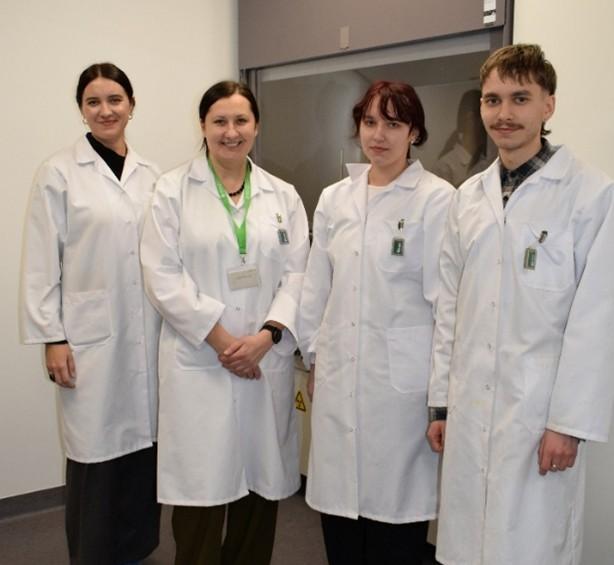
In addition to fundamental research, the team of University of Latvia scientists, together with the company “Allatherm,” is also working on a prototype device intended for the efficient separation of tritium from water. The system combines an electrolyzer, in which tritium is concentrated, and a fuel cell that allows purified water to be recovered while simultaneously generating electricity. Through this research, UL scientists are making a significant contribution to the development of sustainable energy by developing innovative technological solutions that may promote the safe and sustainable use of nuclear fusion energy in the future.
Project No. 1.1.1.3/1/24/A/122 “Development of polymer electrolyte membranes with carbon nanostructure additives for electrochemical tritium enrichment in nuclear fusion applications” is being implemented by the UL Institute of Chemical Physics in cooperation with SIA “Naco Technologies” and SIA “Allatherm”.