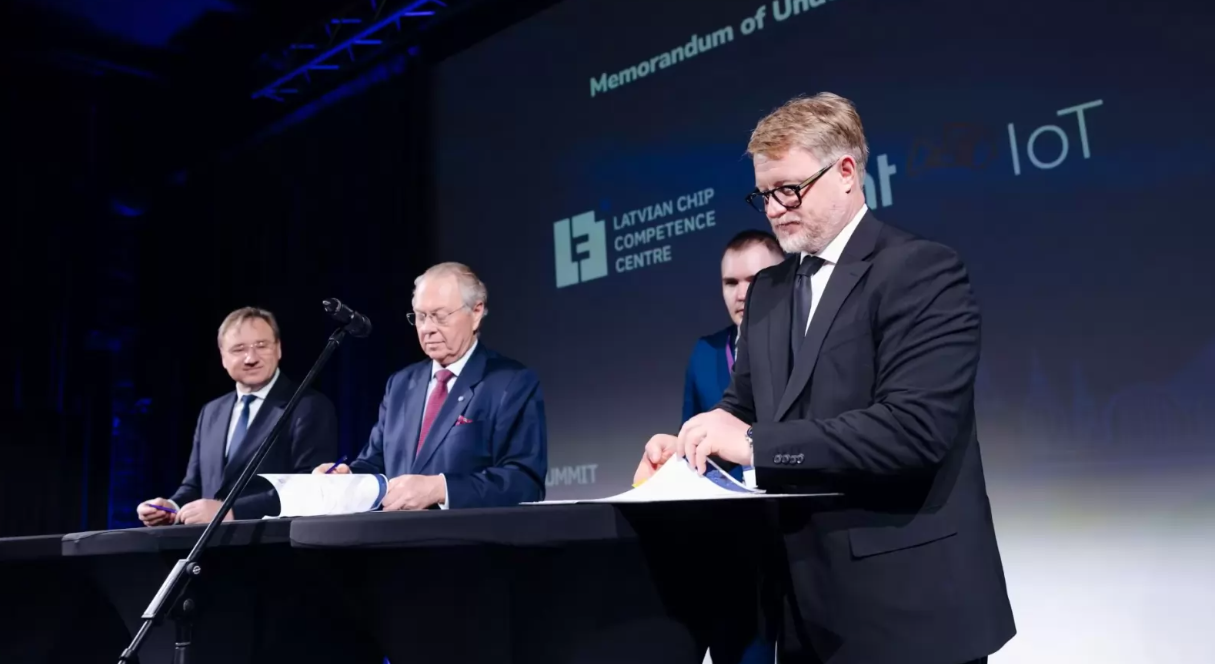
By signing the cooperation memorandum, the Latvian Microelectronics Competence Centre and the LMT (Latvian Mobile Telephone) Group commit to purposefully cooperate in research and development with a focus on the creation of low-energy consumption mobile IoT (Internet of Things) connectivity chips.
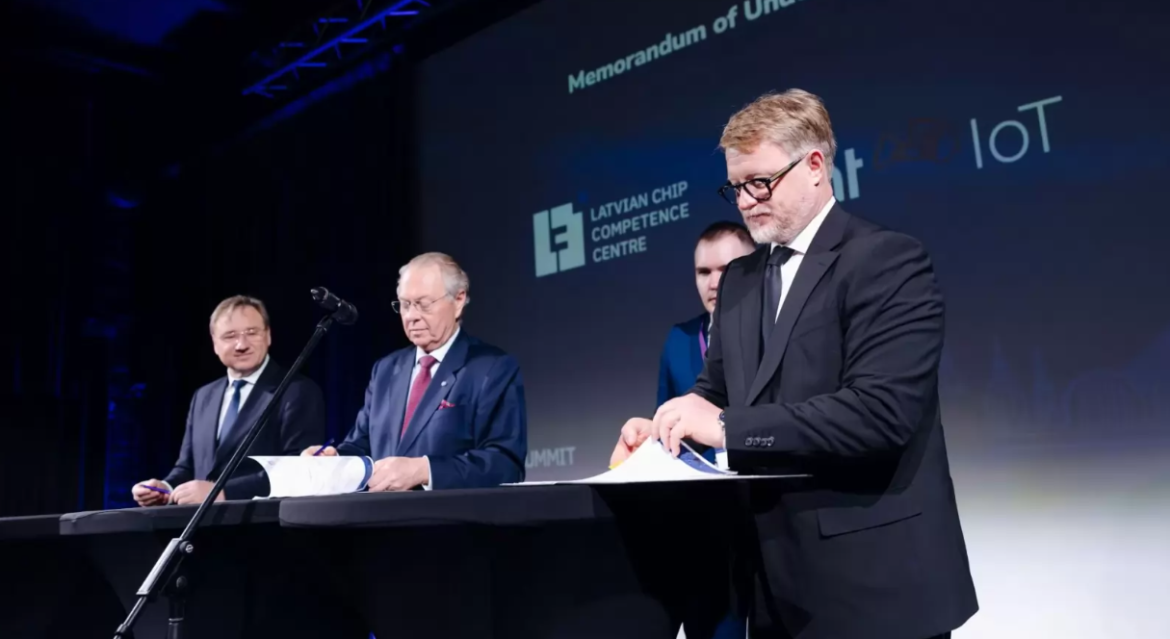
“In the field of high technologies, Latvia must specialize in order to become more competitive globally. Latvian scientists are already among the world leaders in photonics. The signing of the memorandum with LMT confirms that science and industry have shared ambitions which, when developed jointly, can form the basis for the development of new technologies, Latvia’s international economic competitiveness, and also security,” states Tālis Juhna, Rector of Riga Technical University.
“By signing the memorandum with the Latvian Microelectronics Competence Centre, the goal of the LMT Group is to increase Latvia’s capacity for creating added value by jointly working on one of the most technologically complex products – microchips. The LMT Group’s experience in the IoT field shows that it is already possible to create internationally demanded high‑technology products. However, such cooperation promotes the export capacity of Latvian technologies, as it ensures a link between research and the practical implementation of technologies,” emphasizes Ingmārs Pūķis, Member of the Board of the LMT Group and Vice President for Marketing and Business Development, highlighting the importance of the role of industry in the development of innovation.
Also, the Rector of the University of Latvia, Gundars Bērziņš, confirms: “The University of Latvia highly values the opportunity to contribute its scientific competence, working in close cooperation with academic and industry partners, to transform excellence in research into science‑based innovations with practical impact. Microchip technologies are not an isolated sector. They are the foundation of digital transformation, secure communication, energy efficiency, advanced healthcare, defence, and future competitiveness. Together, we strengthen Latvia’s innovation ecosystem and create new opportunities for the development of next‑generation technologies.”
The signing of the memorandum was one of the most significant events of the international microchip industry forum “Riga Chip Summit 2026”. The summit brought together more than 200 participants from 23 countries, including industry leaders, investors, researchers, startups, and policymakers from the Baltics, the Nordic countries, and Europe, demonstrating the growing importance of Latvia and the Baltic region in the European semiconductor ecosystem and promoting cooperation between science, industry, and the innovation ecosystem.
At the first summit, participants discussed the development of the European semiconductor ecosystem, the opportunities offered by the “Chips Joint Undertaking” initiative, as well as examined the involvement of companies in innovation processes – from chip design to commercialization. Internationally recognized industry experts gave presentations at the event, including Régis Hamelin, who represents European chip design initiatives. Issues related to the development of the European semiconductor ecosystem, chip design platforms, funding opportunities, intellectual property protection, and the development of technological readiness were addressed.
“Riga Chip Summit 2026” was organized by the Latvian Microelectronics Competence Centre in cooperation with the LMT Group, and the microelectronics competence centres of Lithuania and Estonia.
The activities of the Latvian Microelectronics Competence Centre are coordinated by Riga Technical University and University of Latvia. The Centre provides Latvian companies not only with access to the microelectronics competencies available at universities, but also to European competencies in chip development, manufacturing, testing, and capital attraction. More information here
This project is funded by the European Union (EU) programme “Digital Europe” under grant agreement No. 101217976.
Funded by the EU. The views and opinions expressed are those of the author(s) only and do not necessarily reflect those of the European Union or the Latvian Council of Science. Neither the EU nor the funding authority can be held responsible for them.