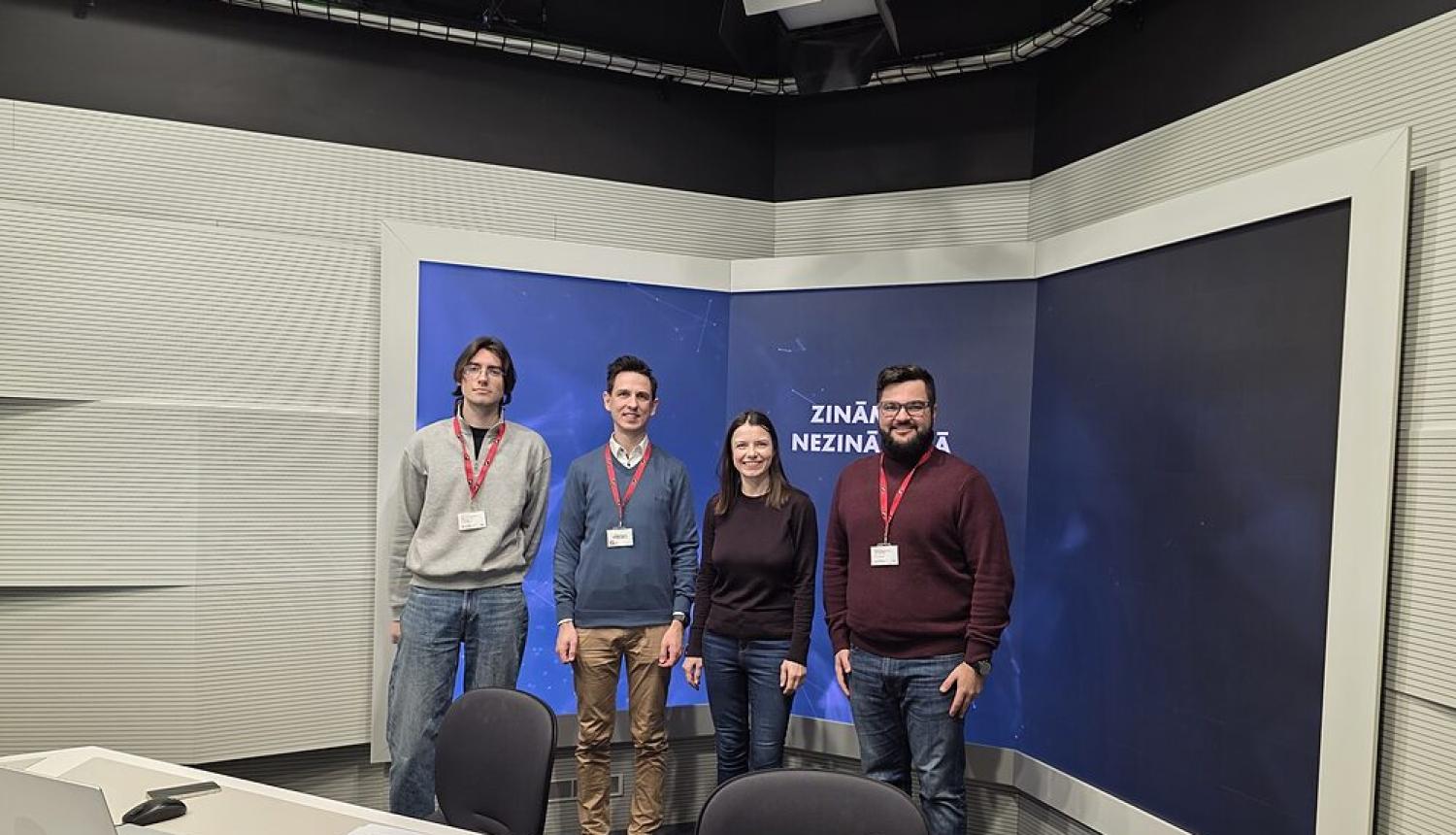
How can a stable electricity supply be ensured in situations where storms, technical failures or other threats disrupt electricity delivery? What role will next-generation batteries and smart electricity grids play in strengthening energy system resilience? These and other topical issues were discussed on the Latvian Radio 1 programme “Zināmais nezināmajā” by researchers from the LACISE project of the Swiss-Latvian Cooperation Programme “Applied Research” – Gints Kučinskis from the Institute of Solid State Physics of the University of Latvia and Normunds Andžāns from the Institute of Electronics and Computer Science – as well as Tomass Liepnieks, Director of Innovation Management at AS “Sadales tīkls”.
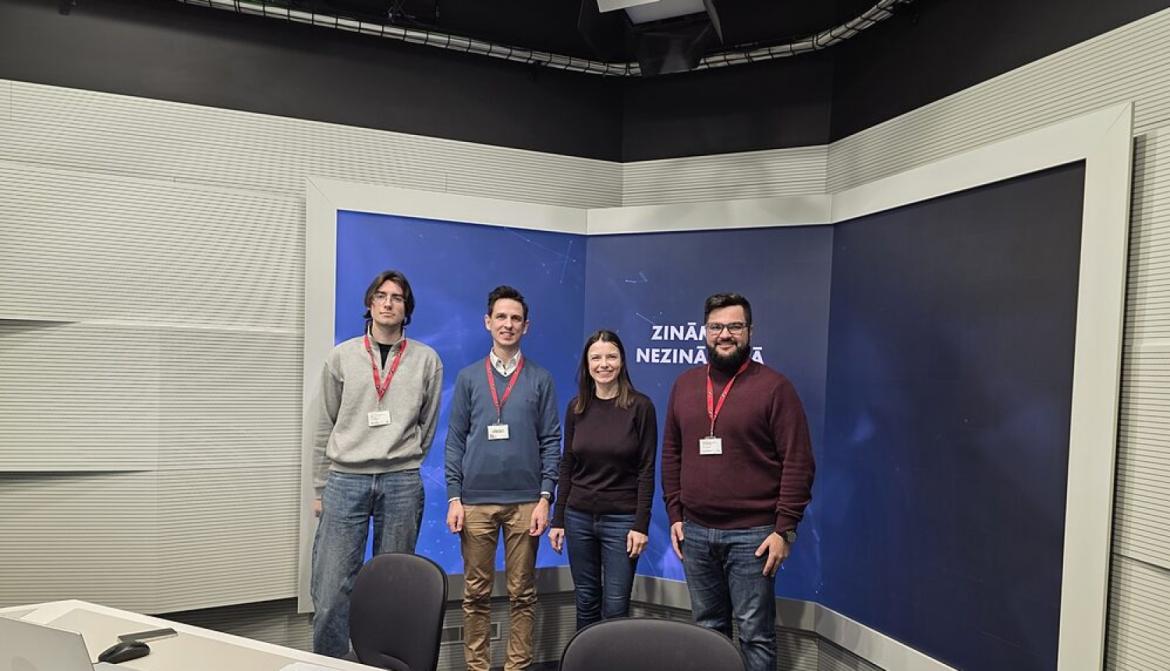
During the programme, Normunds Andžāns discussed the research being carried out by scientists at the Institute of Electronics and Computer Science to develop solutions for forecasting solar energy generation. The research team uses artificial intelligence models to analyse sky images and satellite images and predict cloud movement over the next 15 to 30 minutes. Such short-term forecasts make it possible to predict the amount of electricity generated by solar power plants more accurately and help energy system operators plan grid operations more efficiently.
Meanwhile, Gints Kučinskis explained that one of the most important technologies for ensuring energy system stability is electricity storage in batteries. They help reduce grid overloads and compensate for situations when energy generation capacity is temporarily insufficient, for example, when renewable energy generation decreases.
The programme examined both lithium-ion batteries, which are currently the most widely used, and promising sodium-ion battery solutions. Although lithium-ion technologies currently provide high performance and energy density, lithium is a relatively limited resource, with its extraction concentrated in certain regions of the world. Sodium, on the other hand, is one of the most abundant chemical elements on Earth, making it an attractive alternative for future energy storage technologies. The researcher explained that each technology has its own advantages and limitations, so future energy systems will most likely use several complementary solutions.
The discussion highlighted the importance of cooperation between science, technology developers and the energy sector in building a resilient, flexible and sustainable energy system capable of responding effectively to both everyday challenges and emergency situations.
The full recording of the programme can be listened to on the Replay.lv portal here.