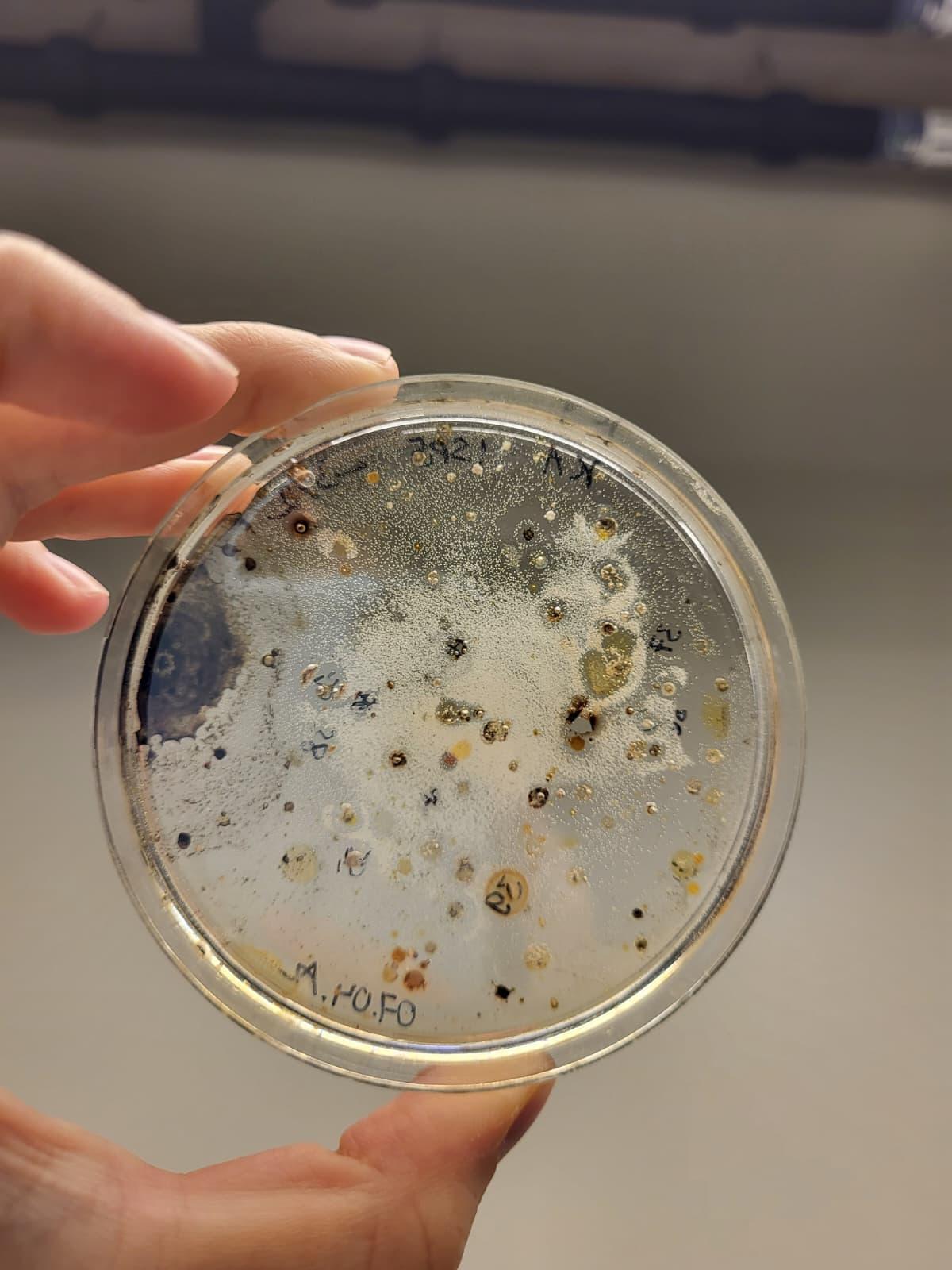
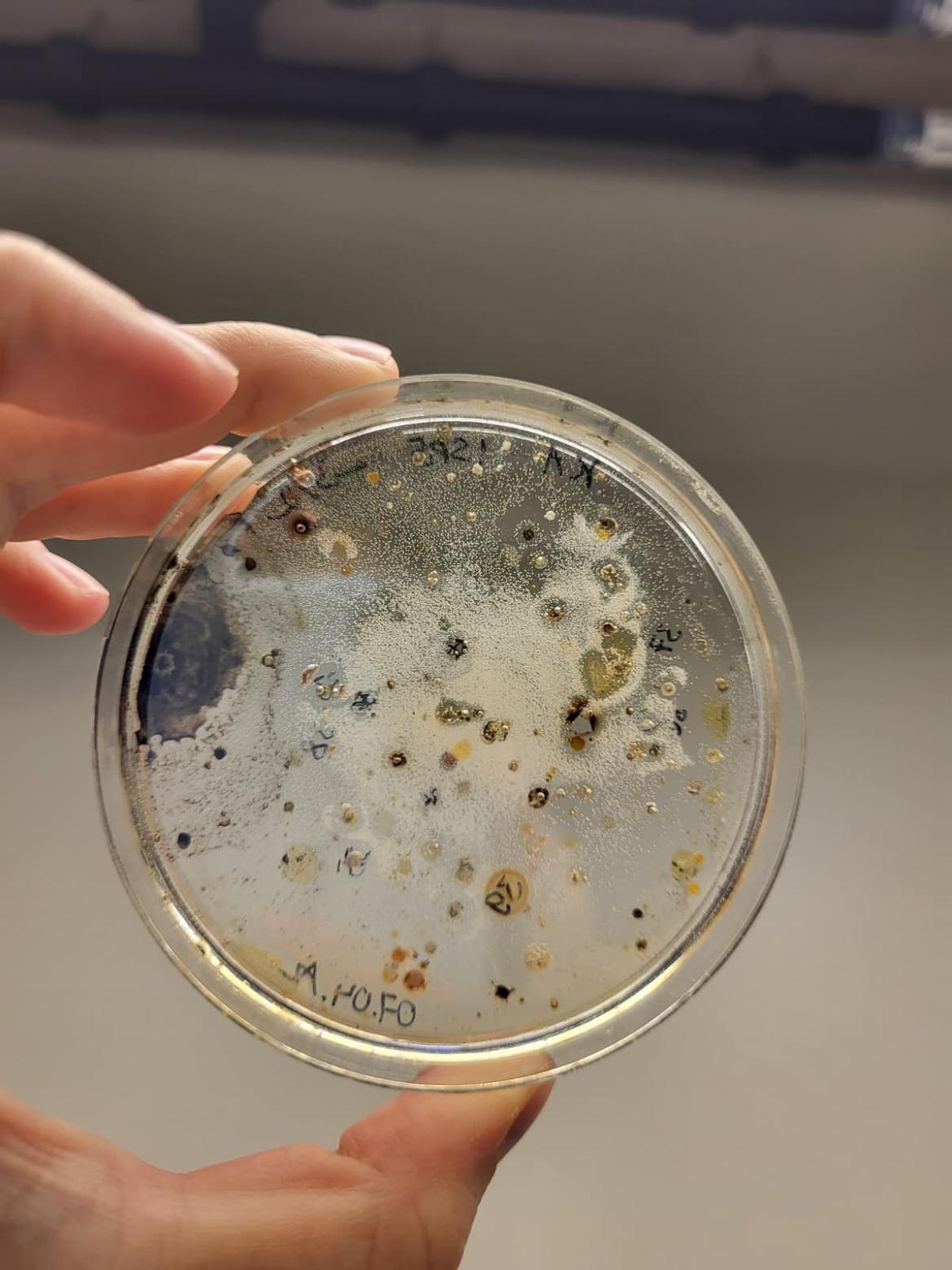
Bogs are one of Latvia’s greatest natural assets and an integral part of the surrounding environment. They are not just wetlands – bogs are complex ecosystems with globally important functions. With financial support from the University of Latvia Foundation, University of Latvia doctoral student Anitra Zīle is carrying out a project that allows insight into the microscopic world of this complex environment – the UL Latvian Collection of Microorganism Cultures has been supplemented with new genera of bacteria.
Bogs – Earth’s carbon stores
Although bogs cover only 3% of the Earth’s land surface, they play an important role in climate regulation, as they are able to absorb vast amounts of precipitation and actively participate in global biogeochemical cycles. One of the most significant values of bogs is their ability to capture and store up to twice as much carbon as all the world’s forests.
Unfortunately, this important habitat is under threat. In some European countries, up to 95% of bogs have been drained for agricultural purposes or are used for peat extraction. Along with bogs, we lose not only an exceptional habitat in whose landscapes we can experience its beauty, but also unique microbiological diversity that has adapted to specific conditions.Microscopic life in an acidic environment with low oxygen content.
Microscopic life in an acidic environment with low oxygen content
The bog environment is not particularly suitable for most living organisms, as it is highly acidic and lacks oxygen. However, it is precisely in bogs that unique microorganisms live, adapted to survival where others cannot. These microorganisms are mostly little studied or even undiscovered to date, yet their properties, such as the ability to break down complex organic compounds and to grow in acidic environments, are useful in modern science and industry. Microorganisms obtained from bogs can be used in the development of new bioremediation methods, the advancement of biological soil fertilizers, or even in the creation of new medicinal products.
Modern technologies reveal the invisible
Thanks to the funding from the University of Latvia Foundation’s Jūris Kalnavārns project competition in the fields of natural sciences and medicine, substantial work has been carried out within the project to characterize the microbiological diversity of several Latvian bogs. To detect what cannot be revealed by other methods, soil samples from Latvian bogs are sequenced, allowing all bacteria present in the sample to be observed, even if they cannot be cultivated under laboratory conditions. It is estimated that only 1% of all bacteria present in the environment can be cultivated under laboratory conditions. It is expected that the proportion of such organisms isolated from bogs that could be propagated in laboratories will be even smaller.
Expansion of the collection – a contribution to the development of science and innovation
Thanks to the project implemented by Anita Zīle, the Latvian Collection of Microorganism Cultures has received a significant addition – more than 20 new bacterial strains have been added to the collection, and at least 10 bacterial genera were not previously available in it. A particularly valuable gain is the preserved microbial communities. In nature, microorganisms rarely exist in isolation from one another; they usually cooperate, therefore the preservation of these communities in the collection will open up new opportunities for researchers in microbial ecology and biotechnology.
This research and the expansion of the Latvian Collection of Microorganism Cultures represent both an academic achievement and an important step in identifying and sustainably utilizing Latvia’s natural microbiological resources. Notably, during the implementation of this project, the International Union for Conservation of Nature established a global Microorganism Conservation Specialist Group with the same objective. The microorganisms obtained in this study will be preserved for future generations of scientists.
The Latvian Collection of Microorganism Cultures was established in 1993 and is currently housed under the Institute of Microbiology and Biotechnology of the Faculty of Medicine and Life Sciences at the UL. Its main task is the storage of microorganisms for further research. At present, the LMKK holdings contain more than 1,800 microorganism cultures, mainly obtained from the territory of Latvia.