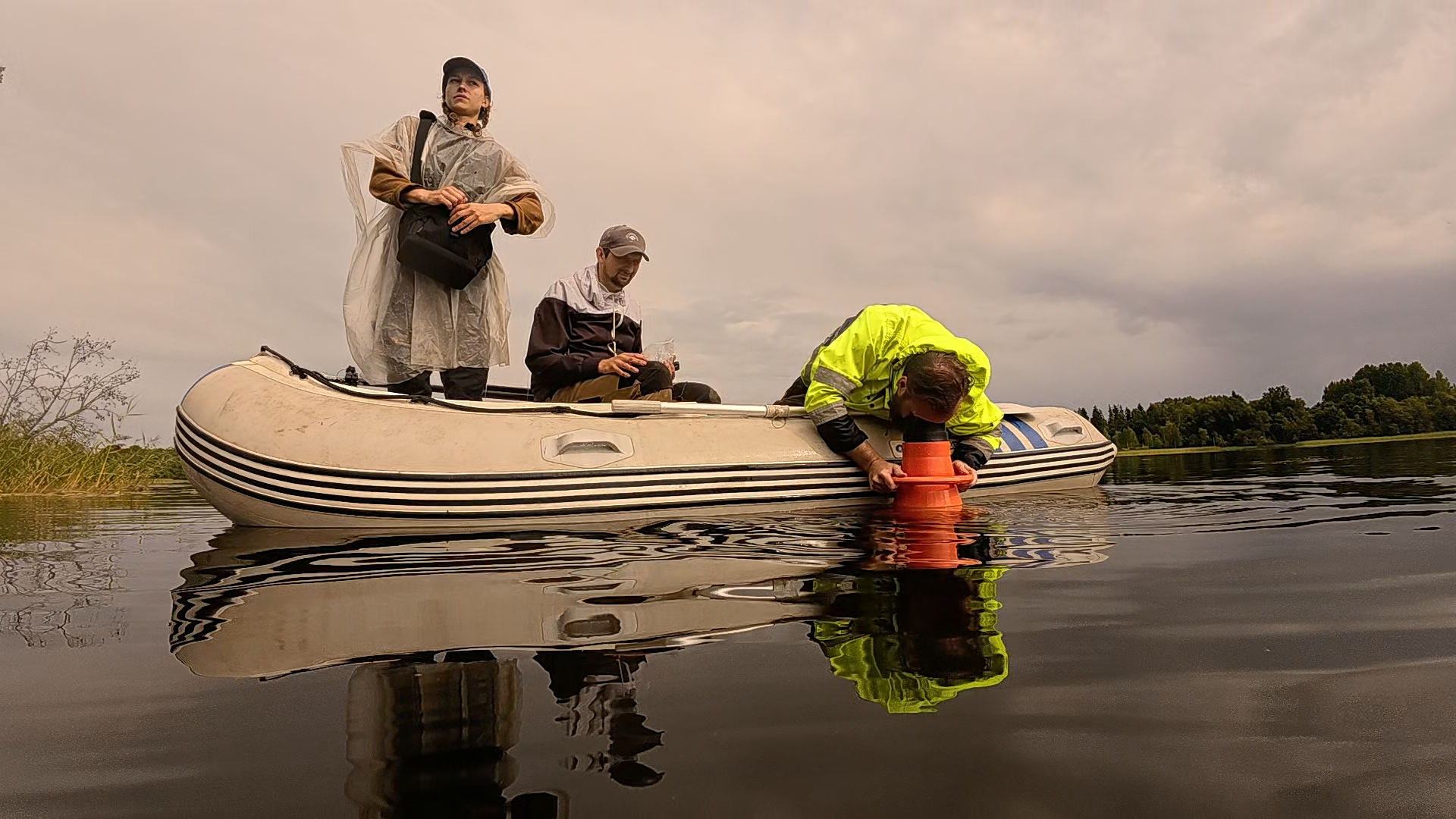
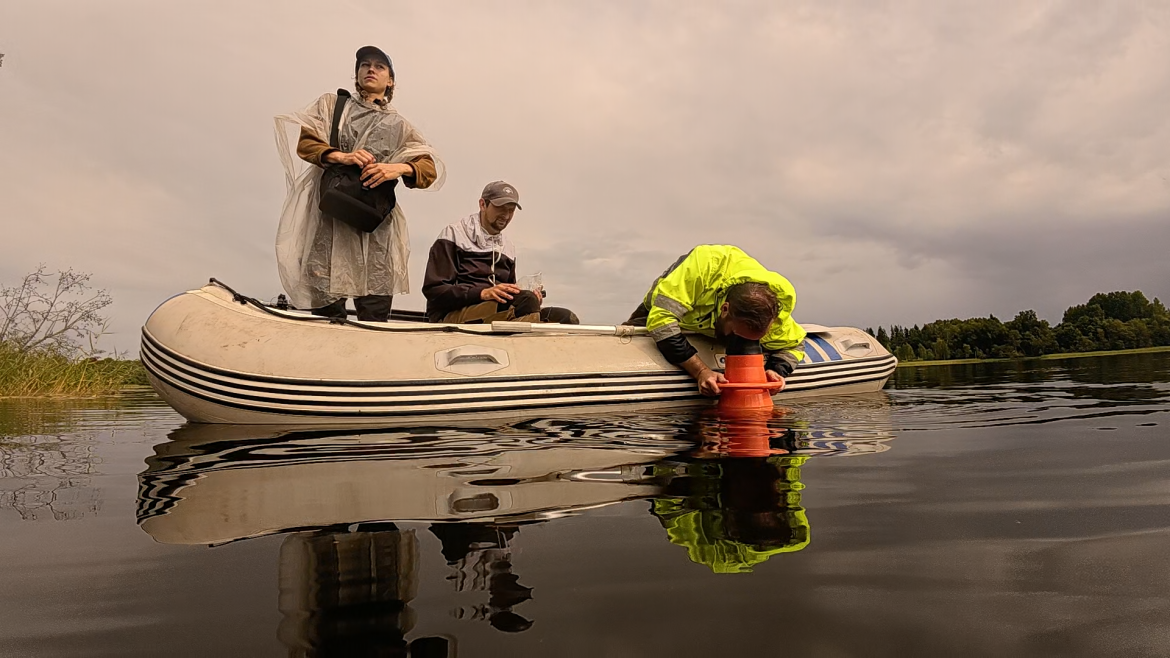
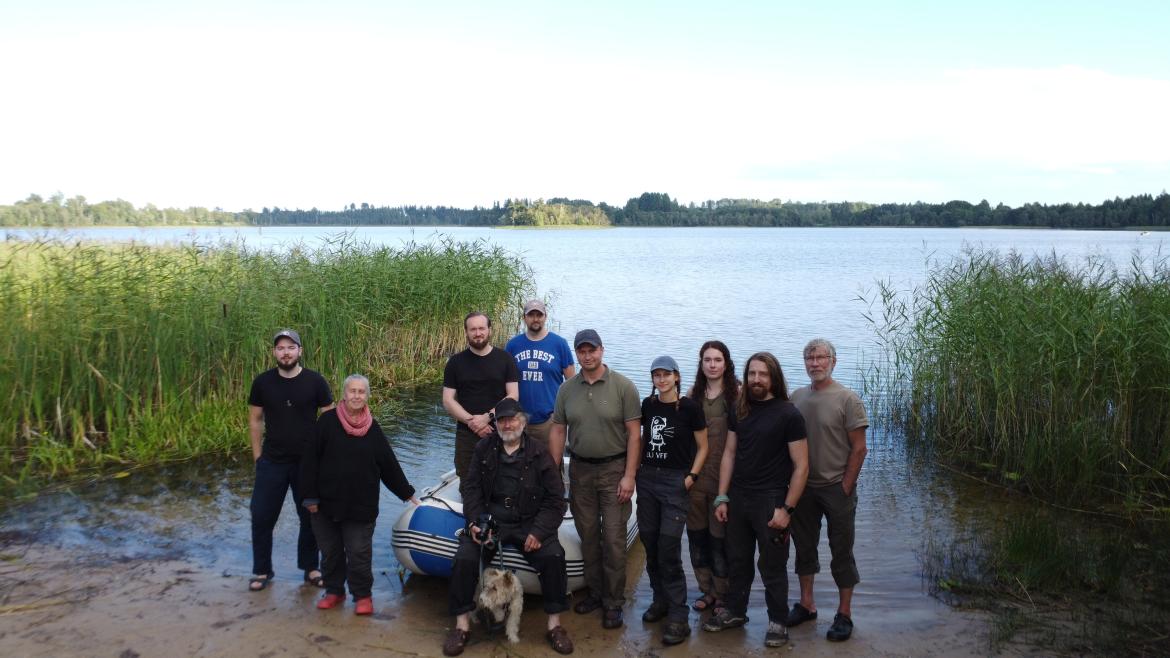
At the beginning of August, archaeological research was carried out on Cepurīte Island in Lake Indzers, Alūksne Municipality, within the framework of the project “Archaeological Heritage of Inland Waters: Islands and Lake Dwellings in Latvian Lakes”, implemented by the Institute of Culture and Arts of the Latvian Academy of Culture (LAC ICA). The excavations were led by archaeologist, project manager, and leading researcher at LAC ICA Juris Urtāns. The research on the small Cepurīte Island was carried out by a strong team of both experienced and young archaeologists – Mārcis Kalniņš, Jānis Meinerts, Kaspars Markuss Molls, Mārcis Kļaviņš, Agnese Čakare, and archaeology master’s student Karla Johanna Neimane (Neumann) from Martin Luther University Halle-Wittenberg in Germany.
Several factors determined the choice to carry out excavations on Cepurīte Island. As early as 1983, archaeologist Māris Atgāzis had discovered that the island contained a cultural layer of an ancient settlement. Within the framework of the project, Cepurīte Island in Lake Indzers was surveyed again in the spring of 2025, revealing that the entire island is covered by a dense cultural layer, while two intact clay vessels and animal bones were found on the lakebed near the island. Among the bones discovered was one human upper leg bone, which was dated using the radiocarbon method to AD 578–654.
As the excavation leader, archaeologist Juris Urtāns, explains: “This year, archaeological excavations covering an area of 10 square metres were carried out on Cepurīte Island in Lake Indzers, and the entire island was examined using test pits. It turned out that the whole island is evenly covered by an approximately half-metre-thick cultural layer characteristic of ancient settlements, containing many pottery fragments but almost no other finds. Divers examining the lakebed found that evidence of ancient human activity – split and burnt stones, animal bones, pottery fragments, and other objects – extends approximately 12 metres from the shore. The lower parts of several pots and larger vessel fragments were found.”
In parallel with the archaeologists’ work on land, small-scale excavations were also carried out underwater at a depth of 2.5 metres. Together with archaeologists Agnese Čakare and Kaspars Markuss Molls, divers Saulvedis Vārpiņš and Laimnesis Markūns from the “Association of Underwater Cultural and Historical Heritage” also took part in the underwater research, conducting a detailed survey of the area around the island and obtaining several scientifically significant finds of ancient ceramics. Juris Urtāns notes: “For the first time in the history of Latvian archaeology, excavations were carried out underwater! While there were relatively many pottery fragments and animal bones on the lakebed, very few such finds were discovered in the archaeological excavations on the island itself. At first glance, the pottery found can be dated to the second half of the 1st millennium AD; a more precise dating will be possible after the pottery has been evaluated and radiocarbon analysis of the collected organic materials has been carried out. Overall, the finds obtained on and around the island are characteristic of and contemporaneous with the material from the lake dwellings of Vidzeme, which dates to the period of Latgalian consolidation, namely the second half of the 1st millennium AD; however, near Cepurīte Island in Lake Indzers we found no evidence of people living in pile or platform dwellings. At present, it is difficult to determine whether the settlement on Cepurīte Island in Lake Indzers was an exception in the lifestyle of people of its time, or whether it represents a distinctive type of ancient settlement combining features characteristic of both lake dwellings and traditional settlements. So far, no similar ancient settlements used by people over a long period have been identified in Vidzeme.”
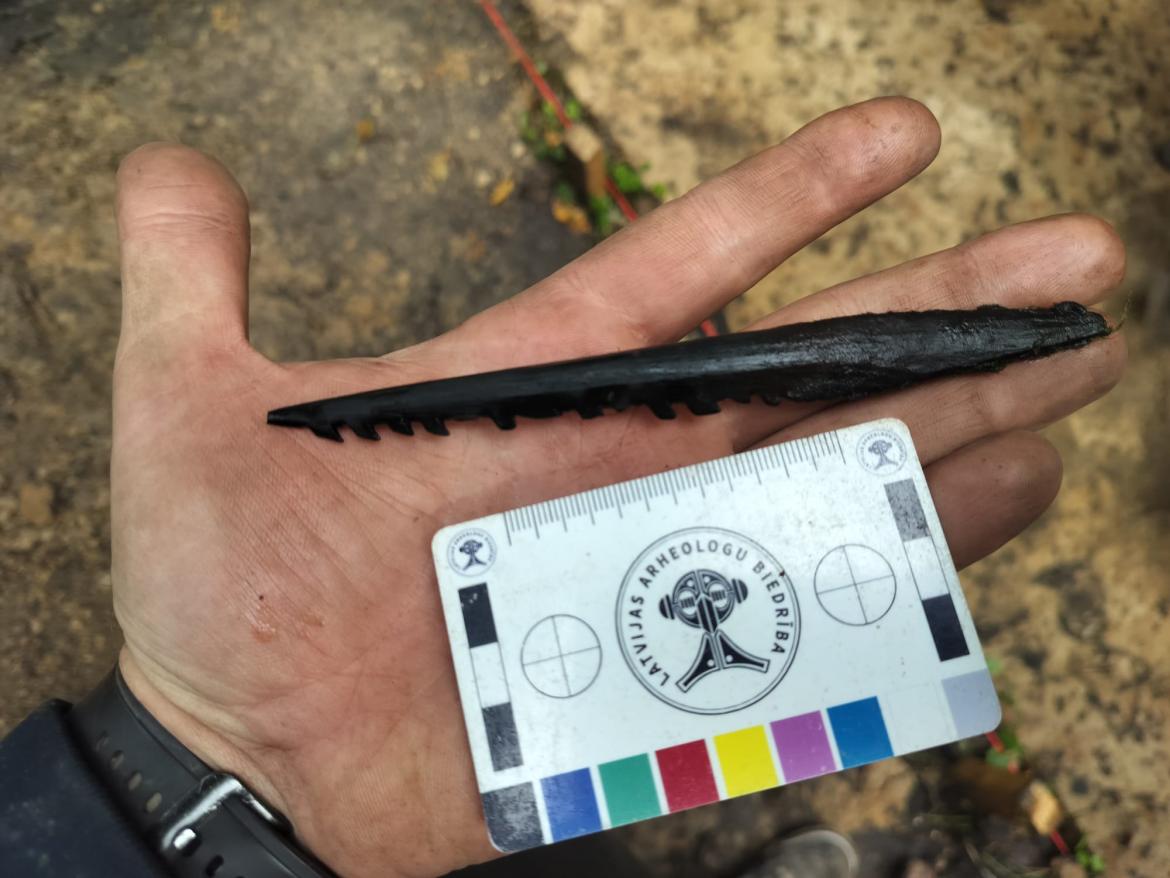
During the project research, earlier evidence dating to the Stone Age was also identified on Cepurīte Island. During the survey carried out in the spring of 2025, a flint flake was found that may have been used as a scraper in the Stone Age. This year, a fishing spear made of bone for spearing and hunting larger fish was found on the lakebed. “Typologically, the fishing spear can be dated to the Middle or Late Mesolithic (9th–6th millennium BC). The bone fishing spear on the lakebed may also not be directly associated with the island, because Stone Age fishermen may not have lived on the island, but only hunted fish near it – Lake Indzers is not large enough to provide food for a Stone Age human community,” says Juris Urtāns.
The name of the island – Cepurīte – is also significant and may have originated from the island’s shape – it is round, with a clearly defined central part that could vaguely have resembled a hat. “It is worth remembering that several Latvian hillforts are also called Cepures kalni, which legends explain as evidence that warriors piled up the hillforts using their hats. In terms of area, Cepurīte Island in Lake Indzers corresponds to the plateau of a medium-sized Latvian hillfort. It is also worth noting that several ancient burial grounds are known on the shores of Lake Indzers, which chronologically generally correspond to the period when Cepurīte Island was used; however, it seems that Cepurīte Island was not large enough to accommodate all the people buried in the cemeteries near the lake. This would mean that other ancient settlements should also be sought near the lake. When the other two islands in Lake Indzers – Liepu Island and Stradu Island – were examined, no cultural layer of ancient settlements was found there,” notes the leader of the archaeological excavations.
The research on Cepurīte Island in Lake Indzers provides a certain basis for proposing that the island be included in the list of state-protected cultural monuments.
The project “Archaeological Heritage of Inland Waters: Islands and Lake Dwellings in Latvian Lakes” (No. lzp-2024/1-0542) is being implemented within the framework of the 2024 open call for Fundamental and Applied Research Projects. Funded by the Latvian Council of Science.
More information about the project: https://www.lka.edu.lv/lv/petnieciba/petijumu-projekti/fundamentalo-un-lietisko-petijumu-projekti/iekszemes-udenu-arheologiskais-mantojums-salas-un-ezermitnes-lat/