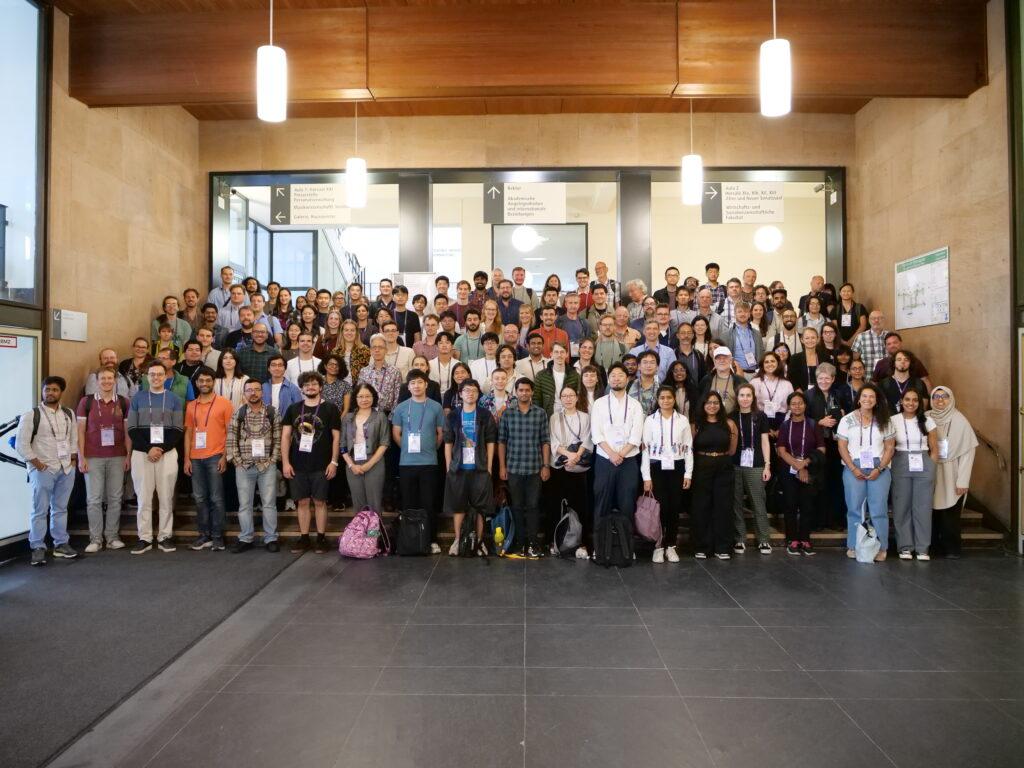
Dr. Artis Aberfelds, Senior Researcher at the Engineering Research Institute "Ventspils International Radio Astronomy Centre" (VIRAC) of Ventspils University of Applied Sciences, participated in the prestigious international symposium "SFB 1601: Cologne-Bonn Symposium on the habitats of massive stars across cosmic time" held at the University of Cologne, Germany. A scientific report on methanol maser activity around forming massive stars was presented during the event.
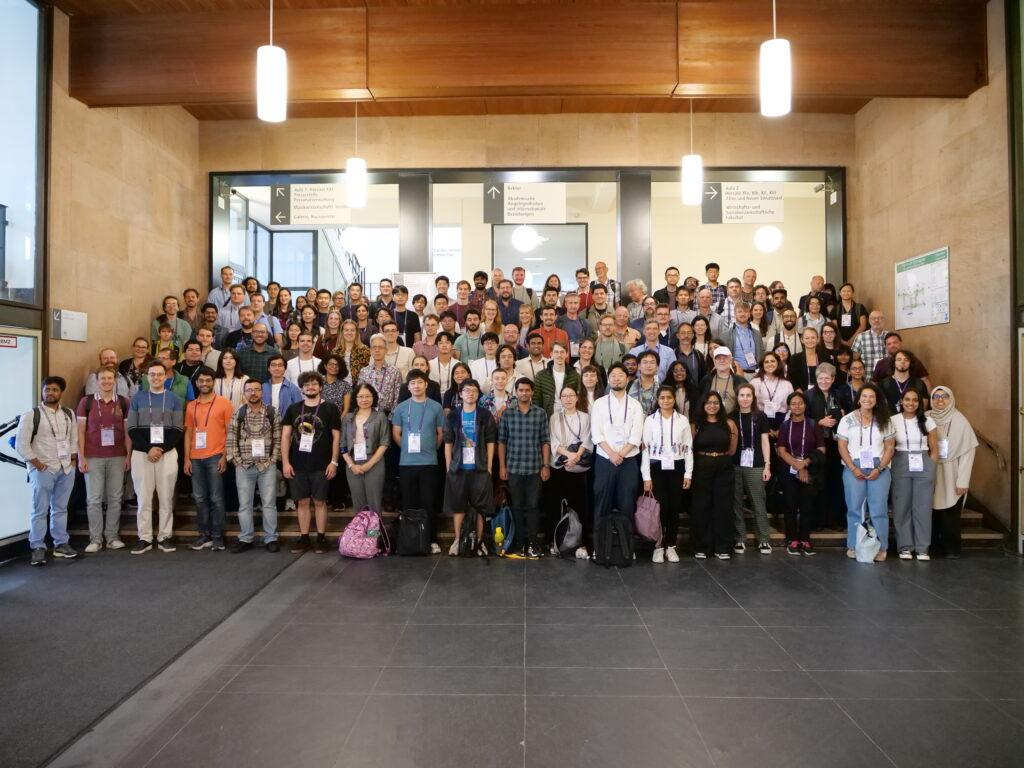
Organized by the University of Cologne, the symposium brought together leading astrophysicists and radio astronomers from around the world to discuss the latest discoveries in star formation, the interstellar medium, and the physical processes governing the birth of stars.
The research presented by Dr. Aberfelds was developed in close international collaboration with researchers A. Sanna and L. Moscadelli from the Italian National Institute for Astrophysics (INAF). Utilizing the Karl G. Jansky Very Large Array (VLA) in the USA – one of the world's most sensitive radio telescope arrays – the study analyzed the connection between 6.7 GHz methanol (CH3OH) maser emission, stellar radiation, and outflows from young massive stars.
Key Findings and Conclusions:
Discovery of 5 new maser sources: Observing 22 star-forming regions, 6.7 GHz methanol maser emission was detected in 13 objects, revealing 5 previously unknown maser sources.
Precise indicator of stellar location: Over 90% of all detected maser spots are located in close proximity to the central star.
Direct link with thermal free-free radio continuum emission: The study revealed a strong correlation between methanol maser luminosity and thermal radio emission, enabling astronomers to more accurately predict and identify weak radiation sources in the Universe in the future.
Potential for next-generation radio telescopes: Calculations indicate that more than 30% of the methanol maser population currently remains undetected due to sensitivity limits of existing instruments. These sources will be unlocked by next-generation radio interferometers (such as the ngVLA and SKA).
The research and conference participation were carried out within the framework of the Latvian Council of Science (LZP) Fundamental and Applied Research Project „Revealing the physical mechanism of mass ejection around young massive stars via CH3OH masers” (Project No. 1.1.1.9/LZP/1/24/044).