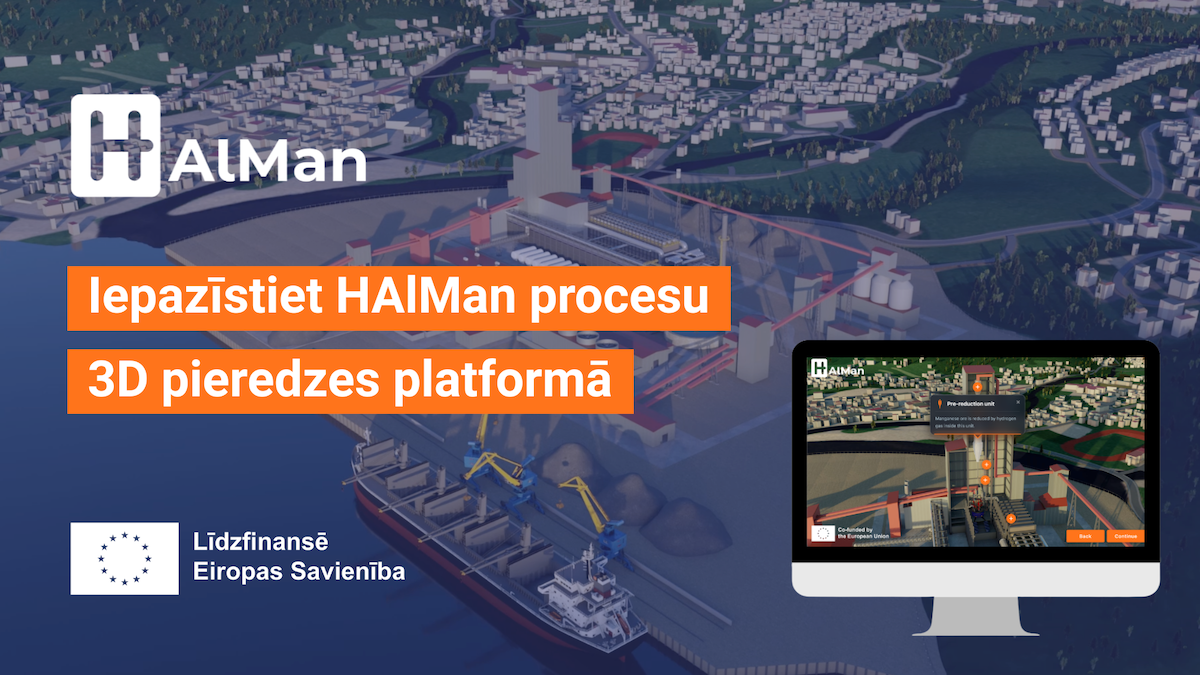
A new interactive 3D experience has been launched to present the innovative process developed within the HAlMan Project, offering audiences an accessible way to explore how manganese—a critical raw material for modern industry—is produced and how its production can become more sustainable.
Manganese plays a vital role in everyday life. It is essential for steel production, infrastructure, transportation, and batteries powering electronic devices and electric vehicles. Today, nearly 90% of global manganese is used in steelmaking, where it enhances strength, durability, and resistance to wear. However, the conventional production of manganese relies on carbon-intensive processes that require high energy input and generate significant CO₂ emissions.
Rethinking manganese production
The HAlMan project, co-funded by the European Union’s Horizon Europe programme, aims to develop and demonstrate a new, integrated and sustainable process for producing manganese and manganese alloys.
At the core of this innovation is the replacement of carbon with hydrogen and secondary aluminium sources as reductants. The process combines hydrogen-based pre-reduction of manganese ores with aluminothermic smelting, significantly reducing emissions while enabling the use of secondary raw materials and industrial by-products.
This approach has the potential to deliver:
Low carbon footprint
Reduced energy consumption
No solid waste generation
Valorisation of secondary raw materials
By addressing the environmental limitations of traditional pyrometallurgical methods, HAlMan represents a potential game changer for the metallurgical industry.
From research to demonstration
Throughout the project, partners have carried out extensive experimental campaigns, pilot-scale trials, and advanced computational modelling to validate each step of the process.
Key activities have included:
Hydrogen-based pre-reduction of manganese ores
Aluminothermic smelting trials in pilot furnaces
Processing of manganese ores and industrial by-products
Large-scale experimental campaigns, including operations at Mintek (Soth Africa)
These efforts have demonstrated the technical feasibility of the process and provided critical insights into its kinetics, thermodynamics, and optimal operating conditions. All tests and activities conducted within the project contribute directly to building and validating the full HAlMan process chain.
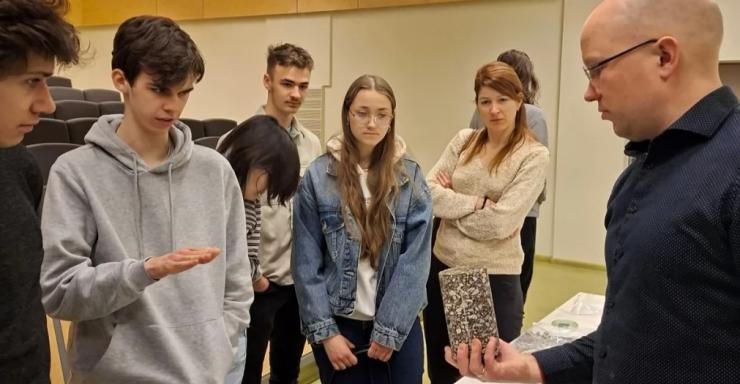
“The HAlMan project combines highly advanced industrial and scientific processes, which made this communication activity both challenging and exciting. Our goal was to create an experience that could transform complex metallurgical innovation into a clear and engaging visual story accessible to different audiences. Every stage of the development process involved close collaboration with the project partners to ensure scientific accuracy while making the experience intuitive and easy to explore,” says Linda Kimeiša, Communication Manager, WIT Berry
WIT Berry is a consortium partner within the HAlMan project responsible for all communication and dissemination activities. Since January 2023, WIT Berry has supported a consortium of 14 partners from 10 countries across Europe, Africa, and Australia in raising awareness about the project and communicating its results to a wide range of target audiences, including industry stakeholders, researchers, policymakers, students, and the general public.
Exploring the process in 3D
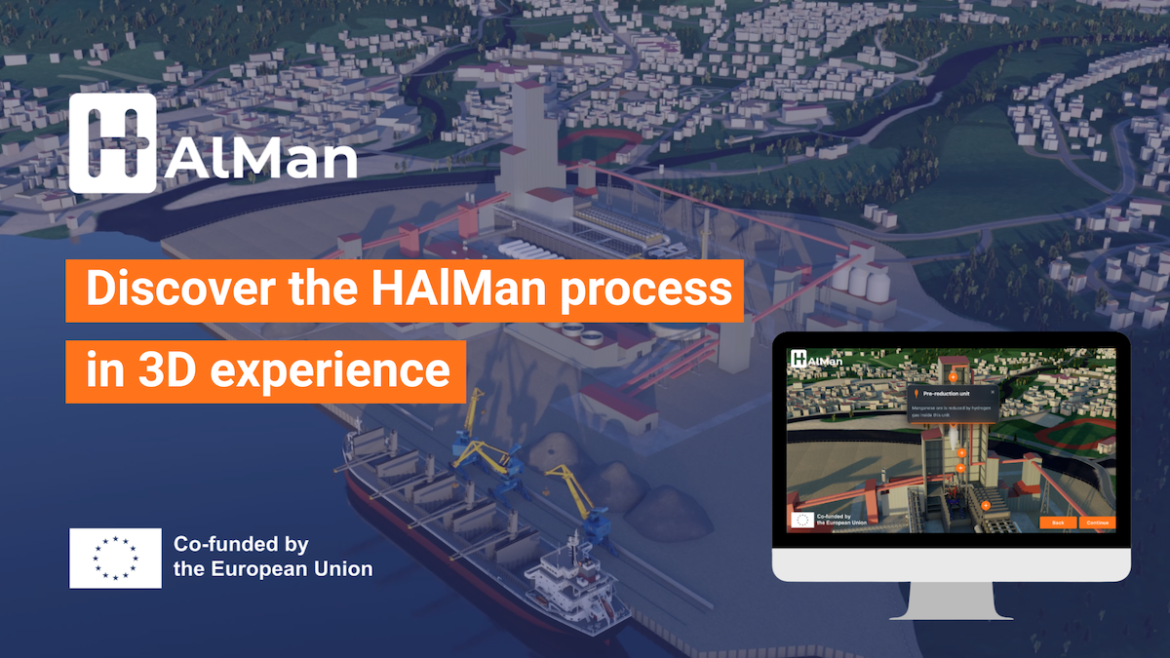
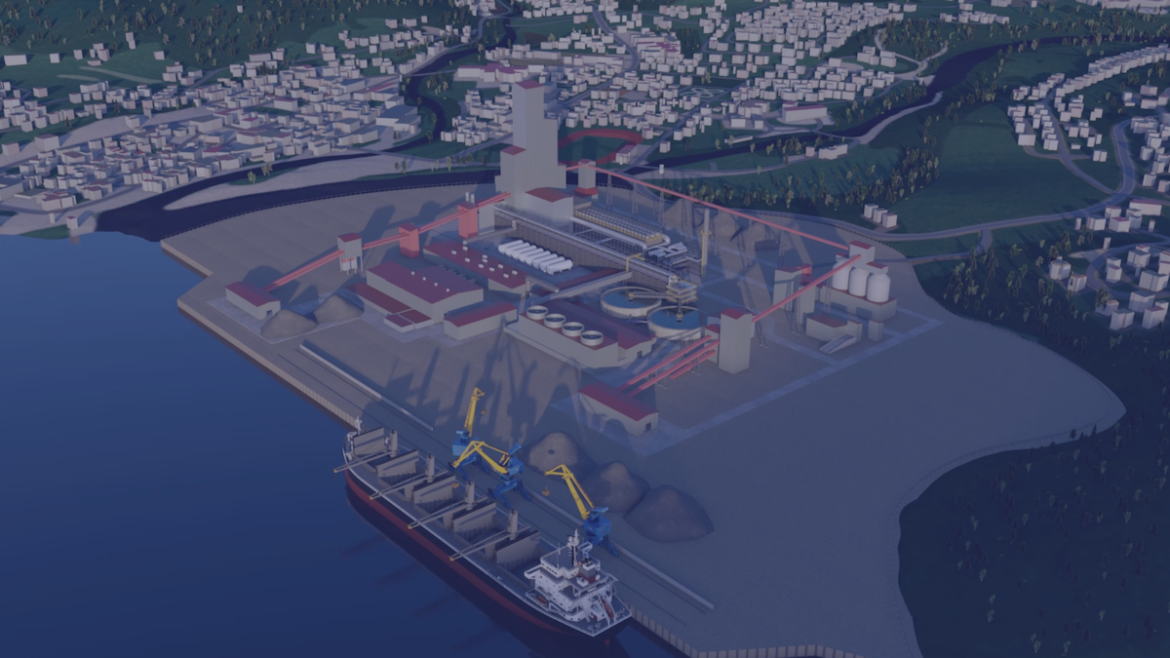
The newly released 3D experience allows users to explore the HAlMan process step by step—from raw material extraction to hydrogen pre-reduction and final alloy production.
Designed as an educational and communication tool, the experience translates complex metallurgical processes into an intuitive and engaging format, making the project’s innovations accessible to a wider audience, including industry stakeholders, researchers, and the general public.
A guided tour through HAlMan process will be delivered on 18 of May at 11:00 CET by the project coordinators Maria Wallin and Jafar Safarian. Learn more and join us for the guided 3D tour on HAlMan process.
Towards a more sustainable future
As global demand for steel, batteries, and advanced materials continues to grow, the need for sustainable production methods becomes increasingly urgent. The HAlMan project contributes to Europe’s ambitions for decarbonisation, resource efficiency, and circular economy in the metallurgical sector.
By rethinking how manganese is produced, HAlMan demonstrates that the future of materials is not only about performance - but also about how they are made and their impact on the environment.
About the HAlMan project
The HAlMan project is Co-funded by the European Union. The project’s consortium is composed of 14 partners and 3 associated partners (AP), representing 10 countries. The project coordinator is Norwegian University of Science and Technology (Norway). Consortium partners are OFZ AS (Slovakia), Mintek (South Africa), SINTEF AS (Norway), WIT Berry (Latvia), National Technical University of Athens (Greece), Max-Planck-Institut für Eisenforschung GmbH (Germany), Advanced Minerals and Recycling Industrial Solutions (Greece), Centre for Research and Technology Hellas - CERTH (Greece), Mytilineos Anonimi Etaireia (Greece), CALIX Europe (France), CALIX LTD (Australia, AP), Spolka Akcyjna Odlewnie Polskie (Poland), Imperial College of Science and Technology and Medicine (United Kingdom, AP), MET4 (Greece), Transalloy PTY LTD (South Africa), Assmang (South Africa, AP). Project has started in January, 2023 and its duration is 4 years. Grant agreement ID: 101091936.
More information
Maria Wallin and Jafar Safarian, HAlMan project coordinators,
E-mail maria.wallin@ntnu.no, jafar.safarian@ntnu.no