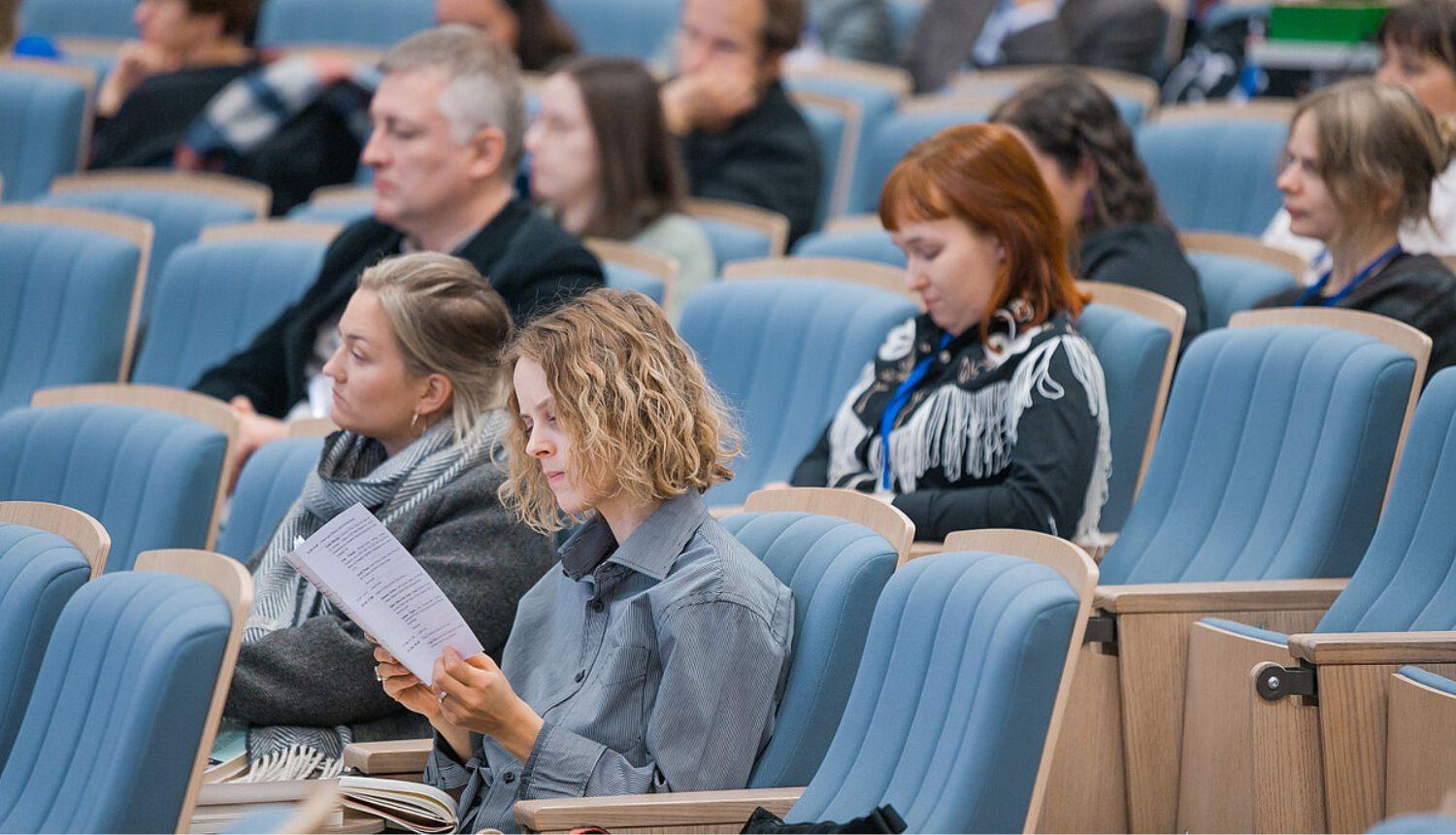
Researchers from the Faculty of Economics and Social Sciences (FESS) of the University of Latvia (UL) will present the latest insights into strengthening global competitiveness at the 84th International Scientific Conference of the University of Latvia, to be held from 14 to 16 April. Strengthening global competitiveness is one of the University of Latvia's priority research areas and a key prerequisite for sustainable economic growth and the well-being of Latvian society. Both experienced and early-career researchers are invited to share the results of their studies during the conference section sessions and to submit abstracts for presentations by 2 March 2026.
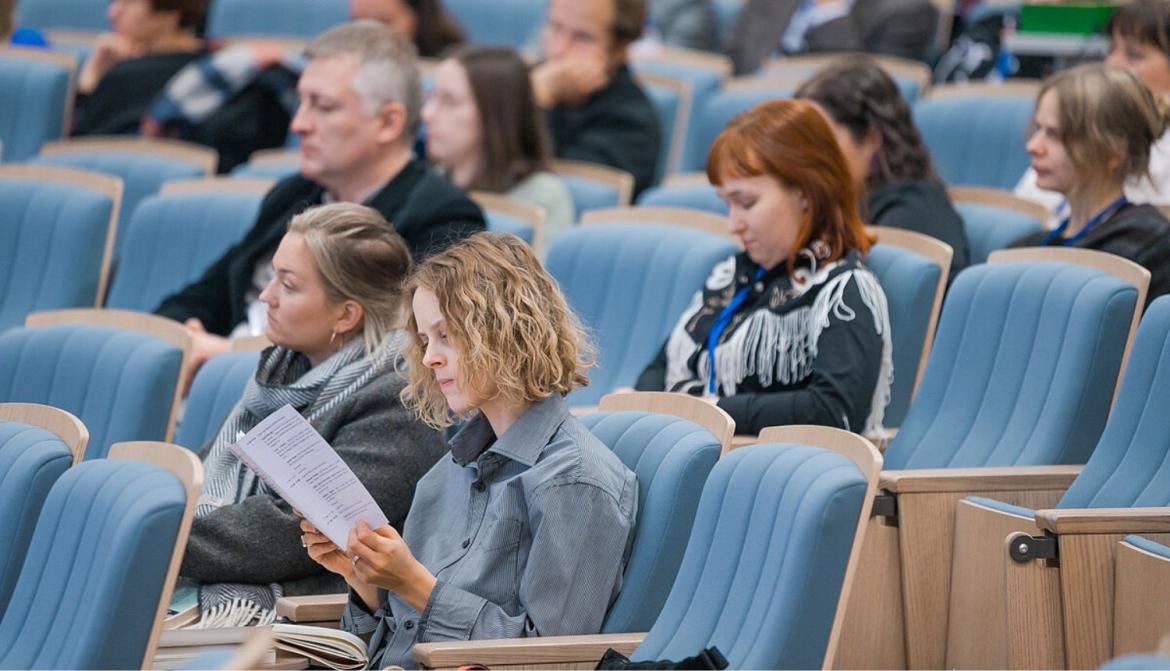
"The role of universities in the world is changing – creating and disseminating knowledge alone is no longer sufficient. This year, with the University of Latvia conference in a new format, we are bringing the University's contribution to society even closer by presenting, explaining, and discussing the latest and most important topics relevant to Latvia's development. I invite everyone to submit a paper or take part in the most interdisciplinary and scientifically intensive event of the year at UL," emphasises UL Vice-Rector for Research, Associate Professor Guntars Kitenbergs.
Highlighting the University of Latvia's role in knowledge creation, societal development, and the development of sustainable solutions, the annual scientific conference has adopted the motto "The University of the Future – Impact-Driven Leadership." The conference will take place in a new format for the first time, structured into nine thematic blocks aligned with UL's priority research areas, thereby fostering interdisciplinary dialogue and covering key research and innovation fields in natural sciences and technologies, humanities, medicine and health, as well as social sciences. This approach ensures a diverse and content-rich programme.
In April, under the leadership of FESS, the conference will analyse the key factors influencing countries' and companies' ability to compete in global markets, with a particular focus on innovation, human capital development, and effective public governance in a changing geopolitical environment. The sections will bring together perspectives from policymakers, entrepreneurs, and researchers and offer concrete, practical solutions to enhance competitiveness. This provides an excellent opportunity for faculty members and other UL researchers to present their research results and share their latest findings.
The thematic block on strengthening global competitiveness will comprise nine sections, for which abstracts are invited to be submitted via the UL conference system:
- Various aspects of entrepreneurship and management in strengthening global competitiveness;
- Marketing and innovation for corporate competitiveness and sustainability;
- Sanctions: regulation, implementation, and challenges;
- Circular economy and sustainable development: challenges and future opportunities;
- Media and society in the context of global and local challenges;
- The role of innovation and industrial policy in strengthening competitiveness;
- Public sector governance and reforms for national competitiveness;
- The impact of global developments on the communication of contested cultural heritage;
- Resilience in a changing security environment: strengthening the capacities of society, institutions, and the state.
Participants in the plenary session of the global competitiveness thematic track, "Latvia's Long-Term Development Strategic Framework," will discuss the LV2050 strategy framework developed by faculty researchers. In addition to the presentation of results from the project "Vision for National Development up to 2050: Assessment of Latvia's Development Vectors up to 2050 and Scenario Development," implemented under the leadership of Professor Gundars Bērziņš at the FESS Productivity Scientific Institute "UL Think Tank LV PEAK," two round-table discussions are planned during the plenary session: "People, Welfare, Economy" and "New Challenges."
Furthermore, FESS researchers will present insights from their research work in sessions of other research tracks:
- Financial system, taxation, and capital market development: technology, sustainability, and regulation;
- Financial management processes in the digital age: data, technology, and risk challenges;
- Perspectives on financial system development in the interaction between individuals, society, the environment, and technology;
- Health and well-being at work as a foundation for a competitive business and working environment;
- How to ensure societal sustainability?
Researchers and industry representatives are invited to participate in more than 60 section sessions and plenary sessions across all nine thematic tracks of the conference. The new conference format provides an excellent platform to present research results, discuss the most topical scientific issues, and share new ideas, thereby jointly strengthening the scientific community and fostering the creation of new knowledge. It is also a space for building cooperation both in Latvia and internationally, promoting innovation development and the exchange of best practices.
To present research results, discuss current issues in science and societal development, and share the latest ideas and insights, prospective speakers are invited to register by 2 March. Registration for listeners is open until 11 April.