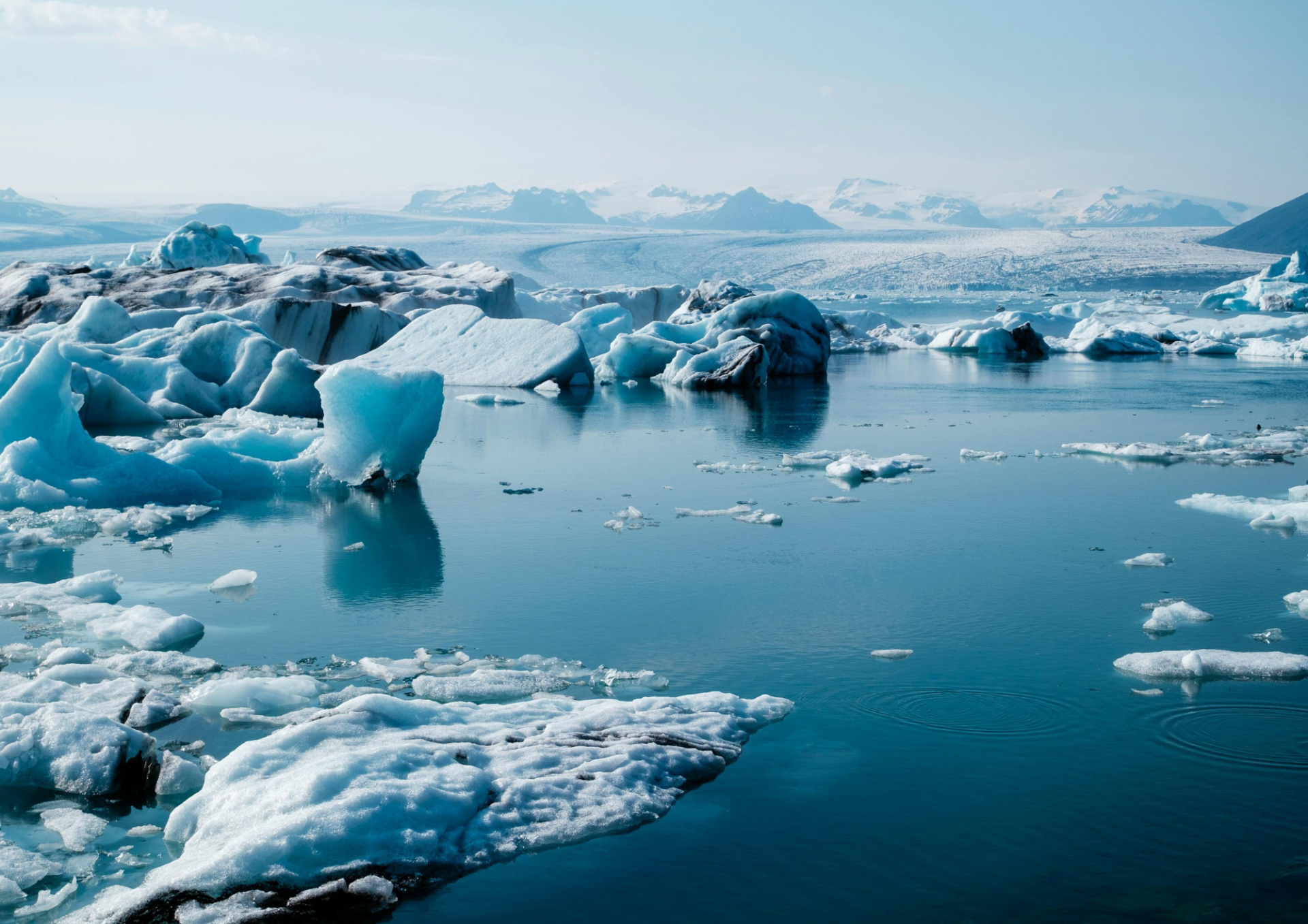
Four UL scientists studied a glacier more than one kilometre wide in the Qaanaaq area. It is the northernmost town in Greenland. The geologists collected data on the glacier’s structure and thickness.
“One of the two largest outlet glaciers flowing from the ice cap, and therefore one with the greatest thickness and the highest level of dynamics. If it turns out that this glacier is cold, as we hypothesised, then most likely all the others are as well. We can then say much more precisely, and predict, what will happen to these glaciers in the future and whether, for example, more water will accumulate in such glaciers, whether their temperature will change, or whether they could suddenly collapse, as has happened in Nepal,” said Kristaps Lamsters, Leading Researcher at the University of Latvia.
The everyday lives of local residents depend on how the glacier behaves. Qaanaaq is home to 600 people. The Inuit are hunters and fishermen who rely on seal and whale hunting for food. They are already facing difficulties caused by changes in nature.
“The sea no longer freezes as quickly, which makes it difficult to travel by dog sled and to hunt. Or, conversely, it may suddenly rain for a week, and such a large amount of water flows down the slope that it washes out the road connecting the airport to the town in several places,” Lamsters explained.
“It turned out that there was a fountain approximately 2–3 metres high. That was something you do not often get to see when standing on a glacier. First of all, it indicates that there is a lot of water. It also suggests that this glacier is cold, because this water cannot flow along the glacier bed or through the glacier, but instead, under pressure, breaks out somewhere through a crack or something similar. This means that the glacier is most likely, especially in that particular location, definitely not warm. The water cannot carve its way through it,” said UL researcher Lelde Švinka.
Latvian geologists also carried out seismic measurements for the first time, obtaining additional information to complement the data recorded while surveying the glacier with ground-penetrating radar.
“This helps us build a broader picture of the glacier, rather than simply knowing that it is this thick and that there may be water somewhere. With seismic measurements, we will try to determine whether, near the bed, the glacier may be… perhaps frozen to it. There may also be softer sediments at the bed, but that is still speculation. We have not yet processed the data, so we do not really know,” Švinka said.
Although satellites provide an overview of the extent of ice masses, much about their internal structure remains unknown.
“It is necessary to look deeper into the glacier and beneath it in order to understand both the condition of the glacier itself and the overall state of the rock slopes – what is happening and whether instability is increasing. Especially now, it is very important to carry out actual measurements on site to demonstrate that glacier behaviour is somewhat different from what we might assume,” noted the UL Leading Researcher.
Glacier research also helps to predict sea-level rise in the world’s oceans more accurately. This is why glaciology is becoming increasingly important.
“Even if we do not have glaciers in Latvia. We are all also excited about new research in space. We do not have those stars or black holes here either, but we still want to explore them. You could ask the same question about many things – why? Why do we need to study this or that? I think we should study everything we are able to study,” the researcher explained.
To continue studying the Qaanaaq ice cap, Latvian geologists plan to return to Greenland next year.