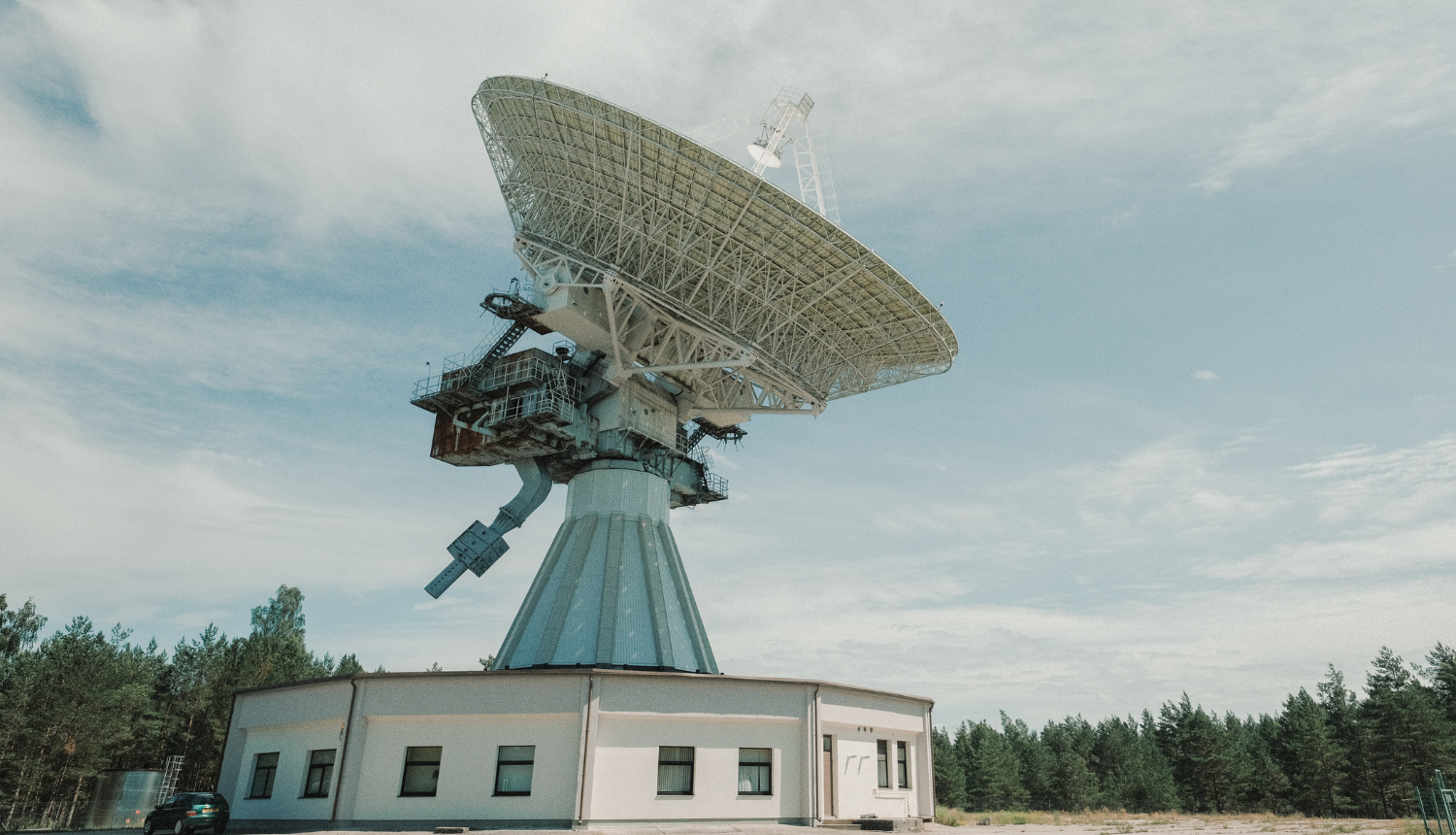
On February 6th, Prime Minister Evika Siliņa and Minister of Education and Science Anda Čakša visited the Engineering Research Institute Ventspils International Radio Astronomy Centre (ERI VIRAC) of Ventspils University of Applied Sciences (VUAS), to discuss Latvia's technological opportunities. Following their visit to ERI VIRAC, the Prime Minister and Minister A. Čakša emphasized the importance of the infrastructure in Irbene at both national and international levels.
The International Radio Astronomy Centre is one of the leading scientific institutions in Northern Europe, specializing in space technologies and radio astronomy.
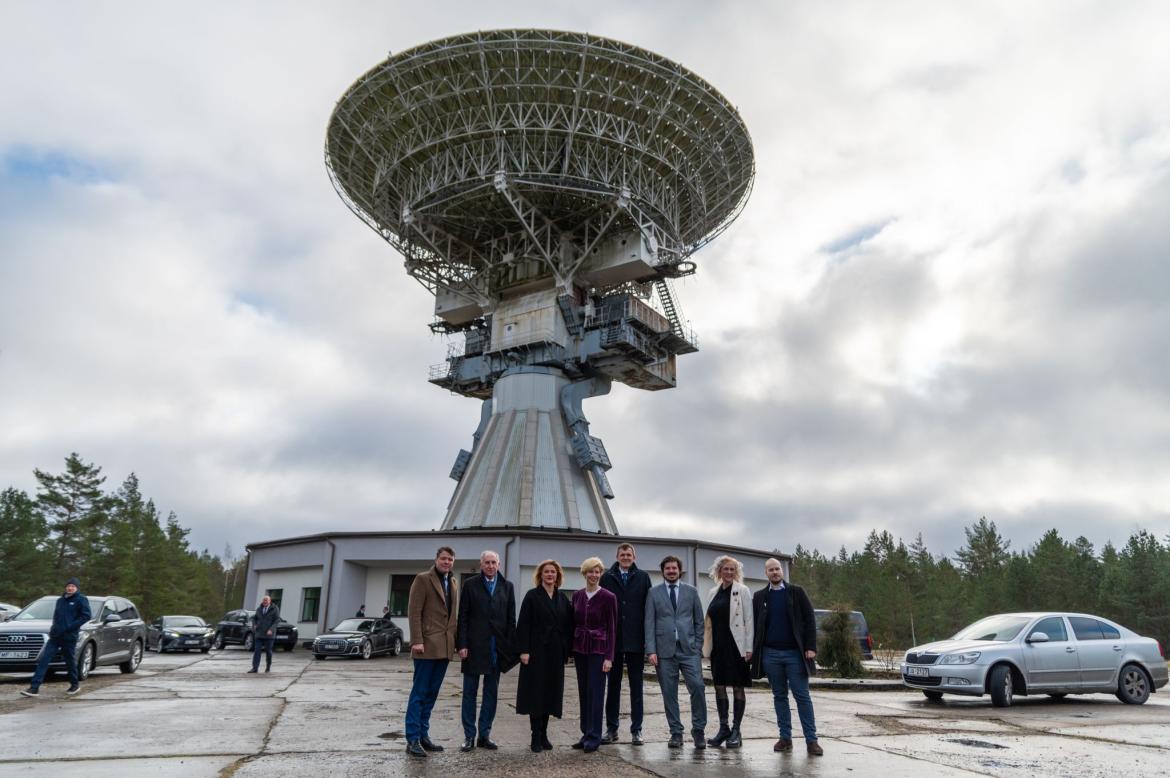
At the beginning of the visit, the Prime Minister and Minister of Education and Science were shown the scientific infrastructure in Irbene.
Prime Minister Evika Siliņa noted: "What has been achieved here is based on enthusiasm, and it represents an enormous contribution to science both in Latvia and Europe! This is an essential infrastructural asset for the country, and we must understand how to allocate the budget to develop such a high-scale scientific infrastructure further. It is crucial to support the scientists, those who invest their knowledge here, and their potential must not be lost!"
VUAS Rector Andris Vaivads emphasized: “The visit of the Prime Minister and Minister of Education and Science is a testament to the government's high regard for Latvia’s largest scientific infrastructure and its contribution to global scientific work, higher education, commercialization, and defence. It also demonstrates the government's desire to ensure this complex's sustainable operation and development and increase its returns to Latvia."
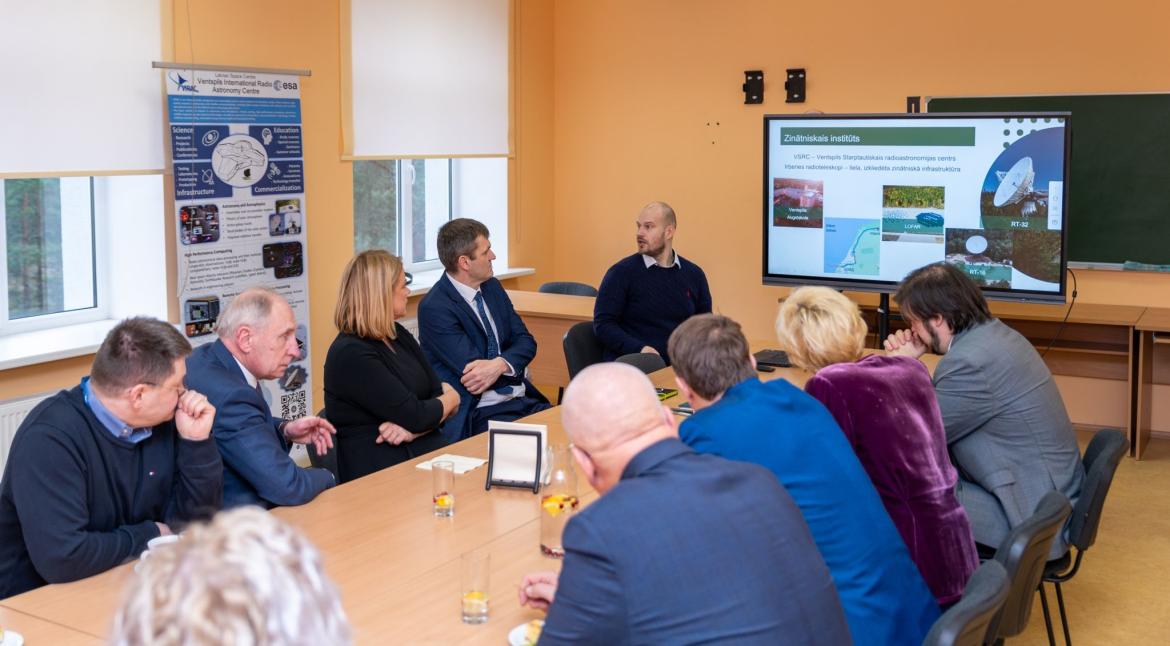
In assessing both what has been achieved and VIRAC's great international scientific potential, as well as VUAS's significance in regional development, Minister of Education and Science Anda Čakša stated: “There must be a university in Ventspils! Its contribution to the region is undeniably significant.” During his presentation, VUAS Rector Vaivads highlighted the university's importance for the region's sustainable development and outlined the financial challenges facing higher education institutions.
This visit was significant as neither Evika Siliņa nor Anda Čakša had previously visited the scientific infrastructure in Irbene, and both acknowledged the incredible work done to preserve and develop it. The visit also included presentations on scientific achievements and potential future projects in lunar missions, cooperation with the European Space Agency, and U.S. scientific institutions that have recognized VIRAC's significant potential in space technologies and research.
The visit was attended by VUAS Council Chairman Kristaps Klauss, Ventspils City Council Chairman Jānis Vītoliņš, Deputy Chairman Guntis Blumbergs, VIRAC Director Mārcis Donerblics, and other local government, university, VIRAC, and ministry staff.
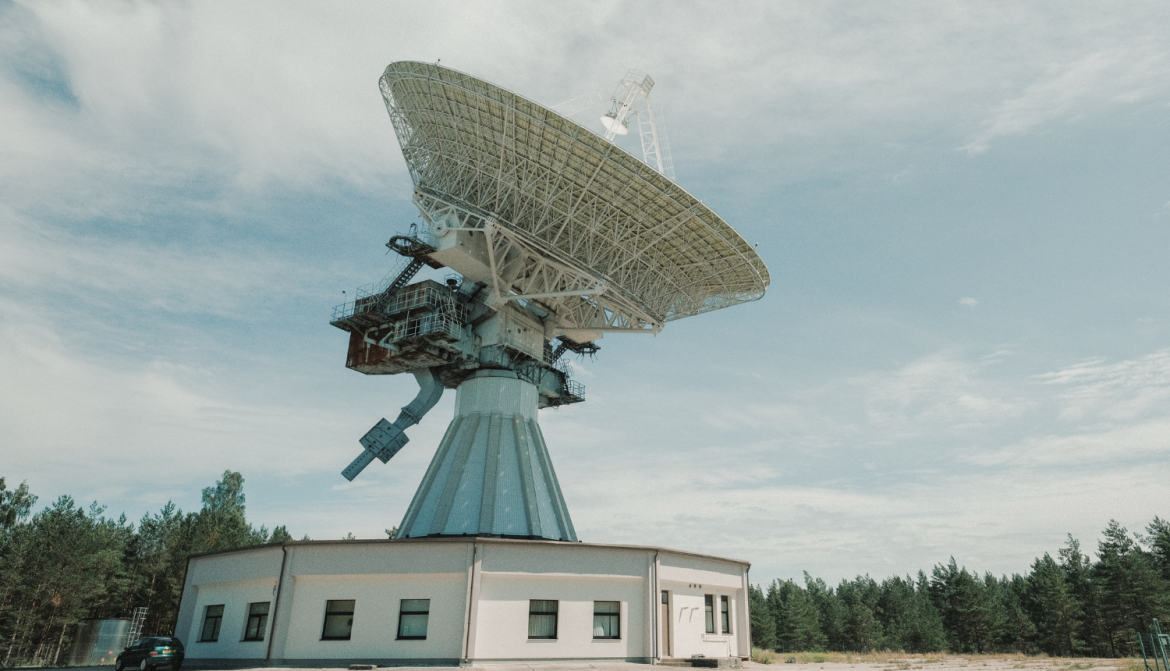
About VUAS VIRAC
VIRAC is a scientific and educational centre implementing high-quality future research services in space technology and signal processing sciences. The Irbene radio antenna complex was established in 1967 as a secret Soviet-era astronomy and communications centre for spying on Western communications. In the summer of 1994, the institute was formed as a unit of the Latvian Academy of Sciences, named "Ventspils International Radio Astronomy Centre". Two years later, VIRAC was reorganized into a state scientific non-profit organization, a limited liability company. In 2004, it was incorporated into VUAS as a university scientific institute.