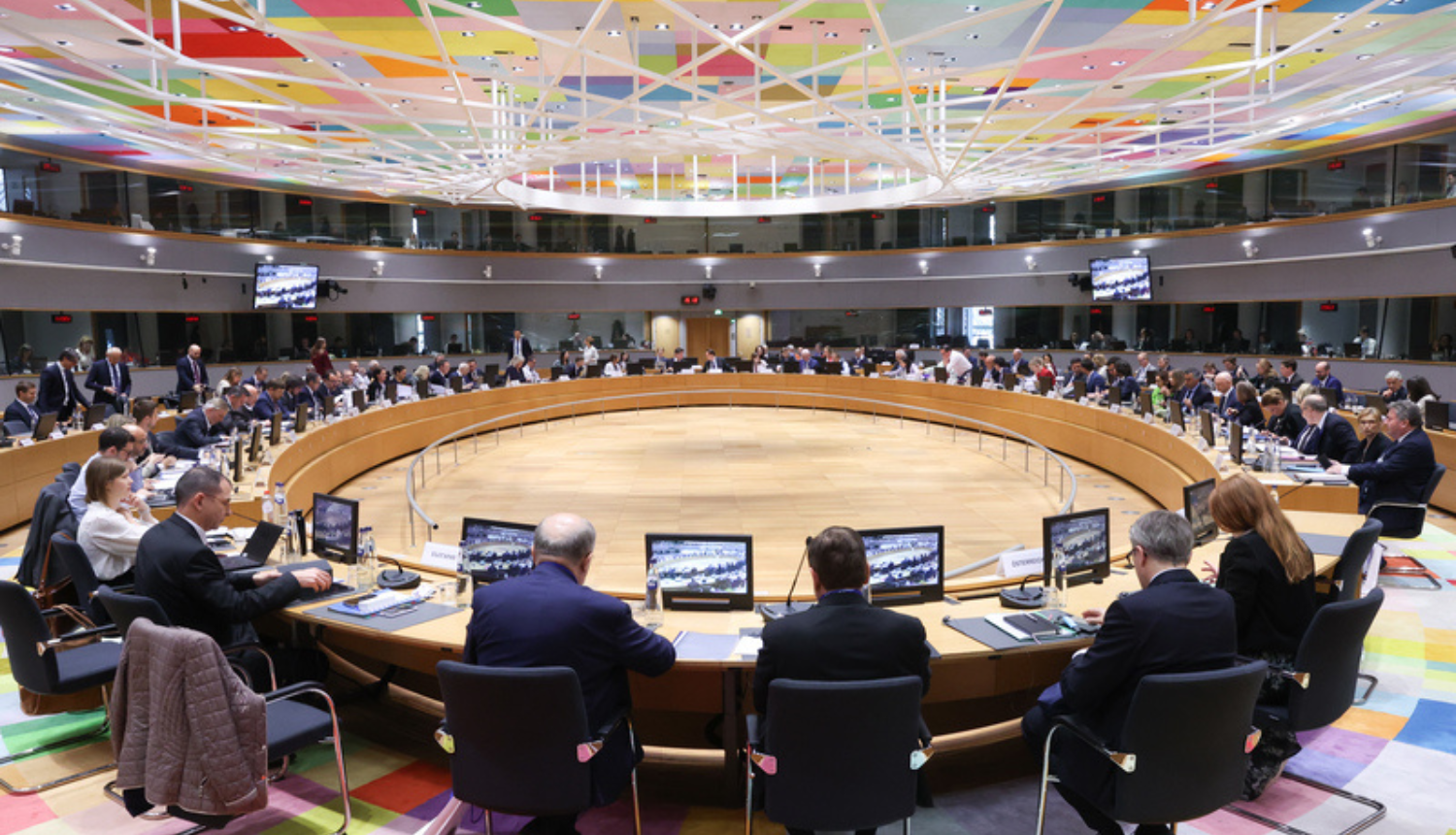
On May 23, 2025, Latvian representatives participated in a meeting of the European Union (EU) Competitiveness Council in Brussels. During the meeting, important issues regarding the development of science, innovation, and space technologies in Europe were discussed, emphasising their importance for public safety, research opportunities, and the accessibility of modern technologies in everyday life.
Deputy State Secretary of the Ministry of Education and Science, Acting State Secretary Jānis Paiders, met with the European Union Space Agency (EUSPA) Director Rodrigo da Costa to discuss current security issues and cooperation opportunities. Latvia emphasised the need to address the problems of satellite signal interference, i.e. jamming and spoofing, and also called on EUSPA to provide technical support in implementing the Government Satellite Communications Service (GOVSATCOM).
During the meeting, the Latvian side informed about the Big Data from Space (BiDS2025) conference, which will take place in Riga from September 29 to October 3, and invited EUSPA to engage in developing the Earth Observation Governmental Service.
At the meeting of the Competitiveness Council's research ministers, a political agreement was reached on the main tasks for the next European Research Area Policy Plan 2025-2027, as well as the adoption of Council conclusions on developing an artificial intelligence strategy in science. The ministers also exchanged views on the mid-term evaluation of the Horizon Europe framework programme for research and innovation. Latvia stressed that it is important to continue efforts to reduce the development gap in the field of research and innovation between the European Union Member States (the so-called "widening participation" instrument) and also called for maintaining funding for international research cooperation in future EU programmes. The issue of reviewing funding restrictions for dual-use technology projects was also raised.
Michal Baranowski, Undersecretary of State at the Polish Ministry of Economic Development and Technology, emphasises: "Space technology is becoming an important pillar of Europe’s security, especially in anticipating threats and managing crises effectively. Ensuring real-time, secure, and reliable access to satellite data is essential."
The meeting of space ministers approved Council conclusions on using satellite data, especially from Earth observation constellations, for civil protection and crisis management. Latvia welcomed the Copernicus Emergency Management Service and expressed its support for the Cassini space entrepreneurship initiative, which strengthens the development of start-ups in the space sector. Promoting user involvement in developing EU space programmes was also emphasised.