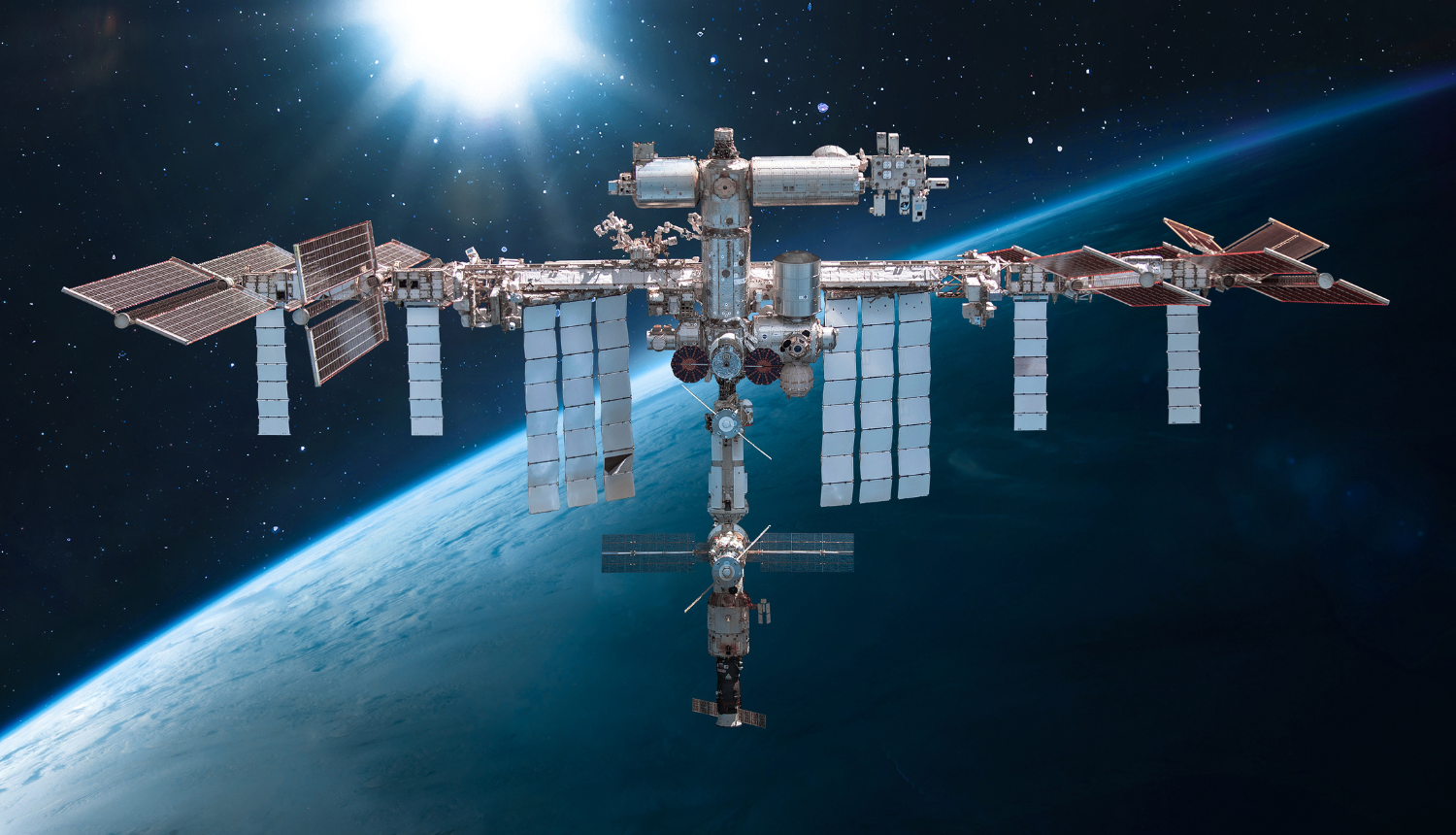
Every euro invested in space programs attracts an additional 2.8 euros in investments, while direct and indirect revenues for every euro invested reach 7.2 euros, and almost half of them, or 49%, are exports, according to data from the European Space Agency. Since 2015, when Latvia cooperated with the European Space Agency, our space technology companies have implemented more than 120 projects, according to information compiled by the Ministry of Education and Science.
The 10 largest recipients of the agency's funding have attracted 8.7 million euros since 2015. From 2021 to 2023, these companies have paid 10.7 million euros in taxes to our state.
In addition to raising funding, our entrepreneurs and scientists are developing solutions that are essential for both space exploration and solving problems here on Earth.
The space technology industry in Latvia is constantly developing, both in research and commercialisation. This area is being developed in several Latvian universities, as well as ideas and companies are being born. In honour of the conference "Deep Tech Atelier" dedicated to science-intensive technologies, the Investment and Development Agency of Latvia has compiled information about Latvian companies working in the space field.
"NRG Solutions" uses space data to assess real estate
"NRG Solutions" uses Earth observation data and geospatial technology to modernise property valuation and assessment. The company's solution provides real estate professionals with remote, data-driven insights, identifying structural and environmental factors that affect the condition of buildings. Unlike traditional methods that rely heavily on in-person inspections and subjective assessments, NRG Solutions offers a scalable and data-rich alternative that improves efficiency and decision-making accuracy.
"NRG Solutions" is the first space technology company to be accepted into the "ESA BIC Latvia" incubation program, Labs of Latvia wrote.
"Bitlake Technologies" develops smart modules for chips for fast and efficient real-time image processing
"Bitlake Technologies" specialises in the development of digital chip components (IP cores) specifically designed for programmable devices used in image processing and computer vision in the space field. In simpler terms, these modules allow for fast and efficient real-time image processing, meaning, for example, a satellite takes an image and analyses it immediately, without transmitting huge amounts of data to Earth.
This technology can be used in several ways, including object detection, such as observing for obstacles or debris in orbit, image recognition, and other space industry tasks that require fast and reliable image processing.
"2AM" produces 3D printing material for the needs of the aviation and aerospace industry
Latvian company "2AM" has developed innovative aluminium, magnesium and scandium alloys and metal matrix nanocomposites, specially adapted for 3D metal printing for aerospace and aviation needs. These materials combine lightness and high strength, allowing the production of large-sized, but lightweight structures, which are essential for both the aerospace and aviation industries.
The main problem that this innovation solves is the need for reliable and efficient materials that can withstand the extreme conditions of space. "2AM" materials provide not only mechanical strength but also improved performance in 3D printing, including defect detection technology, which allows for real-time identification and elimination of potential manufacturing errors. 3D printing also allows for the reduction of production waste, which, in turn, reduces costs and environmental impact.
"Naco Technologies" is developing hydrogen technologies for space as well
As hydrogen technologies are being evaluated and tested for space applications, "Naco Technologies" aims to become a leader in this direction of technology development. The company's solutions will allow for increased durability while simultaneously reducing the weight and size of fuel cell systems, especially those used in Earth-based space activities. The company is currently developing a nano-coated catalyst for fuel cell membranes, Labs of Latvia wrote.
"Deep Space Energy" plans to supply electricity to deep space missions
"Deep Space Energy" is committed to becoming a provider of power in space, providing energy for exploration, industry and life beyond Earth. The company is developing a portfolio of promising early-stage technologies that span a range of space power generation solutions, including advanced solar technologies, radioisotope electric generators, hydrogen storage and nuclear fission power.
"Deep Space Energy" currently owns an early-stage technology concept that provides highly efficient energy conversion in a wear-free dynamic system that can operate for over 20 years without the need for maintenance.
"Nanocraft" joins a space mission to explore comets beyond the solar system
In cooperation with the Latvian technology company "Nanocraft", Ventspils University of Applied Sciences and Tartu Observatory, the photorealistic modelling project "CI3D" has been successfully transferred to the European Space Agency, intended for testing the cameras of the "Comet Interceptor" mission.
The innovation of the "Nanocraft" technology lies in the ability to combine data from various instruments into a single 3D model, which allows scientists to analyse the structure and behaviour of the comet in detail. This approach ensures more accurate mission planning and increases the possibility of obtaining valuable scientific data, wrote Labs of Latvia.
The goal of the "Comet Interceptor" mission is to study for the first time a comet that comes from the outer limits of the Solar System and has not been exposed to the influence of the Sun until now. These 3D models help simulate comet flight scenarios and analyse possible risks, such as collisions with dust particles.
Satellite data in the fight against illegal construction
In 2024, 10 projects with a total amount of 1.58 million euros have been approved in the European Space Agency’s Latvian National Programme competition. One of the supported projects, which will test and then demonstrate the use of satellite data, will be the remote detection of illegal construction activities and irregularities.
If the conclusions of the feasibility study and tests are found to be appropriate, the commercial implementation of the solution will have a positive impact on the national economy, reducing the negative consequences associated with illegal construction and improving the overall reputation of the construction sector.