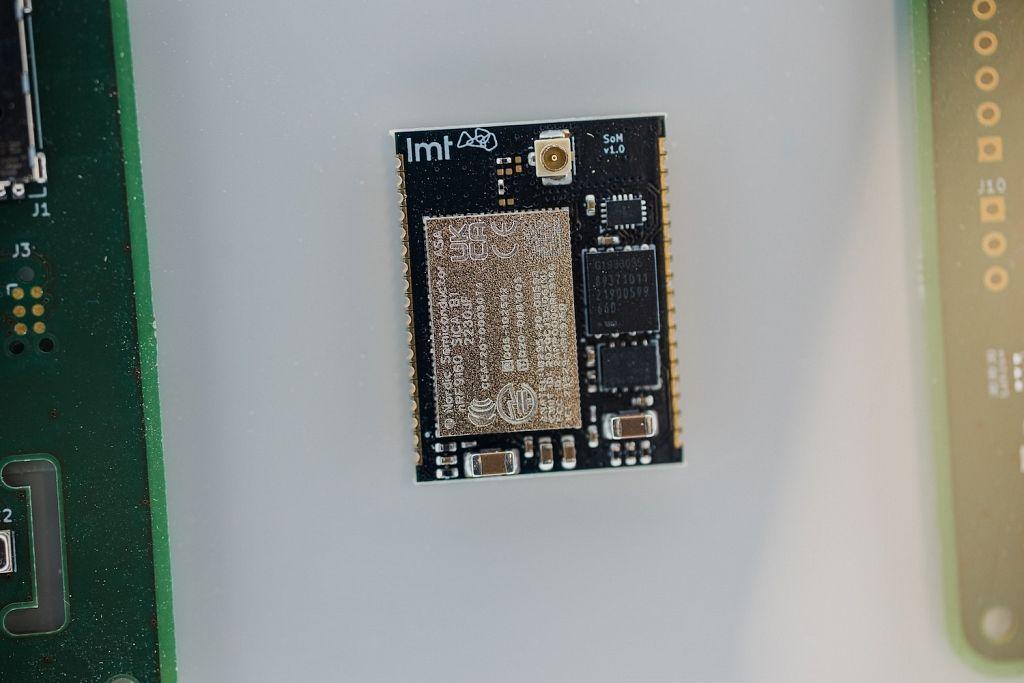
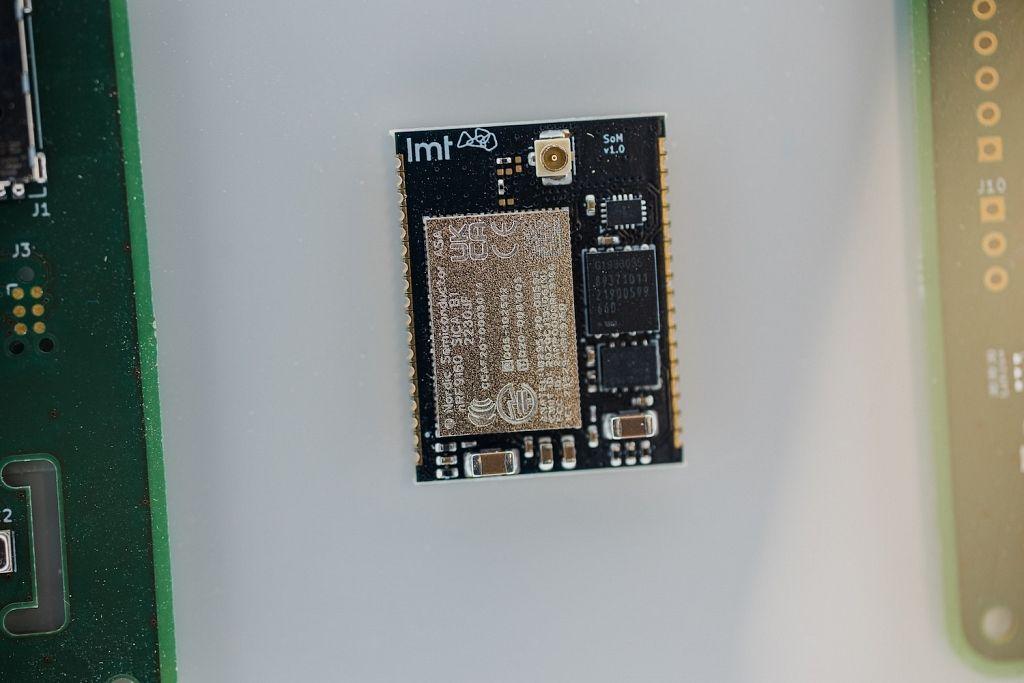
Latvian Mobile Telephone's (LMT’s) Internet of Things (IoT) engineering team has begun producing IoT Shortcut – the world’s smallest mobile data module for sensor devices, offering universal connectivity options for IoT equipment from any manufacturer worldwide.
After the first tests of the module, manufacturers from various sectors in both Europe and the United States have already shown great interest in it.
“LMT Group is driving Latvia’s economic growth with innovative technologies and their export—by not only creating our own devices, but also providing in-demand expertise to global manufacturers. Using our accumulated experience and the knowledge gained in cooperation with other local technology producers, we are now ready to design and manufacture our own technologies, proving that LMT Group has become a strong ecosystem of technology companies. We can be proud that behind every Aer air-quality monitor and IoT Shortcut module stand LMT engineers, analysts, and developers who are creating unique, modern technologies for global use right here in Latvia, bringing the name of Latvia to the world,” says LMT Group President Juris Binde.
Following the initial tests of IoT Shortcut, the module has attracted significant interest from manufacturers in Europe and the U.S., as it enables rapid integration of mobile data connectivity into a wide range of sensor devices. An important added value is the software developed by LMT Group, which automates data processing, integration, and connectivity, and provides cloud services with a customizable client platform and application.
The module is also characterized by very low energy consumption, enabling sensor devices to operate on battery power for up to 10 years. “IoT Shortcut is a comprehensive solution created by LMT Group that allows any device developer to significantly accelerate new product development. Mobile data connectivity is typically one of the most complex and cost-intensive features in device design. This solution gives startups, manufacturers, sensor developers, and IoT device creators the opportunity to focus on the core functionality of their device and simply integrate our module as a component of the final product.
As a result, the development time for IoT devices is reduced from several years to just a few months. At the same time, our technology stands out with a high level of security, as the device components are manufactured in Europe, while data is stored on European servers. This makes it a highly valuable component also for defense and space-exploration technologies,” explains Valters Skrastiņš, Head of IoT Technology Development at LMT.
The module is currently undergoing testing, and discussions are underway regarding collaboration with several Latvian companies, including wireless sensor manufacturer SAF Tehnika, bark beetle activity-monitoring device developer Spruceful, and construction process and structural monitoring equipment producer Adventum Tech, as well as several other partners operating in fields such as animal-health monitoring, agriculture, and maritime industries.
A key step in the international market is establishing cooperation with Europe’s largest chip manufacturer, the German corporation Infineon Technologies AG. Last year, the company achieved a turnover of €15 billion, underscoring its leadership in the European semiconductor market. As part of the collaboration, IoT Shortcut is planned to be integrated into Infineon’s Edge AI solutions, enabling IoT sensor devices to process data locally using artificial intelligence and send only essential information to cloud services.
This approach will reduce the volume of transmitted data, improve device response speed, and extend battery life - significantly enhancing the functionality and efficiency of IoT sensor devices. LMT Group is also in the contract-signing phase with the European Space Agency (ESA) for financing the integration of satellite communication capabilities into the IoT Shortcut module, substantially expanding its potential applications in the future.
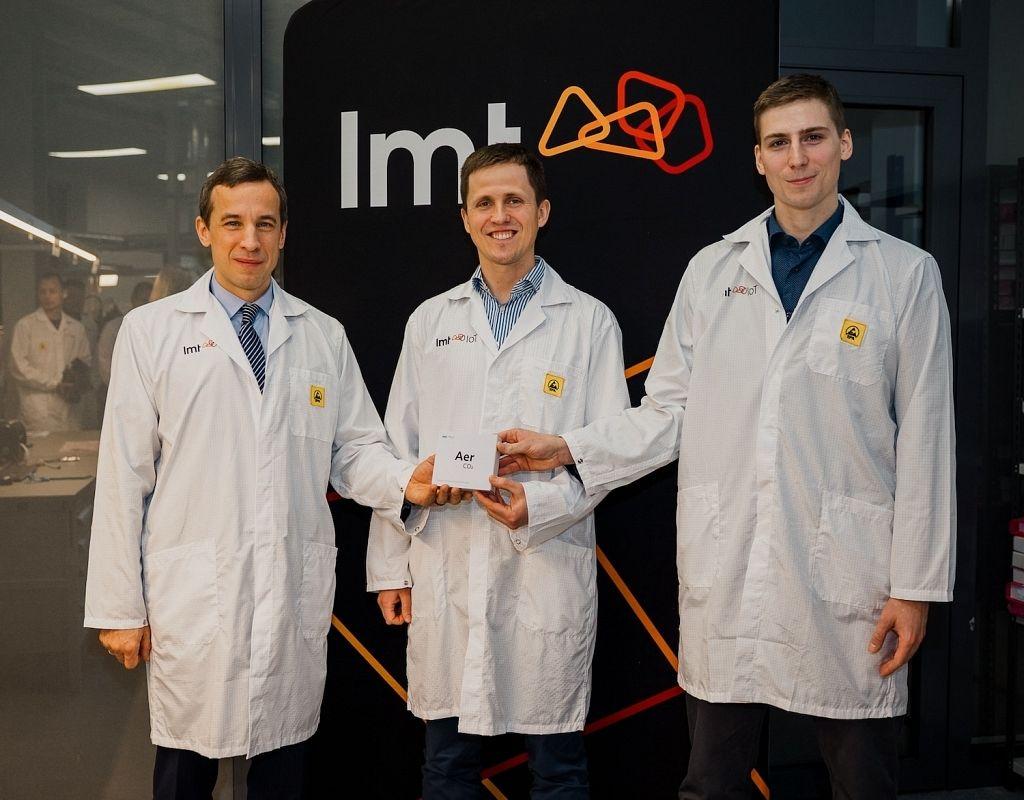
The module has also served as the foundation for the first end-user device produced by LMT Group—Aer, the company’s new line of smart air-quality sensors. The device has been fully developed and manufactured by the LMT IoT team. It offers up to 10 years of operation on a single battery and does not require Wi-Fi or Bluetooth, as data transmission takes place over the mobile network, with connectivity ensured by the LMT Group’s IoT module.
Aer monitors indoor microclimate—including CO₂ and volatile organic compound levels, relative humidity, temperature, and atmospheric pressure - aggregating information in the app and sending alerts to users when air quality deteriorates. The first test batch of devices has already been produced, and after successful testing, the product is expected to reach customers within the next year.