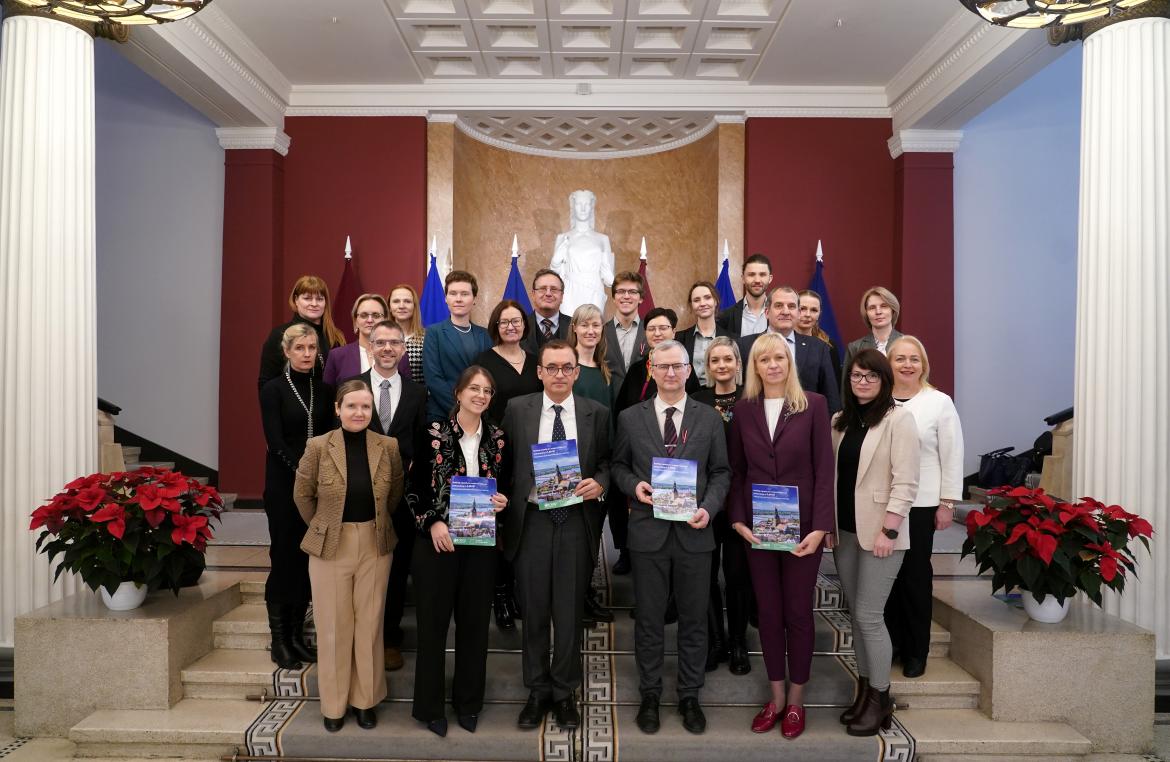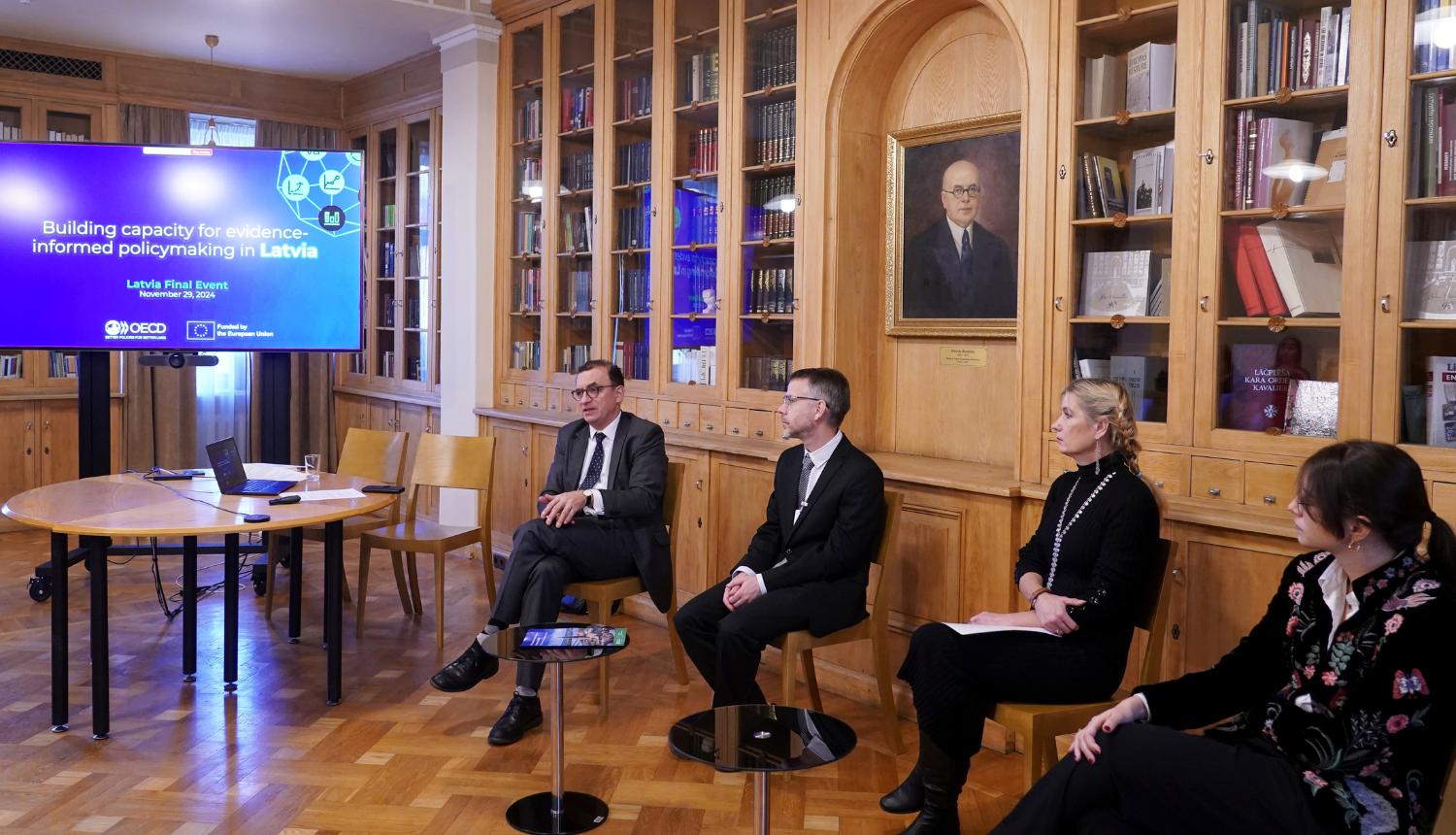
Today, November 29, the Organisation for Economic Co-operation and Development (OECD) presented the key findings of the project "Building capacity for evidence-informed policymaking in governance and public administration in a post-pandemic Europe" and introduced Latvia's final report. The recommendations developed during the project highlight the most significant achievements, identified challenges, and future opportunities to further strengthen evidence-based policy development. The project involved close cooperation between Latvia's leading institutions - the Ministry of Education and Science and the State Chancellery - working together to promote the integration of science into policymaking.
“In recent years, we have strengthened the connection between researchers and policymakers. Since the 2018 reforms, the National Research Programme has proven to be an effective tool enabling ministries to support significant research and receive the necessary evidence to address various policy issues. The Ministry of Education and Science and the State Chancellery will continue to promote evidence-based policymaking by bringing together doctoral school leaders and policymakers to discuss how to encourage policy-relevant research,” stated Silvija Amatniece, Parliamentary Secretary of the Ministry of Education and Science.
The two-year project, involving seven countries, including Latvia, aimed to advance evidence-based policymaking by developing both policymakers' skills to integrate scientific information into the policy development process and enhancing scientists' ability to provide such information to policymakers. The recommendations developed by the OECD offer a wide range of opportunities for future development, including the enhancement of new skills, adapting research outcomes to policy needs, and improving data management.
Evidence-based policymaking involves both the impact of research and its effective use. With the technical assistance of the OECD in cooperation with the EC Joint Research Centre, and financial support from the EC Technical Support Instrument (TSI), this project has provided new insights into how scientific information can be effectively utilized in policymaking. The recommendations aim to overcome future challenges related to bridging the gap between the supply and demand of data-driven knowledge to ensure effective policy development at individual, organizational, and systemic levels among member states.
The recommendations developed by the OECD:
Final-Building capacity for evidence-informed policymaking in Latvia.pdf
openAbout the project
Latvia, together with the OECD and the EC Joint Research Centre, implemented the project "Building capacity for evidence-informed policymaking in governance and public administration in a post-pandemic Europe" during 2023 - 2024. Seven countries participated in the project: Greece, the Czech Republic, Estonia, Lithuania, Latvia, the Netherlands, and Belgium.