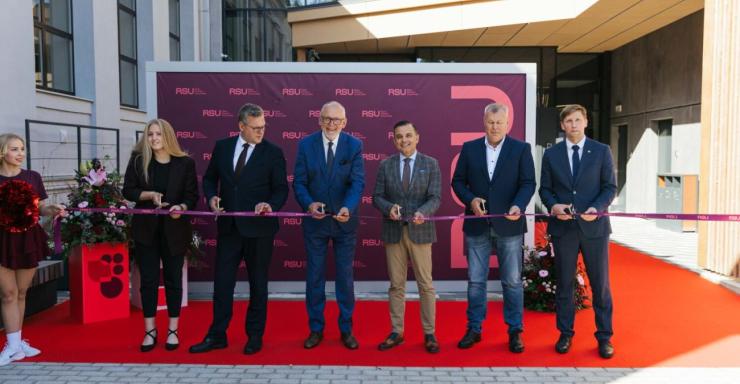
On 1 and 2 August, Latvia will host a stage of the UTMB World Series, Gauja Trail by UTMB, for the first time, bringing together Latvian and international ultra-endurance runners. At the same time, participants in the 50 km and 100 km races will become part of a scientific study that is unique worldwide. Researchers from Rīga Stradiņš University (RSU), in collaboration with colleagues from Riga Technical University (RTU), will analyse the metabolome of ultra-endurance runners for the first time in the Baltic States to determine what happens in the human body at the molecular level during extreme physical exertion and recovery.
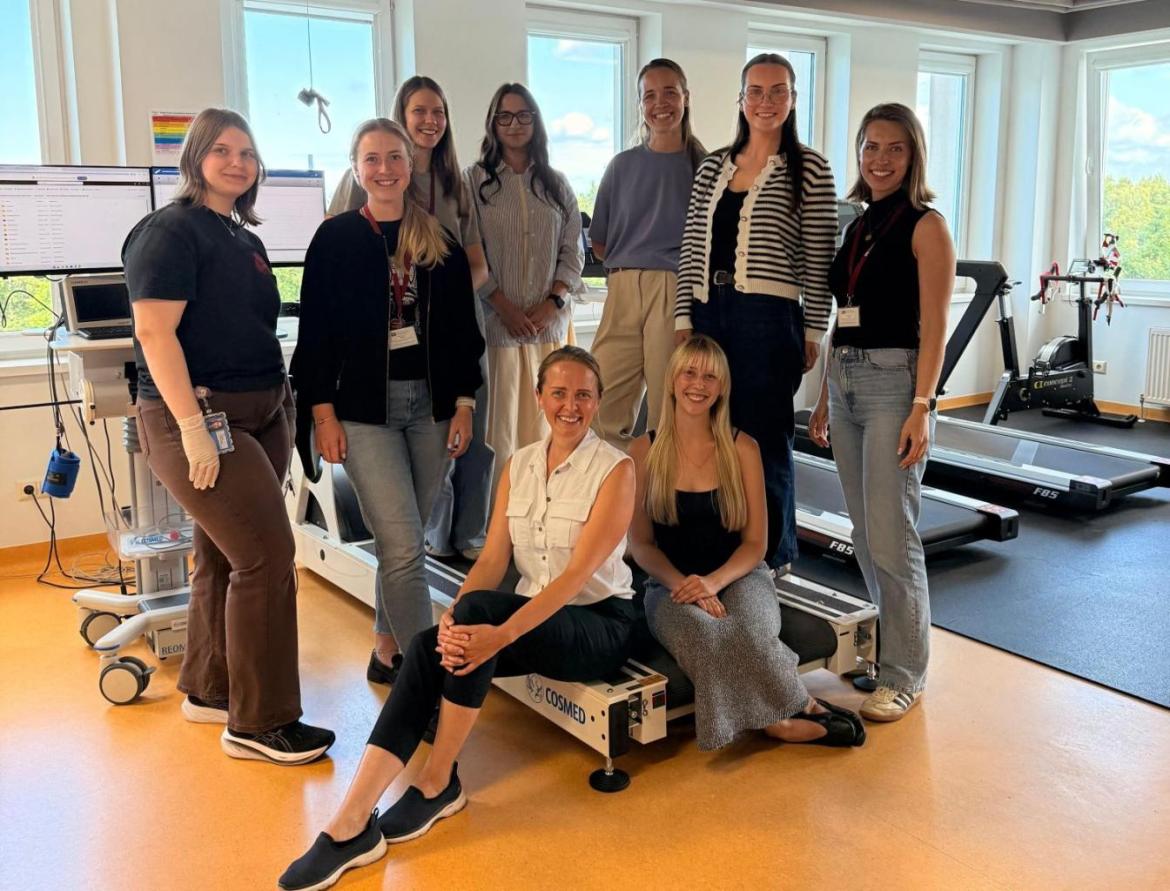
Associate Professor Dace Reihmane, Head of the RSU Sports and Nutrition Research Laboratory, has studied ultra-endurance athletes on several occasions. “An increasing number of people are drawn to the idea of taking part in ultra-endurance events, which offer an escape from everyday life and an opportunity to experience intense sensations. During these events, the body is subjected to enormous physical and mental strain, causing significant changes within it.
This study will be unique worldwide because, for the first time, women will be represented on such a large scale. It will also seek to answer why athletes’ blood glucose regulation changes after ultra-endurance events.”
The Role of Nutrition in the Study
To understand why blood glucose levels are elevated and when they return to baseline, study participants will consume products provided by our partners, AS Rīgas piena kombināts and AS Dobeles dzirnavnieks, before the race and for several days afterwards. RSU researcher and nutritionist Laima Kampa explains: “A strawberry and mango Lakto Probio fermented milk drink together with Herkuless oatmeal porridge is a good light breakfast combination for athletes, as it contains an optimal amount of carbohydrates, protein and fat, providing the energy required for physical activity. Moreover, this meal is also suitable for people who do not normally consume lactose.”
Ilva Veidemane, Marketing Manager at Rīgas piena kombināts: “We support this study because its objective aligns with one of our company’s core values – caring for people’s health. Moreover, the history of Lakto has been closely linked to Latvian science since the brand was established in 1994. The recipe for this fermented milk product is based on a special combination of acidophilus bacteria and bifidobacteria developed by Latvian scientists. It is therefore only natural that we continue to stand alongside Latvian science by supporting research that may provide new and internationally significant insights into how the human body responds to extremely intense physical exertion and recovers from it.”
Maija Brikmane, Marketing Manager at AS Dobeles dzirnavnieks: “Oat flakes are one of the most important products in our range. We are pleased that our products are being used in this unique study. We believe that a science-based approach to nutrition is essential both in professional sport and in everyday life, which is why we are pleased to support initiatives that help improve understanding of the role of nutrition in human health and recovery processes.”
Metabolome Analysis Will Reveal the Body’s Response to Physical Exertion
In addition to continuous glucose monitoring using specially designed sensors, the researchers will investigate the body’s responses to ultra-endurance exercise and a standardised meal by tracking fluctuations in hundreds of different molecules. A broad range of analyses will be conducted in collaboration with E. Gulbja Laboratory, but the study’s novelty lies in the metabolome analysed by RTU researchers – the complete set of molecules found in blood, sweat and urine. RTU early-career researcher and chemist Alise Bērziņa is also taking part in the Gauja Trail by UTMB race.
“The metabolome is like a fingerprint – a unique set of molecules at different concentrations in each individual, reflecting the body’s ability to adapt to physical exertion and providing insight into complex regulatory processes.”
Race Organisers and Participants Are Also Involved in the Research
The study would not be possible without the cooperation of the Gauja Trail by UTMB organisers and research participants. Rimants Liepiņš, the founder of Latvia’s Stirnu buks trail-running series and Race Director of Gauja Trail by UTMB, is one of Latvia’s experienced ultra-endurance runners. “Hosting a UTMB World Series event is a sign of confidence in Latvia and, at the same time, a very tangible responsibility. We want participants and spectators to take away memories of the Gauja River valley, Cēsis, Sigulda and Līgatne, of our nature and people, and of our ability to conduct world-class science. If we deliver the event with precision, safety and respect for the environment, its significance will extend beyond sport and science – to the region, tourism and Latvia’s international image.”
Principal investigator Dace Reihmane is immensely pleased with the responsiveness of the study participants. “A total of 220 long-distance runners expressed interest, but we were able to confirm only 60 participants for the study because the preparatory work includes time-consuming tests – the assessment of maximal exercise capacity and body composition analysis.”
Kalvis Silgals, President of the AAK Surikati club, was included in the study at the last moment. “I run and plan to continue doing so for a long time. That is why I arrange a health check-up for myself once a year, despite the fact that it is quite expensive nowadays. I learned about the study at Bukmežs and applied without hesitation. The free tests were a major motivation. Moreover, and no less importantly, I wanted to take part in the making of sports science history.”
Meanwhile, paediatric surgeon Marija Kraule hopes to gain a better understanding of metabolic processes during an ultramarathon and contribute to the development of science-based solutions for improving athletes’ health and performance.
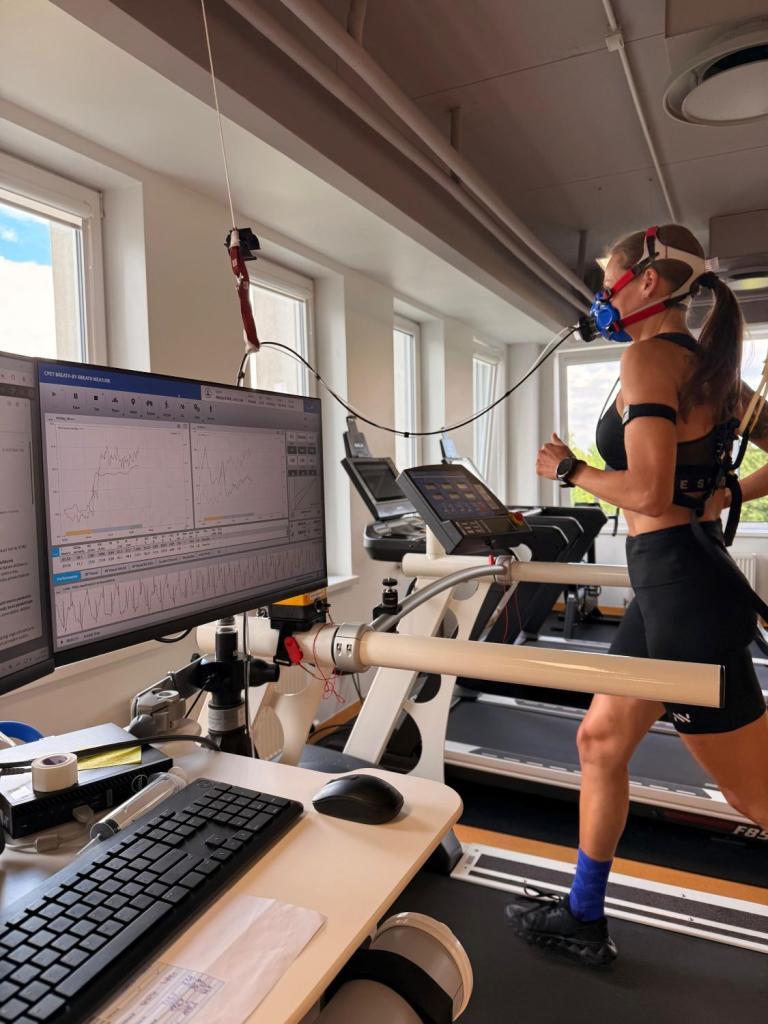
“My experience in events of this kind provides an opportunity to obtain valuable data both for myself and for the research team. In the future, this may help athletes and specialists prepare more effectively for ultra-distance events and recover afterwards,” says Marija Kraule.