To maintain a stable electricity supply after the Baltic States disconnect from the unified power grid with Russia, a system and a prototype device have been developed at the Institute of Industrial Electronics, Electrical Engineering and Energy Systems of Riga Technical University (RTU). The system detects grid disturbances early and mitigates them, thereby reducing the risk of power outages.
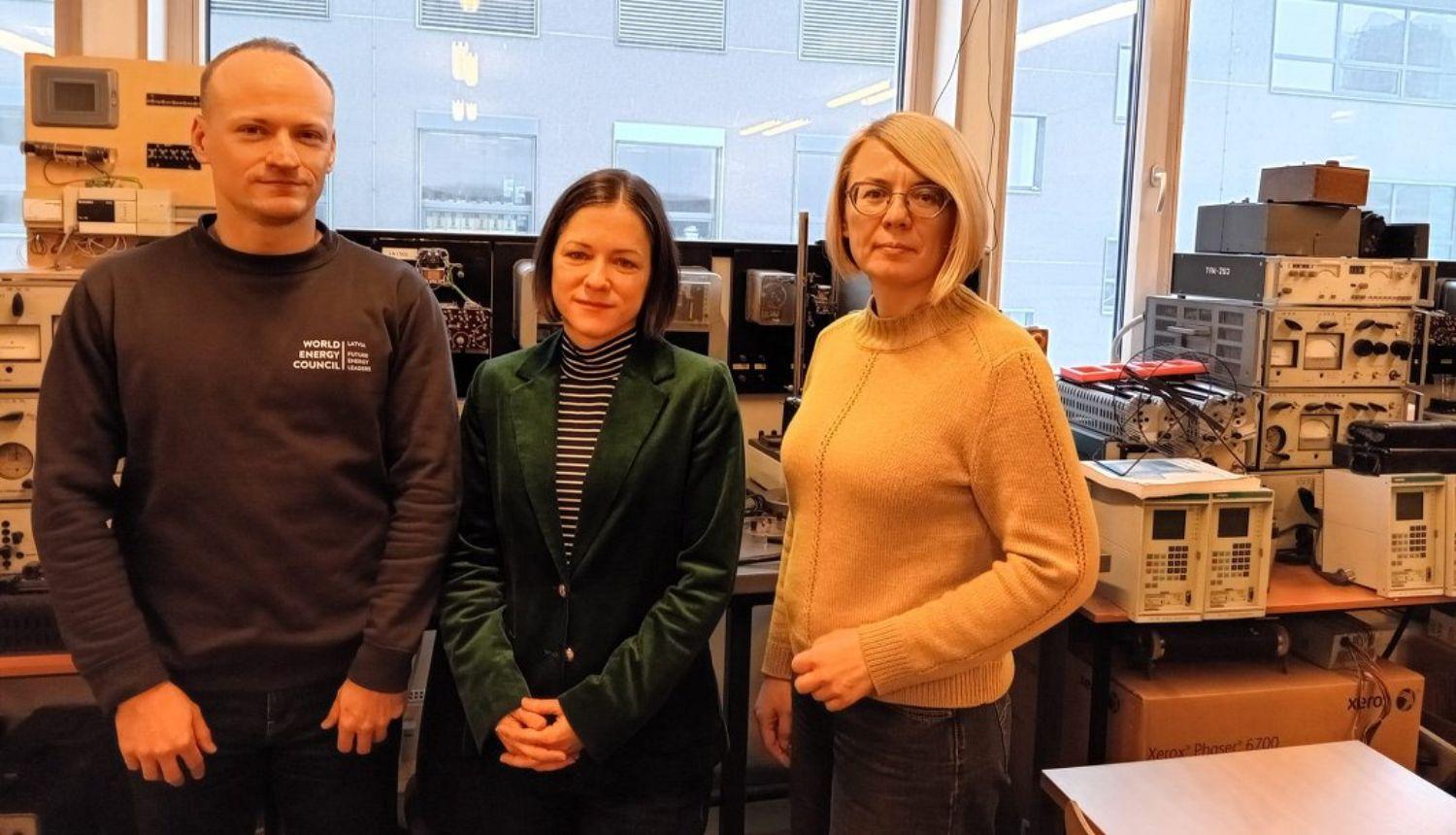
"One 330-kilometre transmission line that Latvia had with Russia has been disconnected. Estonia and Lithuania had more such lines. Thus, synchronisation of electricity from the eastern side no longer exists. We have one transmission connection between Lithuania and Poland that ensures synchronous operation. If this line is disconnected, either due to unplanned outages or scheduled maintenance, the Baltic States must be able to operate in an isolated mode. One could say that, as an ‘island’," explained the Institute’s leading researcher, Kārlis Baltputnis, emphasising why it is essential to prevent power supply disturbances.
To ensure a stable electricity supply, three synchronous compensators have been installed in each of the Baltic States. These regulate grid frequency by counteracting excessive electricity consumption. In addition, two high-capacity battery systems have been installed in Rēzekne and Tume, which store electricity when the grid has a surplus. Similar battery systems are also in operation in Lithuania.
The aforementioned synchronous compensators aim to stabilise power and frequency in the energy system. Frequency is the key indicator of system stability. Under normal conditions, frequency should remain at 50 hertz. If less energy enters the grid than is required, the frequency level decreases.
Leading researcher Diāna Žalostība explained that a drop in frequency is hazardous to various electrical devices and to the entire power supply system. The compensators detect the frequency decrease and begin disconnecting the load from the grid, but until now, they have done so too late, only once system collapse has already started.
RTU researchers have developed a method that enables prediction of a frequency drop and a response time of just 100–200 milliseconds.
"During an авария, dynamic processes develop within milliseconds, so these solutions must be speedy. Naturally, they must be automatic, because humans are unable to react within such timeframes," said Žalostība.
The researchers have created a prototype device that not only collects information from compensators about power loss and performs calculations, but also reduces the rate of frequency decline and stabilises it within acceptable limits. The prototype is planned to be installed for testing at one of the substations of the transmission system operator “Augstsprieguma tīkls”.
Leading researcher Kārlis Baltputnis added that load balancing is necessary not only in emergencies, but also in everyday operation. An imbalance between electricity supply and demand can arise for a wide variety of reasons, including weather conditions and inaccurate consumption forecasts. Until now, such situations were addressed by large, powerful power plants capable of increasing output when needed. However, a modern solution is the aforementioned high-capacity batteries. That said, they can supply only as much electricity as they have stored.
"What we have developed at the Institute in cooperation with ‘Augstsprieguma tīkls’ is a control system for these batteries, to ensure that the state of charge is always continuously maintained within safe, acceptable limits. This allows us to sustain the necessary balancing process over long periods, in whichever direction it is required, even under essentially the worst conditions," Baltputnis explained.
The batteries have been equipped with the researchers’ system since last autumn, thereby ensuring the electricity reserves required for Latvia. This system is also fully automatic.
The solutions proposed by RTU researchers are critical because an increasing share of energy is being produced from renewable sources.
“However, this creates new risks for the operation of the energy system, because solar and wind are not constantly available resources. Therefore, we must develop solutions that help ensure energy supply even when these resources are unavailable. On the other hand, even when solar and wind power plants are generating electricity, the physical characteristics of these energy sources do not provide the same stability as traditional conventional generators,” said leading researcher Zane Broka.
For example, when producing electricity from gas, it is possible to generate exactly the amount needed, and it also provides the energy system with the necessary inertia, whereas output from renewable sources is less predictable.
"This can be compared to a group of cyclists all riding toward a destination in a shared rhythm; if one cyclist drops out of that rhythm, it can cause disturbances in the overall energy system," Broka explained.
When the Baltic States were still connected to the Russian energy grid, such problems did not arise, because the shared system had enormous inertia reserves.
The solutions proposed by the researchers to improve the security and self-sufficiency of the Baltic power grid have been recognised by the Academy of Sciences as one of Latvia’s scientific achievements of the past year.