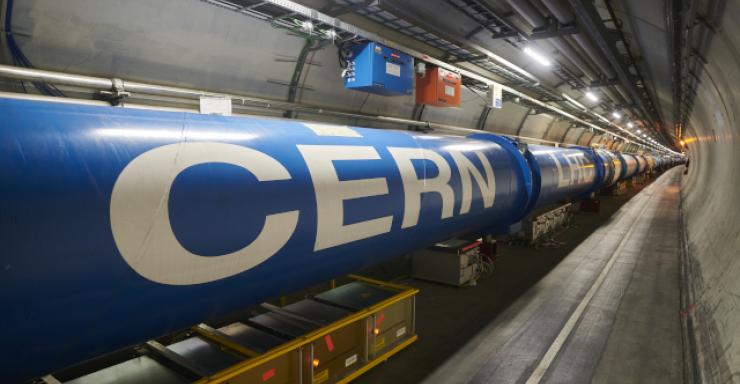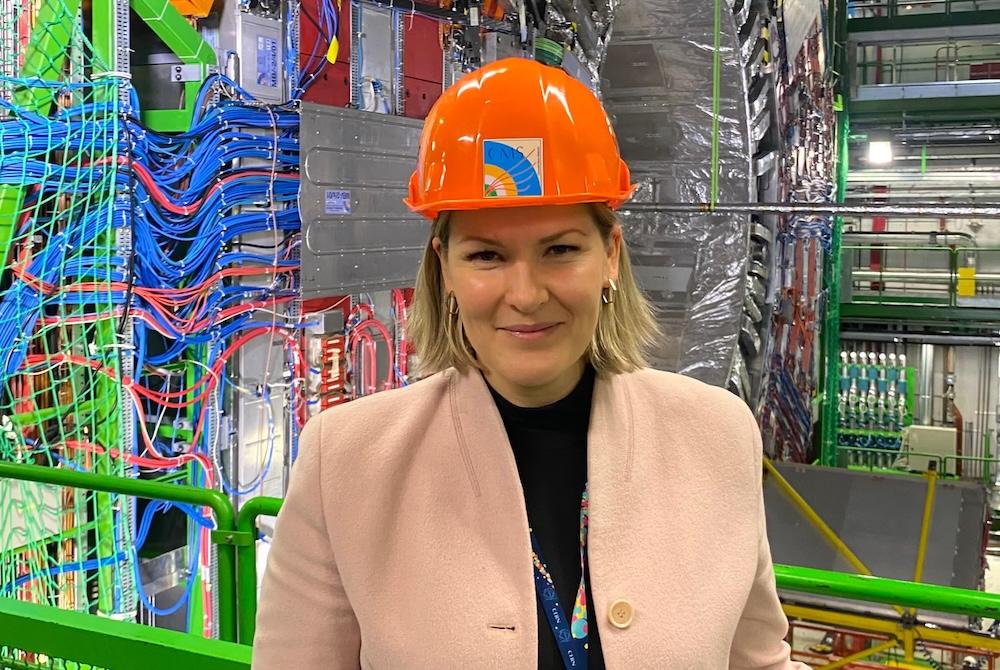
In just a couple of years, the number of Latvian companies in the supplier database of the European Organization for Nuclear Research (CERN) has more than doubled – from 32 to 78. Latvian companies are also achieving strong results in fulfilling CERN orders and in pilot projects. For example, “Sorsera” is currently developing an agentic artificial intelligence solution in a pilot project, which could be introduced in CERN procurement and supplier engagement processes.
Large European scientific organisations such as CERN and the European Space Agency are engineering‑intensive and extremely costly infrastructure laboratories. For this reason, several countries jointly invest in their creation and maintenance — no single country could afford them alone. However, Latvia’s industry representative at CERN, Alise Pīka‑Ozola, emphasises that financial contributions are not enough — a country must also have the necessary scientific capacity. Since 2021, Latvia has been an associate member of CERN, and reaching this goal took many years of building and strengthening national expertise in particle physics. Latvia plans to become a full CERN member state in 2029.
“Once you are already an associate member of CERN, CERN becomes Latvia’s laboratory — I can speak to CERN colleagues as a full partner. CERN encourages this, stressing that this is our laboratory and inviting us to explore all available opportunities,” says A. Pīka‑Ozola.
A. Pīka‑Ozola holds three roles — in addition to leading the Latvian Innovation and Technology Representation in Geneva, she has three mandates from the Ministry of Education and Science: representing Latvia on the CERN Finance Committee, serving as Latvia’s industry liaison officer, and acting as the national delegate in the knowledge‑transfer forum.
“During these two years on site at CERN, my main task has been to increase understanding among Latvian companies about CERN and how to participate in procurement and R&D projects of such a large organisation. And vice versa — to raise CERN’s awareness of Latvian sectors and knowledge‑intensive companies that can take part in tenders and projects. This has been quite successful — the number of Latvian companies in the CERN supplier database has more than doubled,” she explains.
She also organises visits for Latvian companies to CERN — and these visits give participants a completely new understanding of what this major organisation actually does. “Creating this position on behalf of the state was a very wise and forward‑looking step. Being present on site gives many advantages — not all countries have their own representatives here. By being here daily, I can learn precise information about upcoming projects and procurements, far beyond what is written in technical specifications online. Only by speaking directly with the specialists involved can you understand the real needs,” she adds.
Collaboration takes many forms
CERN works with companies in several ways — through procurements, pilot projects, and direct orders. The organisation’s annual budget is around €1.5 billion, half of which is allocated to procurement. However, the procurement process can be long and complex. Over the past two years, Latvian companies have secured more than €600,000 in CERN tenders.
“At first glance, this may not seem like a large amount, but one must remember that companies — and Latvia as a whole — gain invaluable knowledge through this process,” stresses A. Pīka‑Ozola.
Before major procurements, CERN often launches pilot projects, which are an excellent entry point for small companies. Of course, pilot project budgets are smaller. Sometimes collaboration happens without financial compensation — both sides work as partners, and the company can test its solution in unprecedented conditions. “This is mutually beneficial,” she notes.
Because Latvia is still an associate member, opportunities to participate in large‑scale procurements are limited. Currently, most activity comes from precision machining and metalworking companies that can fulfil orders up to €50,000. For example, a Latvian company recently began working with CERN by providing a specialised metalworking service involving fibreglass — an opportunity identified thanks to on‑site conversations. “This is the advantage of being here — during a coffee break I can learn exactly what colleagues are looking for and help find a supplier in Latvia,” she explains.
Procurement opportunities remain limited
As Latvia is still an associate member, Latvian companies may only participate in procurements up to the amount Latvia contributes annually to the CERN budget. This significantly limits access to large‑scale tenders.
“Latvia currently contributes around 1.06 million Swiss francs per year, and most of this goes toward salaries for Latvian researchers and staff at CERN, reducing the amount available for industrial return. This will change once Latvia becomes a full member state — the procurement ceiling will disappear,” says A. Pīka‑Ozola.
To ensure fair returns for all member states, CERN monitors participation levels and uses a restricted procurement mechanism to support companies from under‑represented countries. If two companies from different countries submit equivalent bids, preference may be given to the company from the country with lower procurement returns that year.
“This is a major challenge — maintaining competition while also ensuring fair distribution. That’s why CERN stays in close contact with national representatives to understand what each country can offer,” she explains.
Learning what is not yet public
One of the achievements A. Pīka‑Ozola is most proud of is the Latvian startup Sorsera and its pilot project developing an agentic AI solution for CERN’s procurement and supplier‑engagement processes.
“I had heard that CERN wanted to use AI tools to improve procurement efficiency. I also knew that Sorsera was developing a procurement‑management solution. So I decided to introduce them,” she says.
It took time to understand CERN’s needs — which had not been publicly announced — and to arrange meetings. “Sorsera had analysed the available data and prepared a demo version of their solution, which CERN representatives could test during the very first call. I am especially proud of Sorsera. I hope this pilot project will eventually become a full procurement,” she adds.
A long‑term investment
Representing Latvia at CERN and speaking with many companies, A. Pīka‑Ozola has observed that Latvian companies often hesitate to invest in R&D unless they see guaranteed returns in the near future.
“This is a major challenge — you cannot expect immediate financial results. It is a long‑term investment,” she emphasises.
She notes that EU funding will increasingly prioritise innovation. This means companies will, in a sense, be compelled to engage in innovation and advanced technologies if they want access to EU funding and participation in future value chains.
At the same time, she sees a positive trend — many Latvian companies recognise the potential of science and are ready to develop knowledge‑intensive technologies with commercial applications. “And it pays off — increasingly serious investors are coming to TechChill and Deep Tech Atelier, because Latvia is becoming known as a place where companies develop deep‑tech solutions. As an associate CERN member state, Latvia and its companies are seen as serious technology developers and innovation partners, not just suppliers. A good example is the upcoming joint Nordic‑Baltic stand at the Big Science Business Forum 2026,” she says.
CERN also collaborates with startups through its CERN Venture Connect programme, which allows companies to use CERN‑developed technologies in new products.
“The conditions are quite friendly — once a startup reaches €1 million in turnover, CERN requests 2% equity, while providing expert support and access to a venture‑capital network. CERN’s goal is not to profit from these technologies, but to ensure they benefit society,” she adds.
More about opportunities at CERN and other scientific organisations will be discussed at the Deep Tech Atelier panel “Inside Access: How Deep Tech Startups Actually Break into CERN, ESA & EU Funding Systems”, taking place on 14–15 May in Riga.