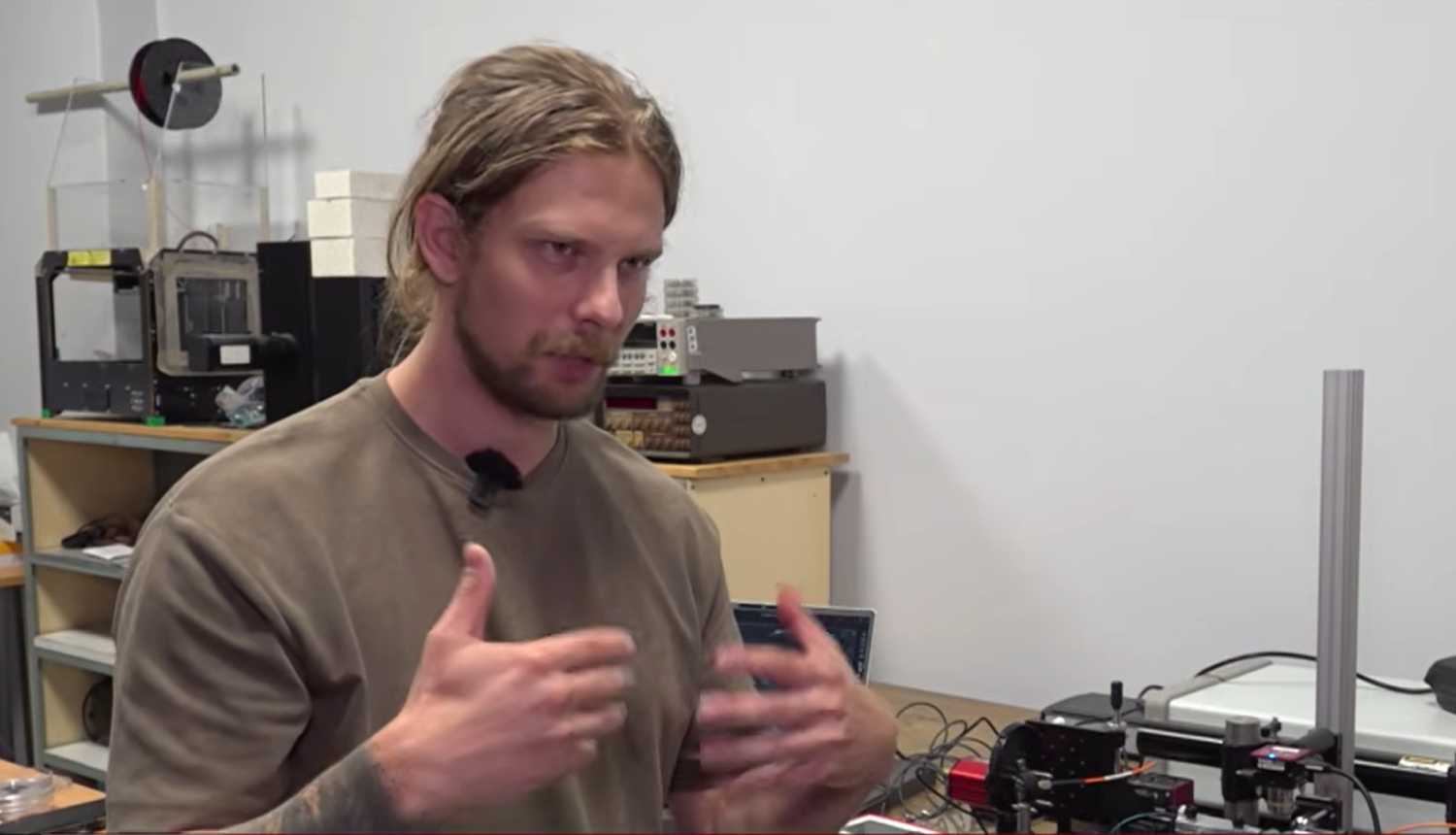
Technology is being developed in Latvia to improve data security

Author
Latvian Television / Latvian Council of Science

September 7, 2026

science science communication
 

Traditional electronic microchips are rapidly approaching their physical limits, but researchers at the Institute of Solid State Physics, University of Latvia (ISSP UL), are already working on a solution. A Latvian Television report highlights the scientists’ work on next-generation photonic microchips – an innovation that is rapidly gaining widespread recognition due to its potential to improve data processing and transmission in both current and future technologies.
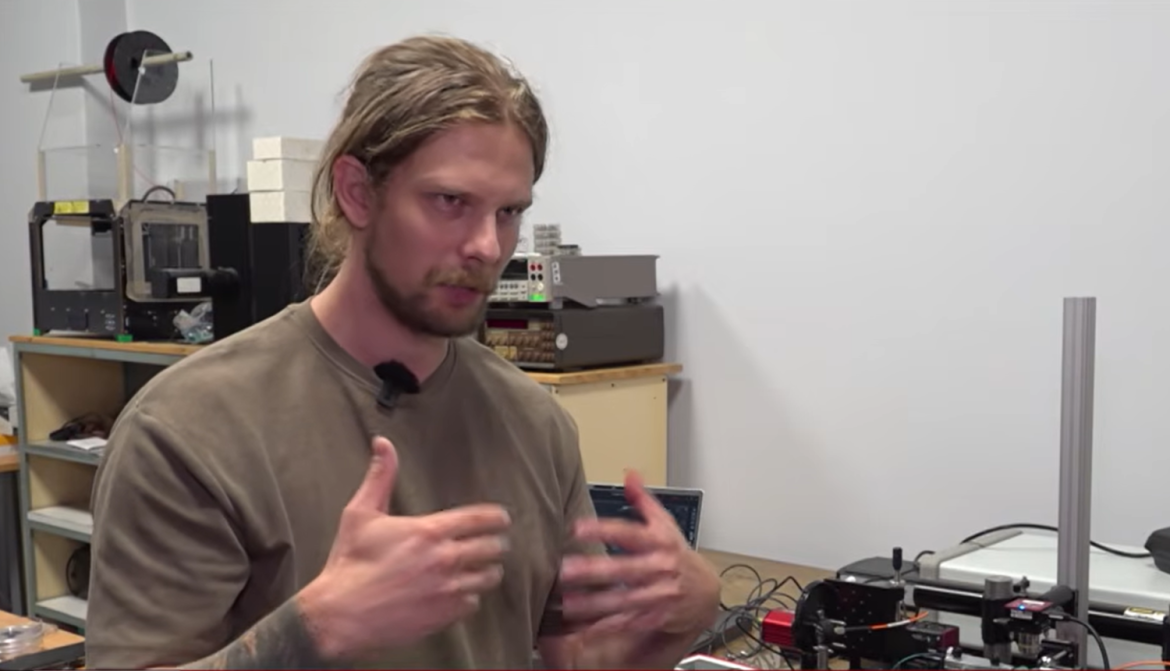
 LU CFI vadošais pētnieks un “BioPhoT” platformas “Phipic” projekta vadītājs Arturs Bundulis

In the news report, Arturs Bundulis, Leading Researcher at ISSP UL and Head of the “Phipic” project on the “BioPhoT” platform, explains how the research team replaces standard electrical signals with light, enabling data transmission at unprecedented speeds.

By integrating microscopic optical fibres directly onto the surface of the microchip, researchers can use different colours of light as parallel data streams.

“Instead of having one electrical signal carrying information, you have the entire rainbow, which can carry information in parallel,” Bundulis notes.


Beyond data processing speed and the potential for significantly faster internet and streaming services, this technology has two major advantages over traditional electronics:

  • Unlike the ones and zeros of electrical signals, which are easy to read, the laws of physics prevent information encoded in a photon’s polarisation from being copied, thereby providing a new level of cybersecurity.
  • Light transmission generates far less heat than the use of electricity, significantly reducing the need for energy-intensive cooling systems, for example in data centres.
 

The first prototypes of these next-generation microchips have already been developed and are currently being tested. “In principle, we are pioneers in Europe and, one might say, also in the world in trying to build such microchips,” Bundulis emphasised. As this innovative and economically viable technology becomes increasingly relevant, the “Phipic” project continues its work to make the future of “light-based computers” a reality here in Latvia.
Recommended articles

science communication natural sciences humanities and arts

European Researchers’ Night 2026 will take place across Latvia on 25 September

At European Researchers’ Night events, everyone will have the opportunity to discover science up close. In a single evening, more than 35 locations across Latvia will offer the chance to meet researchers, get a glimpse into the everyday world of science, and take part in experiments, workshops, dem…

Latvian Council of Science/Research Latvia

September 4, 2026

science

Three Latvian researchers become laureates of the prestigious “Baltic Fellowship for Women in Science” in 2026

In Latvia, three young researchers – Arta Bārdule, Vanda Haferberga, and Aļisa Ponkratenkova – have become laureates of the “Baltic Fellowship for Women in Science 2026” competition. The initiative is implemented by the Latvian Academy of Sciences (LAS) and the Latvian National Commission for UNESC…

Latvian Academy of Sciences

September 4, 2026

science communication

The Travelling Exhibition “Research Latvia 2026” on Display at The Institute of Electronics and Computer Science (EDI) and the University of Latvia Riga 1st Medical College

The travelling exhibition “Research Latvia 2026”, created by the Ministry of Education and Science, offers a unique opportunity to discover 12 outstanding Latvian scientists and their contributions to the development of society and research. In May, the travelling exhibition and the science calenda…

researchLatvia

September 1, 2026

science communication

Meet the Young Scientist! – An Interview with Dāvis Dūcis

Dāvis Dūcis is a doctoral student and research assistant at the Faculty of Medicine and Life Sciences of the University of Latvia (UL). Dāvis works at the Latvian Collection of Microorganism Cultures, and his doctoral research focuses on whey valorisation using wild-type microorganism strains. Dāvi…

The Latvian Association of Young Researchers

August 25, 2026