A unique project, “Development of CO₂ Cycle Monitoring in Natural and Degraded Peatlands”, has been launched, marking a significant milestone in Latvia’s progress toward science-based and transparent carbon accounting. The project aims to establish a next-generation Eddy Covariance monitoring network in Latvia, enabling the measurement of carbon dioxide (CO₂) fluxes in natural and human-impacted peatlands. This method provides direct and continuous measurements of CO₂ exchange between the land surface and the atmosphere, delivering high-precision data on greenhouse gas dynamics.
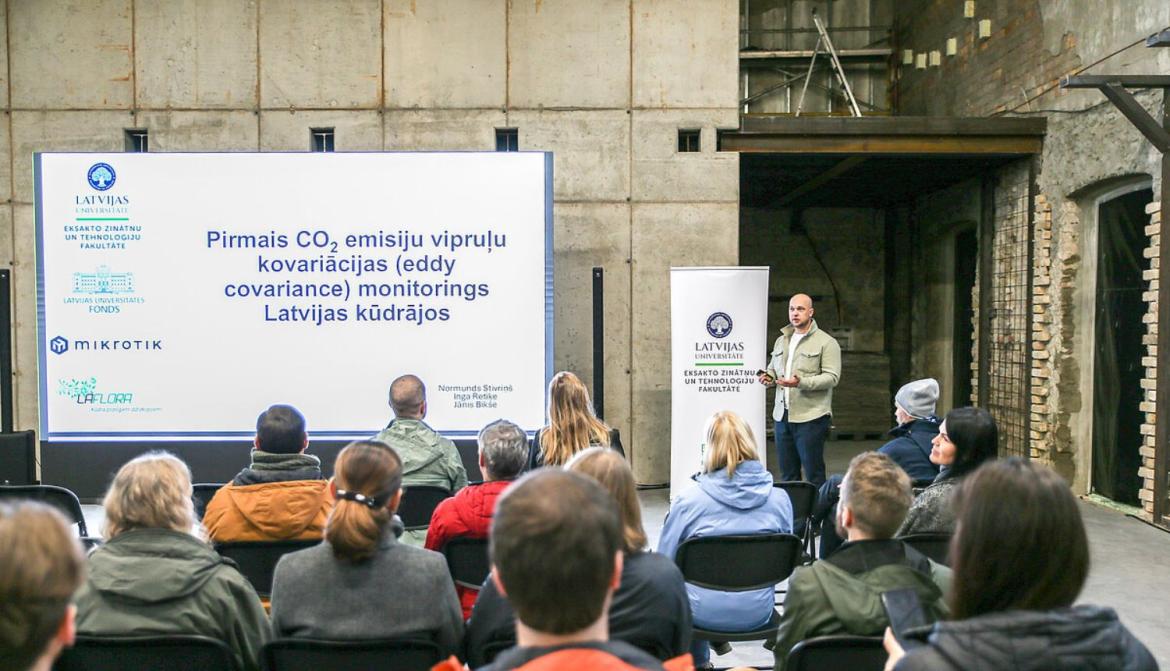
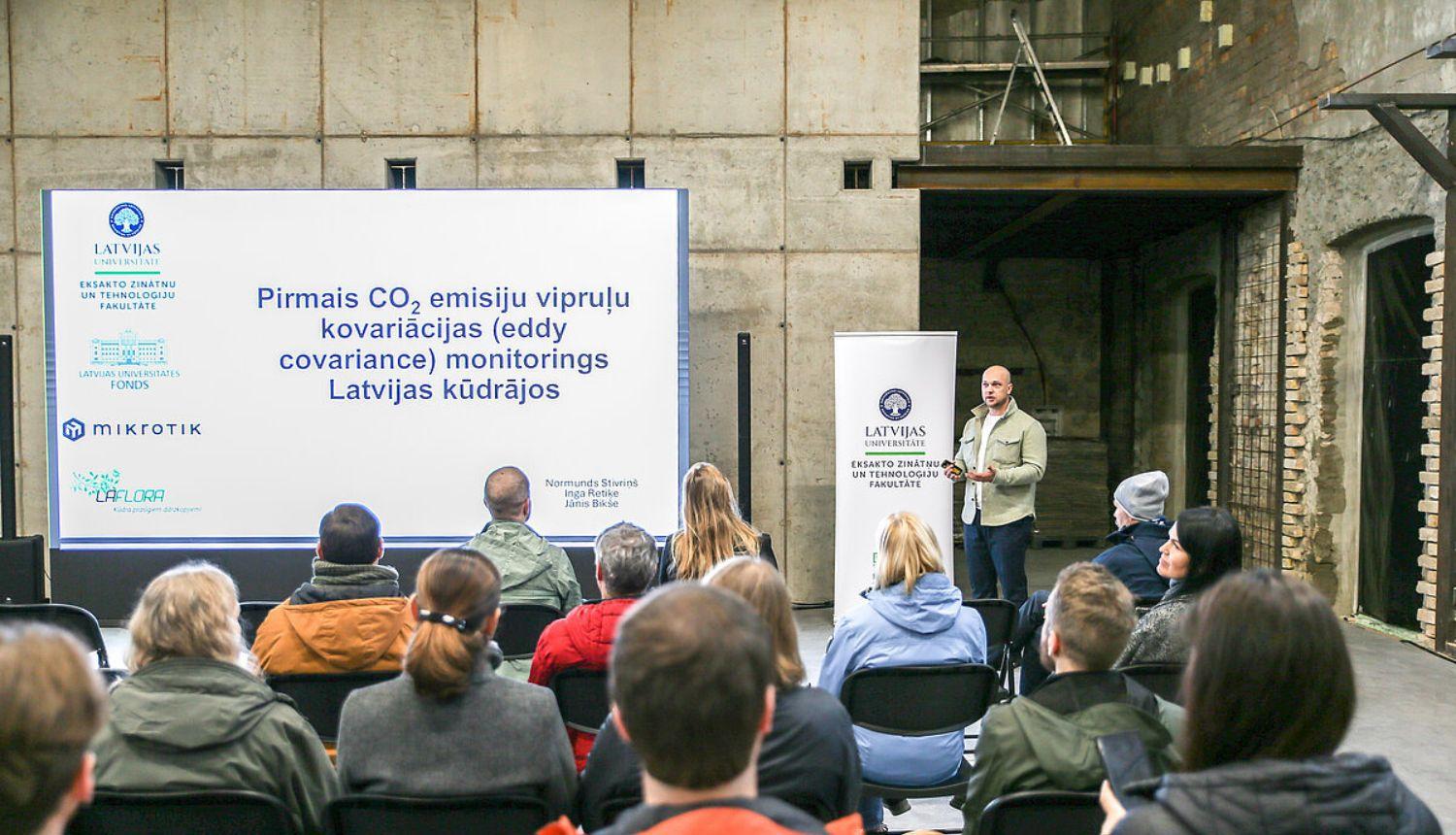
At the project’s kick-off meeting on 14 November at the Kalnciems Peat House, project implementers and stakeholders gathered to learn about the operation of the new equipment and to discuss data integration into national greenhouse gas inventory processes, as well as sustainable resource-management solutions for Latvia. SIA “Laflora” has signed a cooperation agreement with the University of Latvia to install one of the devices at the “Drabiņi” peat extraction fields, demonstrating the peat industry’s commitment to mitigating climate change.
“Direct emission measurements using Eddy Covariance technology are a vital step toward science-based and transparent carbon accounting in the peat sector. We are proud that Latvia is the first in the world to begin operating this type of equipment, strengthening our country’s position as an innovation leader in the field of natural resource sustainability,” says Uldis Ameriks, Chairman of the Board of SIA “Laflora”.
During the meeting, the research team emphasised that peatlands are an integral part of Latvia’s landscape and economy, yet emission estimates have so far primarily relied on general international guidelines rather than direct measurements tailored to Latvia’s conditions. This is precisely why the introduction of the new equipment marks a vital breakthrough: the Eddy Covariance method ensures the highest-reliability CO₂ flux measurements, recognised by both the IPCC (IPCC Guidelines for National Greenhouse Gas Inventories) and the World Meteorological Organisation. The new technology enables assessment of how much CO₂ is emitted into the atmosphere from peat and how much is absorbed, creating an entirely new body of data and an understanding of processes previously undocumented in Latvia.
Project leader Professor Normunds Stivriņš of the University of Latvia (UL), Faculty of Sciences and Technology (FST), Department of Geology, highlights: "Thanks to the support of the UL Foundation and SIA ‘Mikrotīkls’, we can begin measurements that were previously impossible in Latvia. This cooperation with companies allows us to apply scientific methods in real production environments and promotes the accumulation of data needed for both national and international-level emission inventories and climate-target achievement."
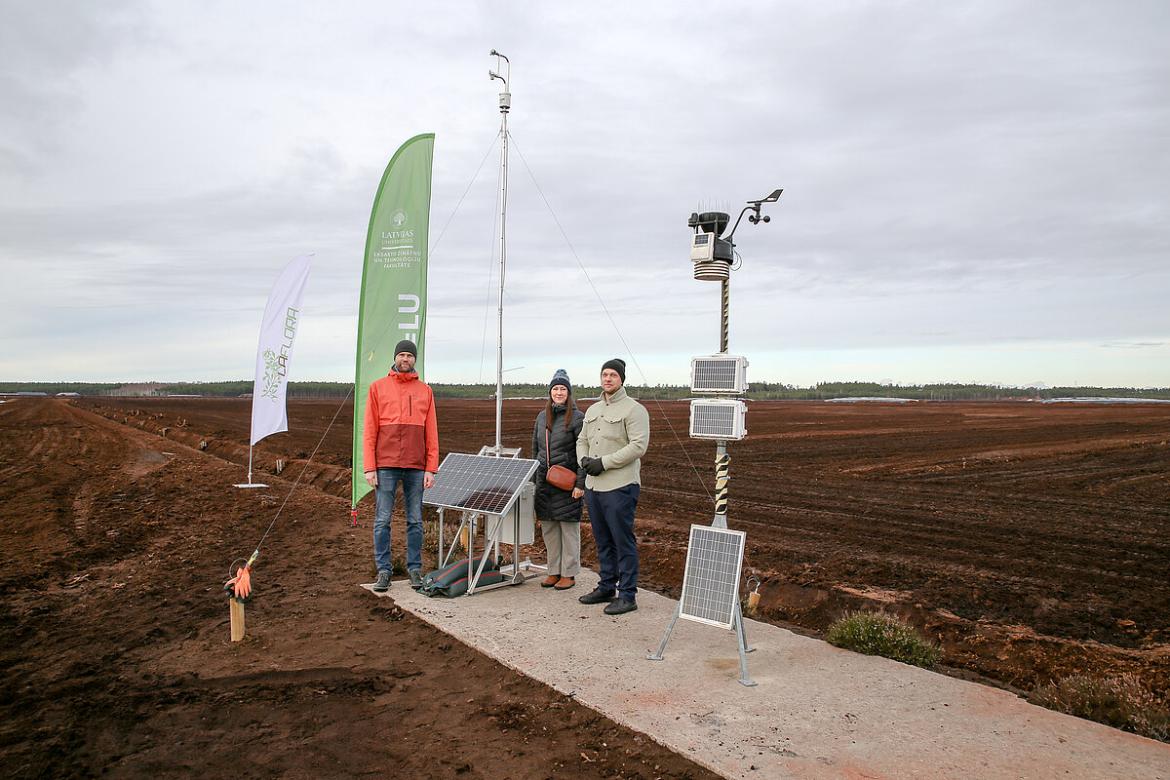
UL FST Department of Geology researcher Jānis Bikše adds: "This equipment is ideally suited for studying CO₂ cycling at the ecosystem level, it operates 24/7, performs 10 measurements per second, and continuously transmits processed data to a server, enabling us to monitor the system remotely."
The project will also have a positive impact on the academic environment. The new infrastructure will strengthen the scientific excellence of the University of Latvia, expand research opportunities, and enhance several UL study programmes, giving students hands-on access to modern environmental monitoring technologies.
The University of Latvia implements the project with the support of the UL Foundation and the patron “Mikrotīkls”, and runs from 1 March 2025 to 28 February 2027. The project team consists of Professor Normunds Stivriņš, lead researcher Inga Retiķe, and researcher Jānis Bikše.