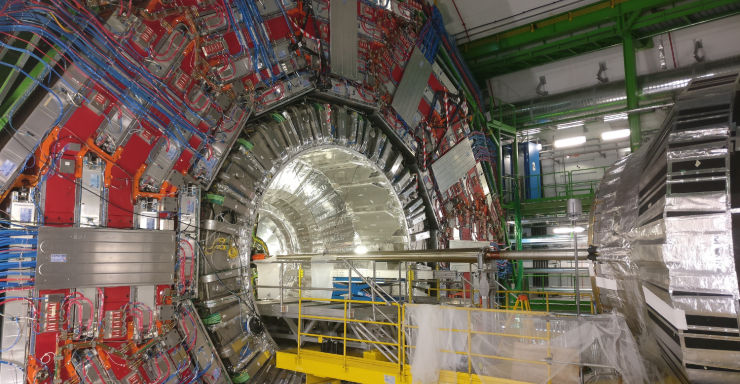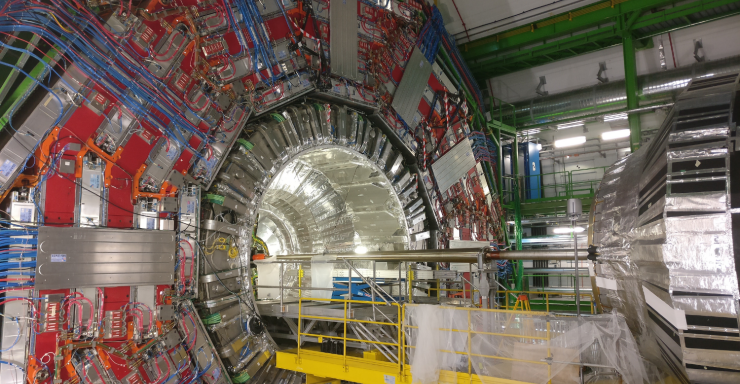
Researchers from the University of Latvia (UL), in collaboration with CERN–MEDICIS (Switzerland) and SIA “NUCLEO” (Latvia), have successfully implemented a unique experiment demonstrating the development of a new radiopharmaceutical for more precise cancer diagnostics and therapy.
The outcome of the experiment represents a significant achievement in the cooperation between Latvian science and industry in the research and development of theranostic (cancer diagnostics and therapy) radiopharmaceuticals. It confirms that Latvia is capable not only of generating ideas but also of practically demonstrating the entire process chain required for the development of targeted radiopharmaceuticals.
“This achievement vividly demonstrates how academic expertise becomes the foundation for new technologies and future medicine. The mission of the university is to ensure long-term benefits for society by transforming academic knowledge into practical solutions. The collaboration between UL researchers, CERN, and industry partners proves that scientific excellence, the courage to innovate, and the ability to operate on a global scale make it possible to develop solutions in Latvia with real impact on healthcare and human well-being,” emphasises UL Vice-Rector for Development, Enno Ence.
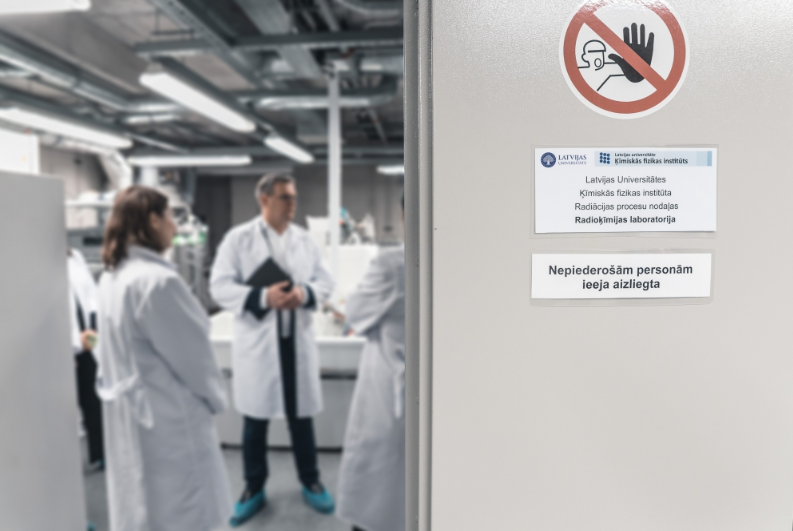
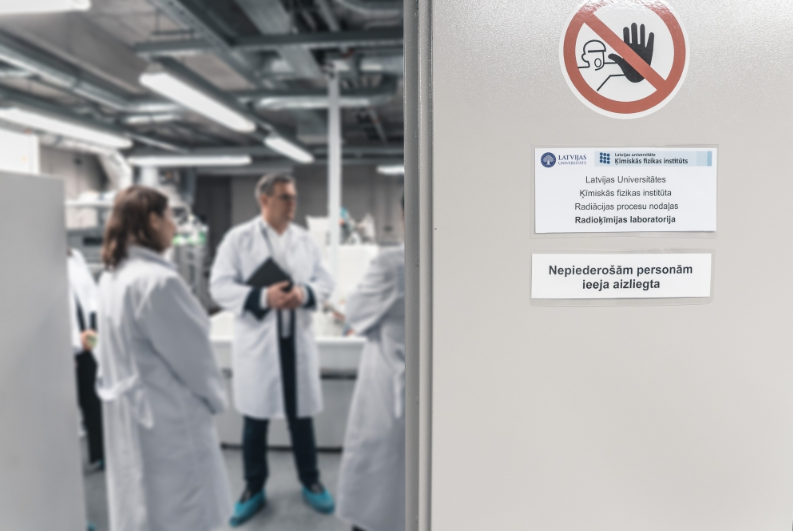
The experiment – the complete cycle of producing a theranostic radiopharmaceutical, from the development of the target material to radionuclide purification and preparation of the radiopharmaceutical compound – was carried out by the Radiochemistry Group of the Institute of Chemical Physics (ICP) at the Faculty of Science and Technology (FST) of the University of Latvia.
Elīna Pajuste, Director of the Institute of Chemical Physics and Head of the Radiochemistry Group, elaborates: “Theranostics is extremely important for healthcare and innovation, as it combines two functions in a single approach – diagnostics and therapy – enabling precise imaging and localisation of disease sites, as well as targeted treatment of these sites using radionuclide radiation. The theranostic approach supports the move towards personalised medicine, where each patient’s treatment is based on how the drug behaves in that specific patient’s body.”
She emphasises that, in practice, this means more precise adjustment of therapy to the individual patient, better planning and monitoring of treatment, and potentially a lower risk of side effects, as the effect is directed precisely at the target – the disease site.
A radiopharmaceutical is a medicinal product to which a very small amount of a radioactive isotope (radionuclide) is attached as a marker. It is used either to localise specific tissues (e.g., tumour cells) in the body for diagnostic imaging purposes or to provide a targeted therapeutic effect in the treatment of tumour cells.
The UL researchers developed an irradiation target composite material, as well as semi-automated radiochemical purification/separation methods and a synthesis methodology. CERN–MEDICIS provided irradiation of the target with high-energy protons and the physical separation of scandium-47 (Sc-47), while the stage from radiochemical separation to synthesis was carried out using the infrastructure and equipment of SIA “NUCLEO”.
“This experiment also serves as a model of how Latvian science, an international partner (CERN), and a company (SIA ‘NUCLEO’) can jointly implement projects that previously seemed possible only in large countries with a well-established radiopharmaceutical industry. It is a signal to both researchers and industry: Latvia can become a visible player in the development of theranostic radiopharmaceuticals by offering expertise, technologies, and a flexible collaboration ecosystem,” says E. Pajuste.
The project demonstrated the feasibility of establishing a complete technological chain: developing and preparing a nanostructured composite material as a target for irradiation; producing scandium radionuclides using a high-energy proton flux; separating an isotopically pure scandium-47 (Sc-47) radionuclide sample via mass separation; subsequently purifying it radiochemically to suitable quality; and synthesising a radiopharmaceutical compound by binding the radionuclide to a DOTA-TATE molecule, which ensures stable attachment of the radionuclide to target cells.
By demonstrating the full production cycle of the radiopharmaceutical, the partners have taken a significant step towards the development of a new platform for theranostic radiopharmaceuticals. Such a “full-cycle” proof is crucial for strengthening Latvia’s competence in radiopharmaceutical R&D, building a bridge between academic excellence and manufacturing reality, and opening opportunities for further steps – process optimisation, reproducibility, quality control, and, in the future, potential clinical translation.
The Director of the Institute of Chemical Physics expresses gratitude to all supporters: “We extend our sincere thanks to the UL Foundation and "MikroTik" Ltd. for financial support in developing the infrastructure of the UL radiochemistry laboratory. The research was initiated thanks to a project funded by the Latvian Council of Science. The Ministry of Education and Science supported Latvia’s participation in the CERN–MEDICIS consortium. The University of Latvia provided support by allocating funding within a high-impact pilot project, while the Radiation Safety Centre of the State Environmental Service assisted in the preparation of licences.”
About the project partners:
Radiochemistry Group of the Institute of Chemical Physics, Faculty of Science and Technology, University of Latvia
The group brings together researchers for interdisciplinary studies in physics and chemistry, with a focus on radiation and radiochemistry. Its research covers the study of new radionuclides for cancer diagnostics and therapy (theranostics), separation and purification of medical isotopes using chemical and physical methods, and radionuclide research in the field of energy.
CERN–MEDICIS
CERN–MEDICIS is a CERN facility that produces “non-standard” radioactive isotopes for medical research and purifies them using physical methods to support the development of radiopharmaceuticals for both cancer diagnostics and therapy. To obtain radionuclides with high molar activity and to perform physical isotope separation, CERN–MEDICIS uses a high-intensity proton beam (1.4 GeV) and mass separation technology.
SIA “NUCLEO”
SIA “NUCLEO” conducts research and development of radiopharmaceutical production technologies. The company is currently implementing two research projects focused on developing production methods, quality control methodologies, and documentation required for the registration of active pharmaceutical ingredients, as well as developing a digital solution for ordering and precise delivery planning of radiopharmaceuticals. The projects focus on radiopharmaceuticals containing radioactive fluorine or radioactive lutetium and are implemented within the framework of competence centres under Latvia’s Recovery and Resilience Plan investment direction 5.1 “Increasing productivity through increased investment in R&D”, reform 5.1.1 “Innovation governance and motivation of private R&D investment”, investment 5.1.1.2.i “Support instrument for the development of innovation clusters”.