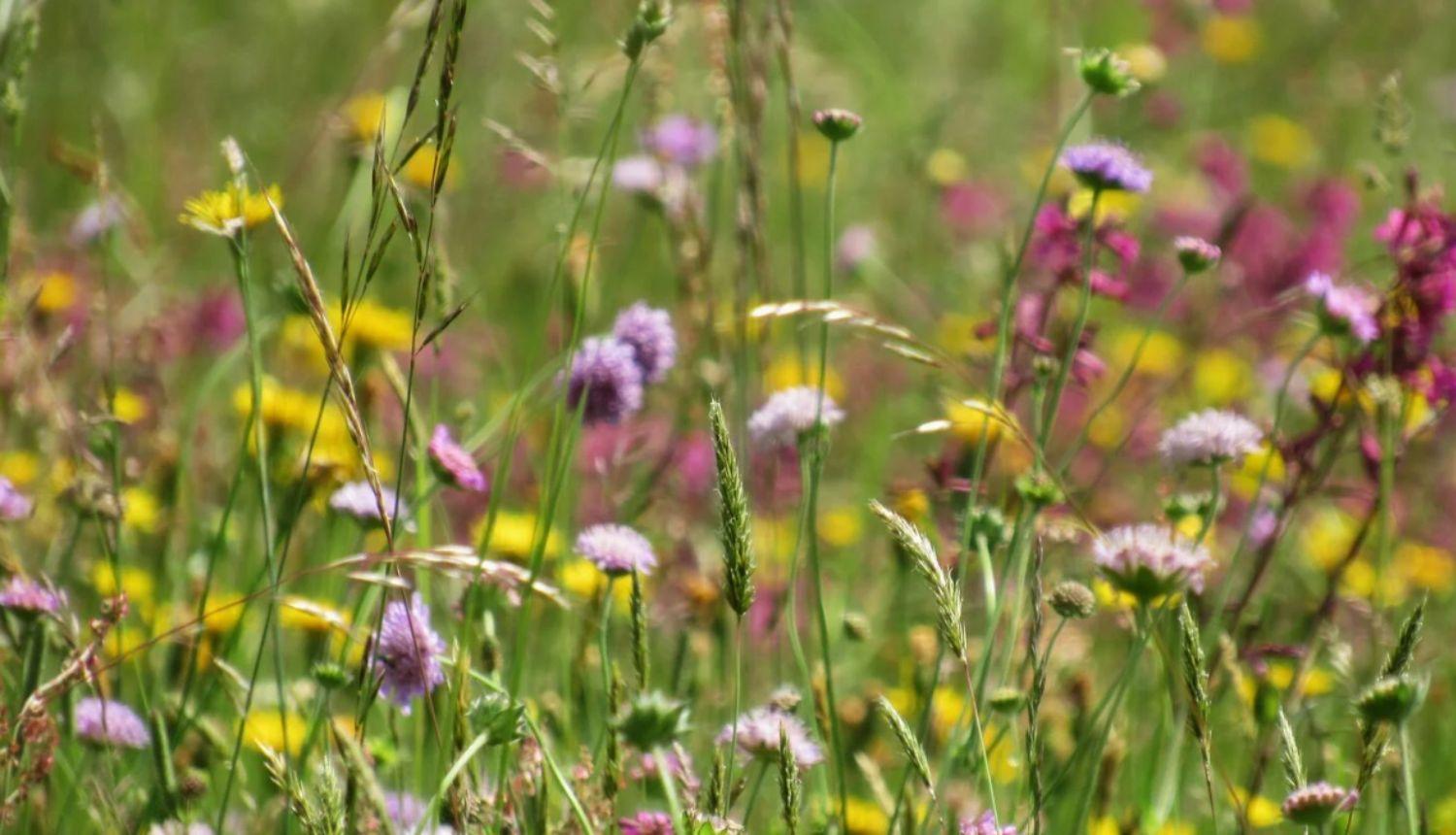
Why sow a meadow? How long does it take to grow? Doesn't it just happen on its own? As part of the Delfi Brand Studio project In Nature's Footsteps, we speak with Dr. geogr. Agnese Priede.
A biologically diverse flower meadow often blooms brighter in our imagination than in the Latvian landscape, where it is frequently replaced by lush fodder grasslands or fields with more economically profitable crops. The conclusion drawn from nature data inventories is stark: less than one percent of the country's territory remains as natural grasslands. Although these total around 60,000 hectares, the threat lies in how scattered these "meadow patches" are. They stand too far apart for seeds to travel between them by wind, birds, or cattle, limiting species circulation, dispersal, and even survival. As habitat and plant-species protection expert Agnese Priede notes, managing and sowing natural grasslands can help species return. To maintain ecological "circulation," at least 3% of Latvia would need to be covered by natural meadows.
Long-Term Relationships
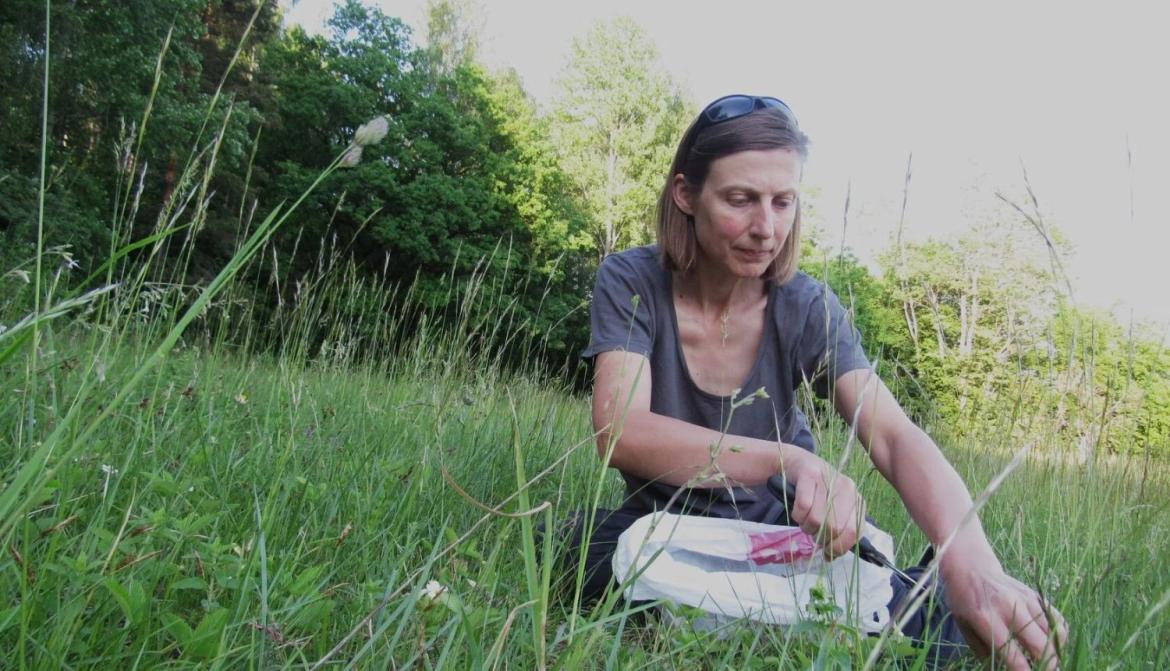
Agnese humbly says that "mission" is a strong word, but it comes close to describing her motivation: first, helping people understand whether a meadow is genuinely what they want and whether they can commit to it, and second, educating them about practical care and the long-term relationship that follows. Natural meadows are often assigned to the wilder corners of land where the owner doesn't want to invest effort in tilling for other uses. Sometimes people live under the illusion that a meadow is easier — "Tired of mowing? Let's grow a meadow instead." But a natural meadow must also be mown, invasive plants must be controlled, and the environment must be shaped into something truly valuable and species-rich.
What should a meadow owner know? One scenario is inheriting an already valuable grassland. One must carefully consider whether they want, and are able- to continue its upkeep. A meadow cannot survive without human help; it will simply become overgrown with shrubs. The most essential task is mowing: not too early, or valuable plants won't flower and set seed; not too late either, or invasive plants will spread, and the grass sward will become too dense for flower seeds to take root. And mowing alone isn't enough, the cut grass must be removed so it doesn't act as fertiliser. Otherwise, vigorous grasses thrive, while the most valuable species grow best in poorer soil.
Another growing group of meadow keepers are enthusiastic nature lovers, biodiversity advocates, and admirers of subtle beauty who want to establish or restore a natural meadow. Where to begin? Agnese Priede emphasises repeatedly: there is no single recipe. One must assess the land's condition, soil type, moisture levels, and existing plant species. A meadow is a long-term relationship, not something that becomes quick, striking, and showy overnight.
Why People Need Meadows
The hardest part is understanding what a natural meadow is, what it isn't, and how to manage it.
A natural meadow is for people who want nature, not for those who want to avoid it. And surprisingly, many people do like it. That gives hope.
A meadow needs some human involvement to thrive. But at the same time, the meadow is also something the owner needs. People begin to observe and think. At first, it's just a patch of land, but gradually the caretaker learns to recognise species and notice rarities. If someone wants to harvest seeds themselves, they must know each plant's life stages, when it blooms, and when to collect the seeds. The process is slow, but once the "meadow spark" ignites, people eagerly follow natural rhythms, seek information, and build relationships with nature. According to Agnese, this sense of the meadow is the greatest reward, a seed sown in the land, which, under good conditions, continues to grow and expand.
Watching seedlings appear, wondering whether they are indeed the species sown, leads people to understand why it is essential not only to cultivate exotic garden flowers but also to cherish native treasures that may seem modest at first glance. The process itself is as meaningful as the result. Agnese draws parallels with citizen science: the information gathered is valuable, but the learning and involvement matter just as much. And this holds even when sowing a tiny "mini-meadow."
Pocket-Sized Meadows and Landscape Architecture
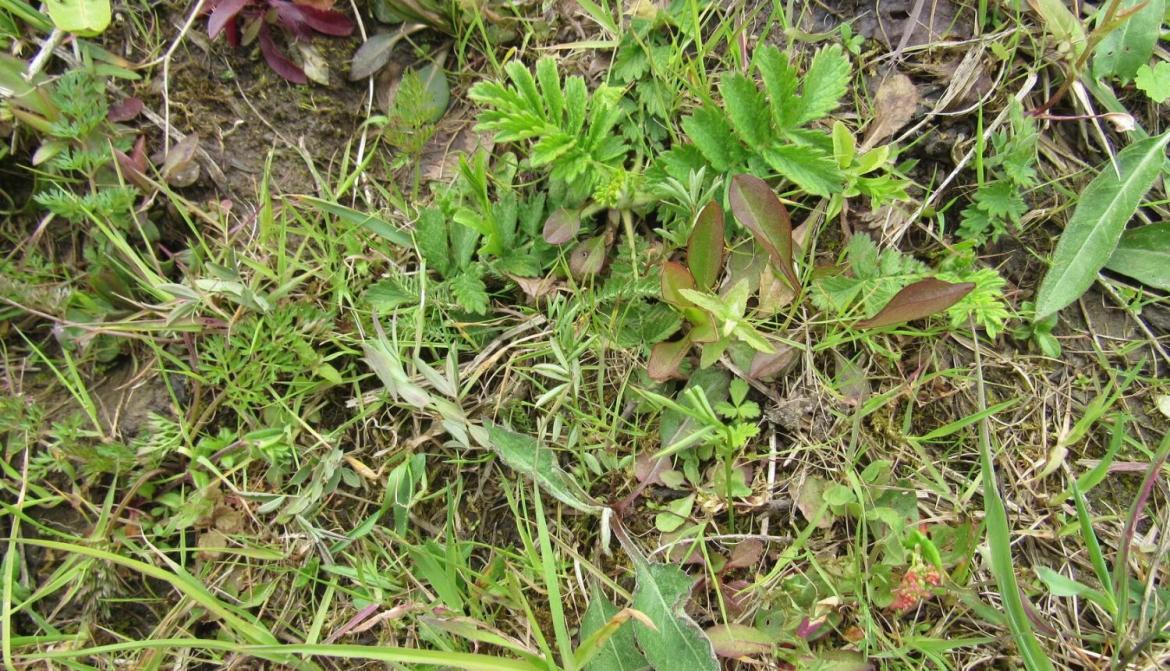
The available patch of land must be studied carefully. If the soil is very fertile, modest meadow species may be pushed out by robust grasses. If mature trees grow nearby, it's usually better to care for the trees than try to force a meadow there; large trees will absorb resources, and the flowers will die out. Likewise, meadow seeds shouldn't be sown where ground elder or goldenrod already dominate; these must first be controlled for several years.
Still, Agnese encourages people: no area is too small to establish a natural grassland. It can be a less fertile corner of a garden or even a roadside strip. A few years ago, the Latvian Fund for Nature launched the initiative "Sow Your Square Meter!", inviting people to sow one square meter of meadow flowers from seeds harvested by the organisation. Interest was so great that seeds ran out; over a thousand packets were distributed in two years.
The meadow feeling is taking root not only among rural enthusiasts but also in urban landscapes, where imported ornamental flowerbeds are being replaced with meadow-style plantings. Agnese has collaborated with municipalities, gardeners, and landscape architects, a new and promising experience. Tukums fire station now has its own natural meadow; others have been established in Riga, Jelgava, and beyond.
The Seed Detective
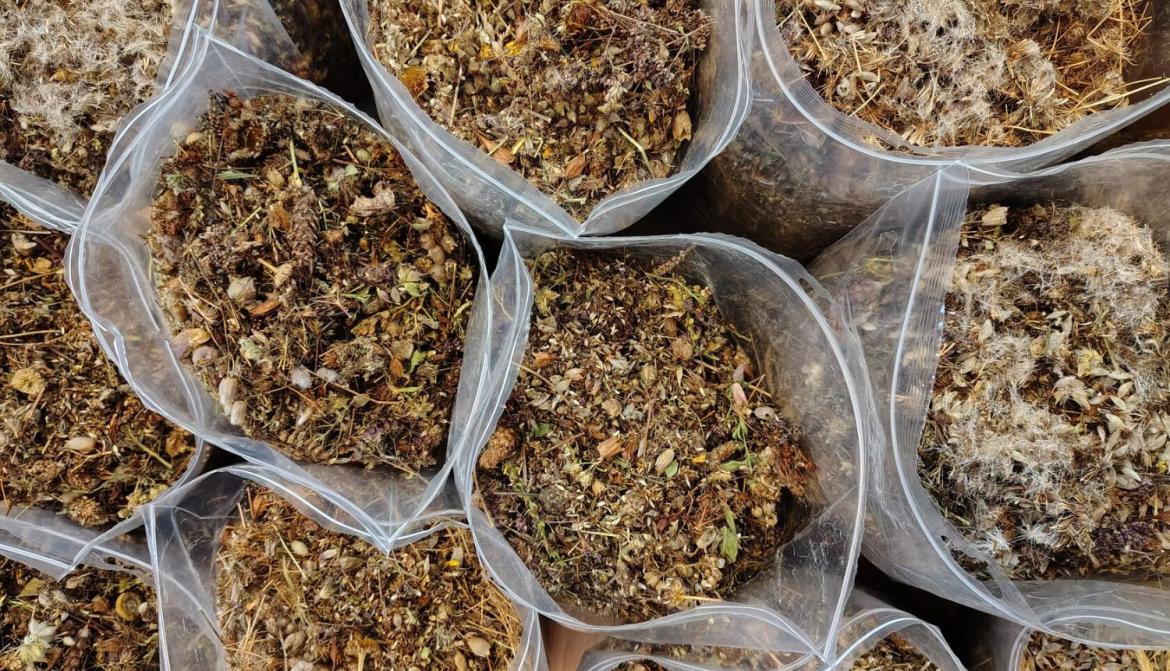
Agnese's passion for collecting meadow seeds began nearly 20 years ago while working as a botanist in Ķemeri National Park. She began sowing various species into meadows on her own initiative, organising volunteer days for several years. Today, a "beautiful little meadow" thrives there, proof that patience is essential. People liked the idea of helping meadows regenerate faster and began asking for seeds, but no such seed market existed. Agnese admits that seed collecting cannot be combined with a regular job. As a "seed detective," she spends June through late September moving from place to place, tracking where each bloom blooms and when it is ready for harvest.
If someone feels that dozens of euros for a packet of meadow seeds is expensive, they must understand the time and expertise that go into preparing it. Some species, such as globe-flower (Trollius europaeus), are so rare in Latvia that finding seeds is a real challenge. Rare species, therefore, must often be explicitly grown for seed production.
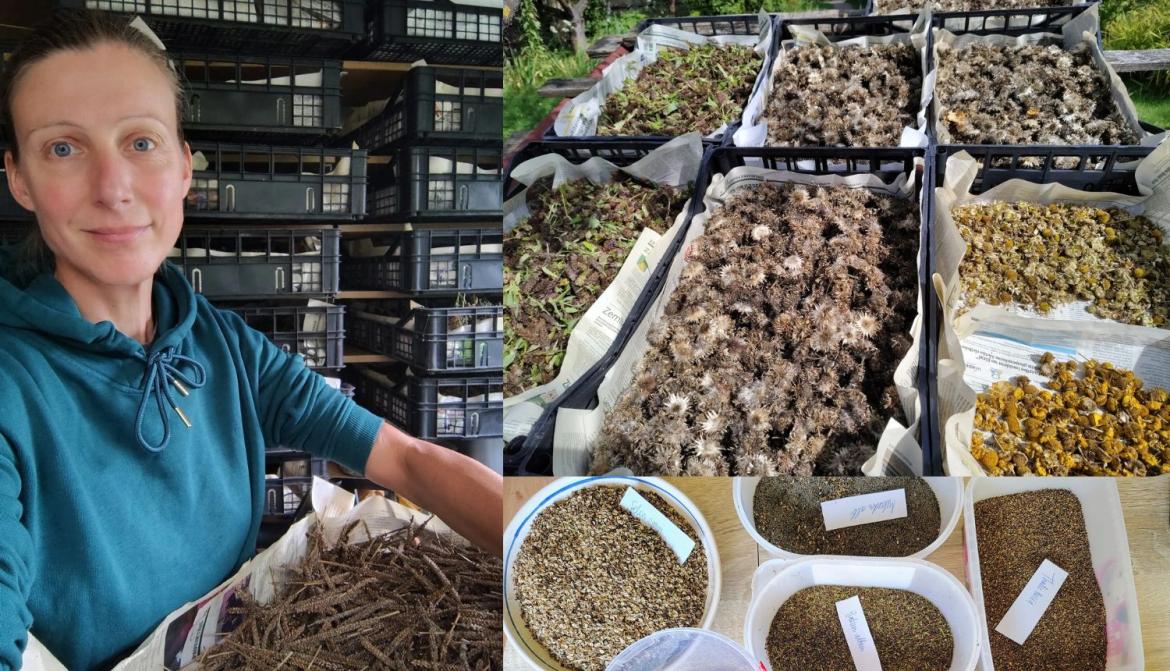
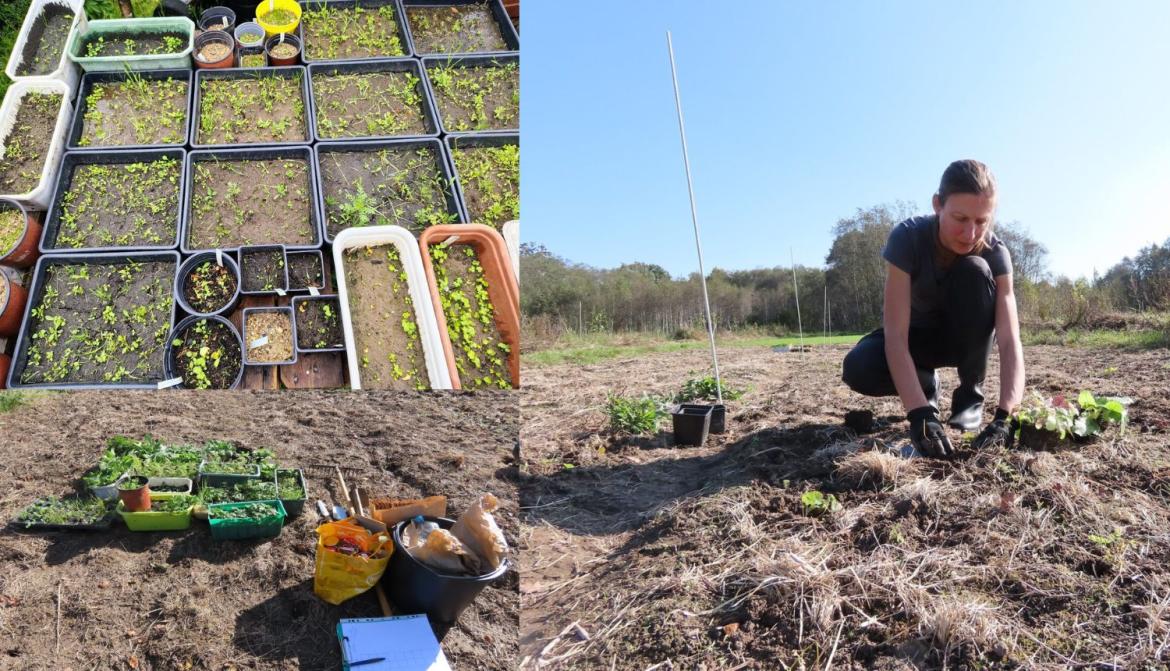
Simply scattering a seed packet over grass in autumn rarely works; next year, you will not suddenly see bunches of cowslips. If someone truly wants a specific plant, the safest method is to sow collected seeds in pots first, grow seedlings, and then plant them in the meadow. This also protects the seeds from hungry rodents. Meadow grower Liene Auziņa, known on social media as Mūsu dabiskās pļavas, also offers seedlings grown this way, along with practical video tips.
The Meadow Community
What resources exist for aspiring meadow keepers? Agnese Priede and other experts offer consultations. The Latvian Fund for Nature has created excellent materials, including compact illustrated guides, What Grows in Natural Meadows? and What Lives in Natural Meadows? The Nature Conservation Agency has also prepared methodological materials for landowners.
And one need not tackle everything alone; a community of meadow enthusiasts has formed in Latvia, which Agnese affectionately calls the "meadow club." It primarily consists of landowners involved in meadow-related projects run by the Latvian Fund for Nature and the Nature Conservation Agency. Although some project participants may receive small payments for improving grassland quality, most say the expert advice and the chance to meet like-minded people are far more valuable.
People are often surprised when experts discover botanical treasures in their meadow. But sometimes the opposite happens: an owner believes that daisies, poppies, and cornflowers make their meadow exceptionally valuable, but experts must explain that these showy flowers do not necessarily indicate a high-quality natural grassland.
A Label to Recognise and Support Meadow-Based Products
Considering the lengthy timeframes and the fact that biodiverse meadows cannot be combined with intensive farming, is this merely an expensive hobby for dedicated enthusiasts? Agnese is convinced that meadows can bring income. Meadow management works beautifully with extensive livestock farming. The Latvian Fund for Nature has created the label Natural Meadow Product, marked with a swallowwort blossom held between two hands, awarded to businesses that manage natural grasslands and produce related goods: meat, honey, herbal teas, dairy products, handicrafts, or meadow-based tourism experiences. Among producers entitled to use this label are cattle, sheep, goats, and Blue Cow breeders, beekeepers, guesthouse owners, and more.
The classics are herbal teas harvested from biodiverse meadows, but one can also find syrups, extracts, sorbets, ice creams, sheepskins, cosmetics, and ceramics decorated with plant prints. Restoring a former field or fallow land into a truly diverse meadow may take decades. But that is no reason to give up — the time to begin is now. A biologically rich meadow, like a newly planted forest, will bring joy to future generations as well.