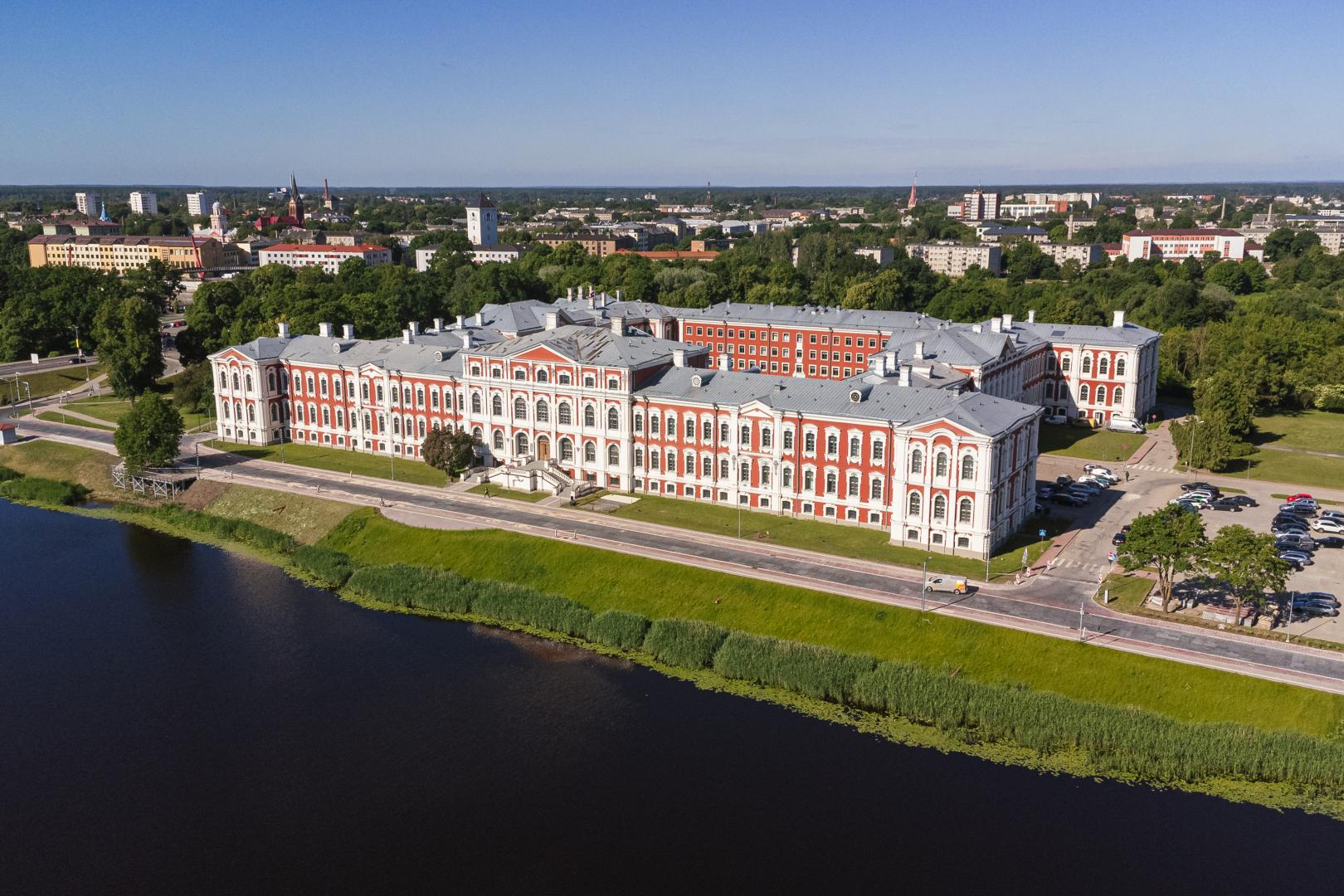
On 27 July 2026, the Latvian Council of Science and the Latvia University of Life Sciences and Technologies (LBTU) signed an agreement on the implementation of Project No. VPP-ZM-Lauksaimniecība-2026/1-0003, “Strengthening a Resilient, Innovative, Sustainable and Efficient Food System in Latvia (RISE AgriFoodLV)” (hereinafter – the Project).
The aim of the Project is to develop knowledge and create scientifically sound and innovative solutions to strengthen Latvia’s food system by improving its sustainability and competitiveness, thereby increasing the country’s resilience to crises and external risks.
The lead partner of the Project is the Latvia University of Life Sciences and Technologies. Five partners are involved in its implementation: the Institute of Horticulture; the Institute of Agricultural Resources and Economics; the Institute of Food Safety, Animal Health and Environment “BIOR”; Rīga Stradiņš University; and the Latvian Biomedical Research and Study Centre (after 31 May 2026 – the National Institute for Research and Innovation (NIRI)). A total of 88 researchers and students will work on the Project.
Several tasks have been set for the implementation of the Project: to develop scientifically sound and innovative solutions for strengthening Latvia’s food system by creating and implementing an interdisciplinary stakeholder participation model; to promote the development of human capital in research; to expand knowledge; and to strengthen educational processes. The Project will include significant scientific activities: the development and implementation of an interdisciplinary multi-agent participation model; research and the development of solutions to strengthen the competitiveness and resilience of the agricultural sector and support the sustainable development of the bioeconomy; the development of new food products; and the preparation of proposals to limit infections and antimicrobial resistance in Latvia.
The Project’s scientific lead, Dalija Segliņa, a leading researcher at the Institute of Horticulture, emphasises: “The RISE AgriFoodLV project is an important step towards the sustainable development of Latvia’s food system. We are bringing together the scientific expertise of six institutions to create solutions that will strengthen the resilience, competitiveness and capacity for innovation of the agricultural and food sectors. The development of an interdisciplinary cooperation model and the involvement of early-career researchers envisaged in the Project are particularly significant, as they will make an important contribution to the renewal of the scientific community and the development of human capital. Our aim is to ensure that the results produced – including new products and technologies, as well as policy recommendations – are applicable in practice and make a direct contribution to strengthening Latvia’s food system.”
The main results planned under the Project are as follows: 28 publications indexed in Web of Science or Scopus; 33 conference abstracts; 10 new products and technologies; 10 policy recommendations; five applications for international research projects; six successfully defended bachelor’s, master’s and doctoral theses; and 32 other scientific outputs.
The Project will run for 30 months and has a total budget of EUR 2.98 million.