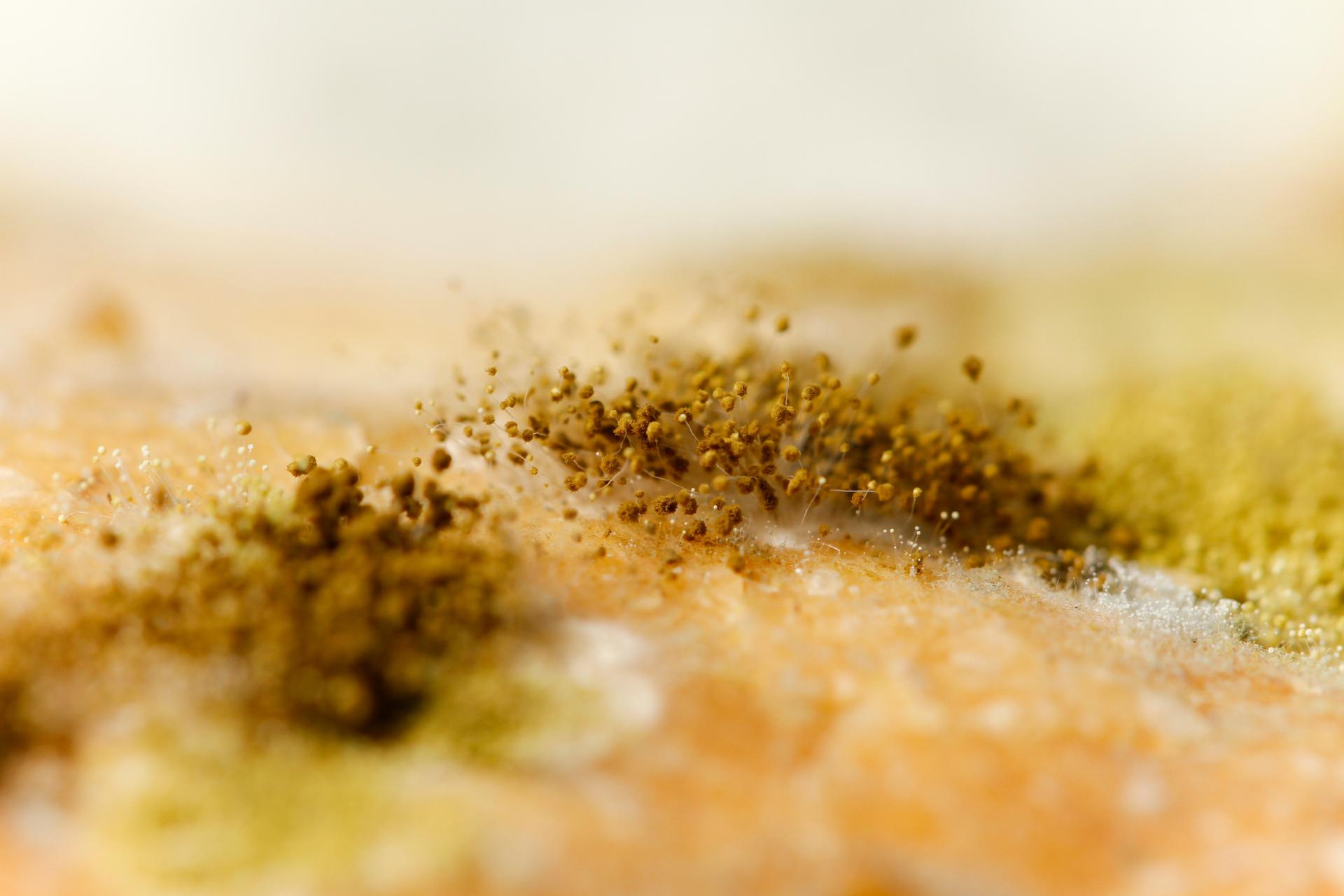
Is it safe to eat grandma’s jam after removing the mouldy top layer? And what about bread if one slice has gone mouldy? Many moulds produce fungal toxins that can affect health, but the problem is that the harm caused by mould can be cumulative and may only become apparent years later rather than immediately.
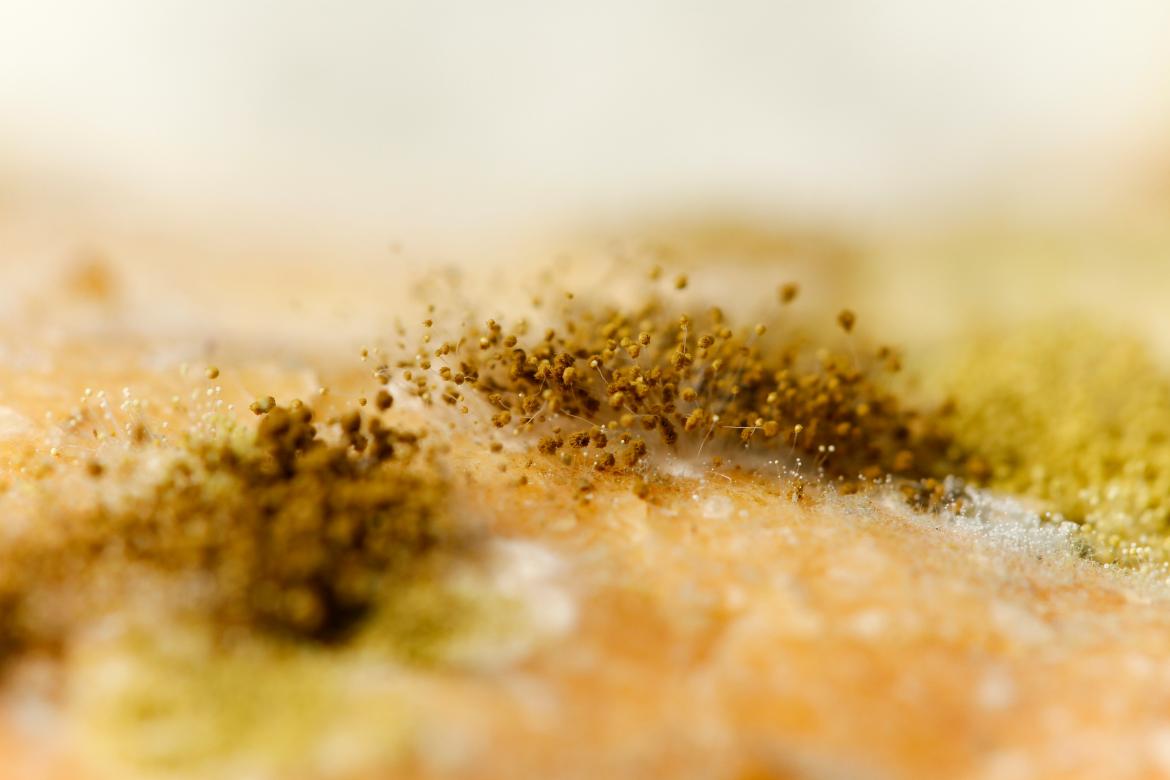
Fungal Toxins and Their Effects
Asnāte Ķirse-Ozoliņa, Associate Professor and leading researcher at the Institute of Food Science of the Latvia University of Life Sciences and Technologies, said on Latvian Television’s programme “4. studija”: “Moulds are very interesting microscopic fungi.” She explained that, from the perspective of consumption, forest mushrooms can also be divided into beneficial and undesirable ones. The same applies to moulds – some are used in food production, while others can pose a serious threat to health.
Many moulds can produce fungal toxins, or mycotoxins, and these always have a target organ on which they exert their greatest adverse effect. They can affect the liver, kidneys and heart function, as well as our genetic material. Some mycotoxins can also directly affect foetal health, for example by causing various mutations and defects in an unborn child during pregnancy, the researcher explained.
Ķirse-Ozoliņa emphasised that the problem with mould is that its harmful effects do not always appear immediately, but can be cumulative, building up over time.
“We eat various products that may contain mould, and we consume them over the course of our lives. These substances can combine with one another, and perhaps after 10, 20 or 30 years – or for some people even after 50 years – health problems may appear that we would rarely associate with having eaten a product containing mould and these toxic compounds when we were younger,” the researcher explained.
Baking the Jam into a Cake Will Not Help
Beneficial mould does not produce toxins, whereas harmful mould always does. In everyday life, consumers cannot determine with the naked eye whether a mould contains harmful toxins or not.
“With bread, we only see the mould after it has been growing for several days and the fuzzy growth becomes physically visible,” she said, explaining that the mould’s mycelium, or fungal network, which is very similar to that found in forests, has already spread throughout the bread.
It should be borne in mind that the greatest production of mycotoxins, or harmful substances, occurs once the mouldy fuzz is already physically visible. While the fungal network, or mycelium, is growing, the cells are only beginning to divide, but once the fuzz appears, the process of toxin production has already begun. Bread can be protected from spoilage using a very simple method – mould grows less readily in the refrigerator because it needs moisture and warmth.
With jam that has mould growing on the surface, however, the problem is that it provides a fairly moist and liquid environment, in which mycotoxins dissolve more readily and can mix much more thoroughly into the entire product.
Therefore, jam that has developed a layer of mould is no longer safe to eat even if only the mouldy surface is removed. It is also important to note that mycotoxins remain present even after heat treatment. Toasting bread, baking jam into cakes or using similar methods will not work, and the risk of poisoning remains.
“[Hard] cheese is probably the relatively safest product in this situation because it is quite dense, making it much more difficult for the mould’s mycelium to penetrate deeply. However, if small spots of mould or fuzzy growth appear, it is not enough simply to cut off a small piece. The affected area should be cut out to a depth of at least one or two centimetres, and care should also be taken not to run the knife over the rest of the cheese,” the researcher explained, adding that this approach would not work with soft cheeses because, due to their moisture content, the toxin may already have dissolved into the product.
The researcher emphasised: “With jam that has mould growing on the surface, the problem is that it provides a fairly moist and liquid environment, in which mycotoxins dissolve more readily and can mix much more thoroughly into the entire product.”
Therefore, jam that has developed a layer of mould is no longer safe to eat even if only the mouldy surface is removed. It is also important to note that mycotoxins remain present even after heat treatment. Toasting bread, baking jam into cakes or using similar methods will not work, and the risk of poisoning remains.
The researcher emphasised: “Any mould should be regarded as potentially harmful and as a fairly serious health hazard.”
It should be borne in mind that mould can develop in several ways. It can also reach food through the air, as spores are present in every room and can land on food products as a result of air currents.
However, the situation is not as alarming as it may seem, and there are ways to avoid mould and protect food – and, as a result, ourselves. The researcher recommended storing products in their original packaging. If products are vacuum-packed or kept in a sealed airtight environment, mould cannot develop there.
“Store-bought products usually begin to spoil once we open them. With homemade products, contamination can occur if we choose the wrong storage conditions, if containers are dirty or damaged, and this can lead to contamination or cross-contamination spreading from one product to another,” Ķirse-Ozoliņa noted.
The researcher concluded that it would be safer not to consume any of these products. In other words, if there are doubts about a product’s quality, it is safer not to take the risk, because not everything harmful is necessarily visible to the naked eye.