October is Breast Health Awareness Month. Breast cancer is the most common malignant tumour among women in Latvia – around 1,200 women are diagnosed with it each year. Approximately 10% of breast cancer cases may be associated with inherited genetic changes (mutations). Modern genetic testing makes it possible to identify an inherited increased risk of developing breast and ovarian cancer in a timely manner, providing an opportunity to begin individually tailored preventive and health monitoring measures even before the disease develops. Although genetic testing in Latvia is state-funded in cases where certain medical indications are present, broader preventive genetic testing is not included in the state-organised cancer screening programme. It is therefore particularly important to raise public awareness of the risks of hereditary breast and ovarian cancer, as well as to improve access to timely genetic risk assessment and appropriate examinations.
As Part of the Initiative, 100 Women Undergo Preventive Screening
Just a few days after the Breast Health Month initiative at Pauls Stradiņš Clinical University Hospital offered screening for genetically inherited breast and/or ovarian cancer risk, more than 300 women had registered for the test. Due to limited funding, screening was carried out for the first 100 women who had registered.
The opportunity to undergo free BRCA1 and BRCA2 gene testing on 14 October was provided as part of the pilot project “Genetic Screening for Hereditary Breast and Ovarian Cancer Risk”, implemented by the Institute of Oncology and Molecular Genetics at Rīga Stradiņš University. Its aim is to assess the possibility of introducing genetic screening in Latvia that would help identify women with an increased hereditary risk of breast and ovarian cancer in a timely manner. The pilot project is being implemented in cooperation with “Longenesis” and E. Gulbja Laboratory, while “Lindex Latvia” has been the project sponsor since 2022.
Arvīds Irmejs, Associate Professor at Rīga Stradiņš University, Director of the Institute of Oncology and Molecular Genetics, lecturer and surgeon, expresses hope that, over time, this important preventive measure will be included among state-funded healthcare services, as prevention is known to be less costly – both for patients and the preservation of their health, and for the state.
Nearly One in Four Ovarian Cancer Cases Is Hereditary
Approximately 10% of breast cancer cases may be associated with inherited genetic changes.
“For breast cancer, if these are changes in the BRCA1 and BRCA2 genes, the figure could be around six per cent, but when changes in other genes are included, it could be up to ten per cent in total. For ovarian cancer, however, heritability is even higher: 20–25 per cent. In fact, one in four ovarian cancers is hereditary,” says Arvīds Irmejs.
But which women should definitely undergo this particular test? Dr Irmejs points out that testing should certainly be carried out in cases where a first- or second-degree relative has had breast cancer before the age of 50 or ovarian cancer at any age. It is recommended from the age of 25. Unfortunately, it is not always possible to know whether a person is exposed to this particular risk, because the altered gene (mutation) may just as well have been inherited from the father, who in turn may have inherited it from his father; therefore, preventive testing is recommended for all women.
Screening That Saves Lives and Preserves Health
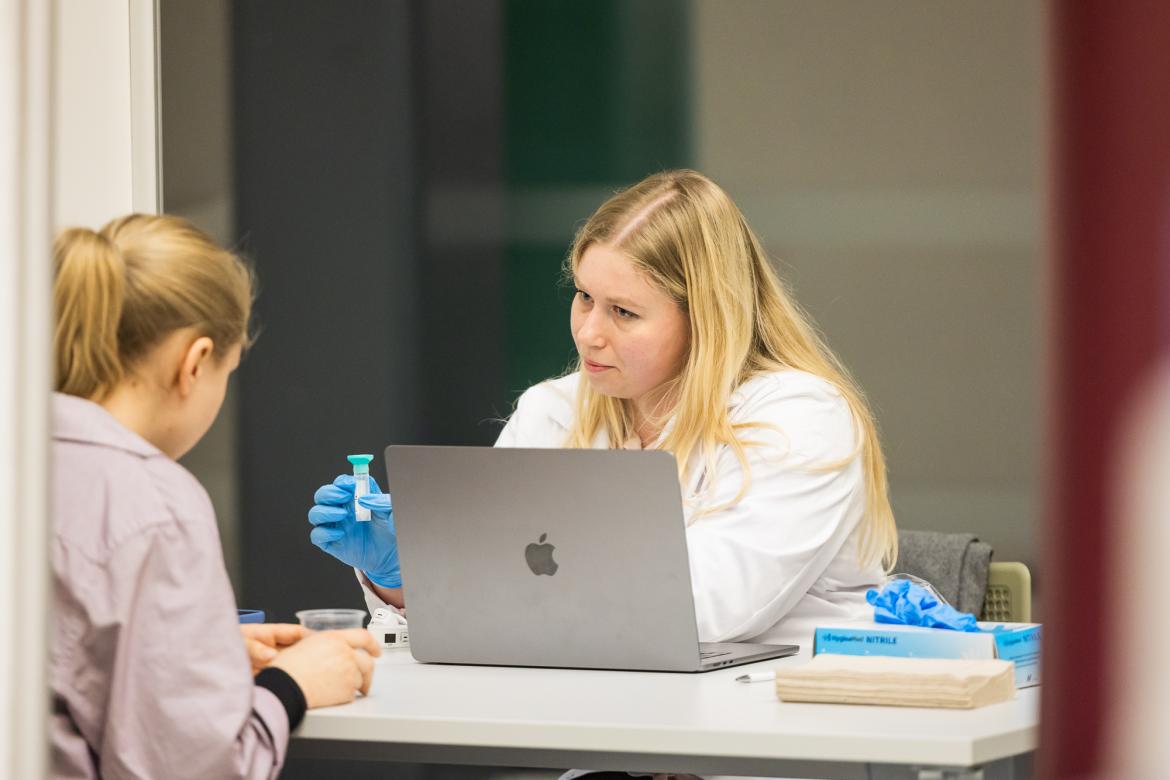
Screening for a genetically inherited risk of breast or ovarian cancer is very simple – it is carried out by taking a saliva sample. Women who had registered for the screening on 14 October but were unable to participate will be notified as soon as it becomes possible to provide a sample again within the pilot project.
A saliva sample can determine whether a woman is at high risk of breast or ovarian cancer and whether she needs to take specific preventive measures. Researcher Arvīds Irmejs explains that the probability of inheriting the genetic change in each individual case is 50–50.
“For example, a mother with genetically inherited breast cancer has two daughters, and both of them should undergo screening. The first is found to be at high risk, so all the necessary preventive examinations and other measures, such as surgery, are carried out. In the second daughter, however, this mutation is not found, which means that the risk has not been inherited.”
At the same time, the doctor and researcher emphasises that the absence of genetic changes does not mean that breast or ovarian cancer cannot develop during a person’s lifetime due to other, relatively non-genetic factors. Healthy lifestyle habits – such as a balanced diet, avoiding harmful substances, drinking enough fluids, getting sufficient rest, and taking care of physical and mental health – remain important. Various reproductive factors can also slightly increase the risk of developing the disease, for example if a woman has her first child after the age of thirty or does not breastfeed her baby.
Savings for the State Budget as Well
Unfortunately, these preventive examinations are currently available only for a fee, because, as always, there are many needs in healthcare and it is not possible to meet them all with limited financial resources. At present, women who suspect they may be at risk due to genetic inheritance can consult a gynaecologist who has a contract with the National Health Service and receive a referral for a simpler test, which is not as accurate as the screening mentioned above. Women who have already been identified as being at high risk of developing the disease also have the option of undergoing annual breast MRI examinations or preventive mastectomies with reconstruction.
Preventive measures have always cost less than treating a disease that has already progressed.
“Over a ten-year period, introducing preventive screening would cost the state much less. Women identified as being at high risk of developing the disease would have the opportunity to take preventive measures rather than treat an already existing malignant tumour. Considering that there are approximately 1,200 newly diagnosed breast cancer cases each year, around 120 patients are those whose cancer is hereditary. And treating this disease is very expensive – it involves costly medicines, lost labour and tax revenue for the state because a woman is unable to work for a period of time, disability benefits, as well as a negative demographic impact, because hereditary cancer affects young women,” emphasises Arvīds Irmejs.
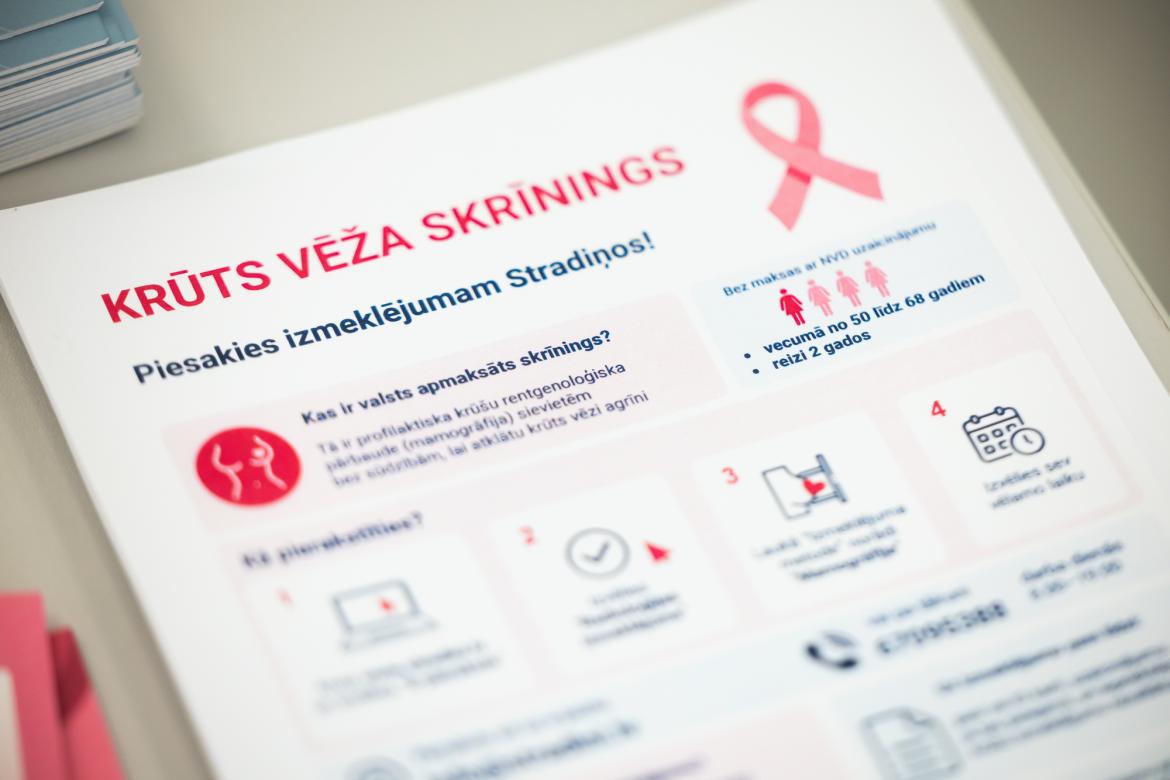
Although breast cancer is the most common cancer among women in Latvia, statistics show that only a small proportion of the target group undergoes the state-funded preventive examination, or mammography, which is funded by the state once every two years for women aged 50 to 69. In 2025, the examination was carried out by 36.7% of the target group, or 51,189 out of 139,311 women. Here too, it is important to reiterate that prevention plays an enormous role in preserving and maintaining health.
It should be noted that breast cancer treatment has advanced significantly in recent years, and breast cancer is a treatable diagnosis. The researcher points out that three quarters of patients diagnosed with the disease live for at least five years. This is an indicator showing the percentage of people who live for at least five years after being diagnosed with cancer, but it is only a measurement used in a particular study and does not mean that these same patients cannot live longer – they may go on to live another ten, twenty or more healthy years after diagnosis. In a significant proportion of cases, the disease may never return during a person’s lifetime.
Watch the video story about researcher Arvīds Irmejs:
More information about the pilot project “Genetic Screening for Hereditary Breast and Ovarian Cancer Risk” is available in the article “BRCA1 and BRCA2 Population Screening in Latvia: Feasibility, Engagement, and Early Lessons from a Pilot Study”.