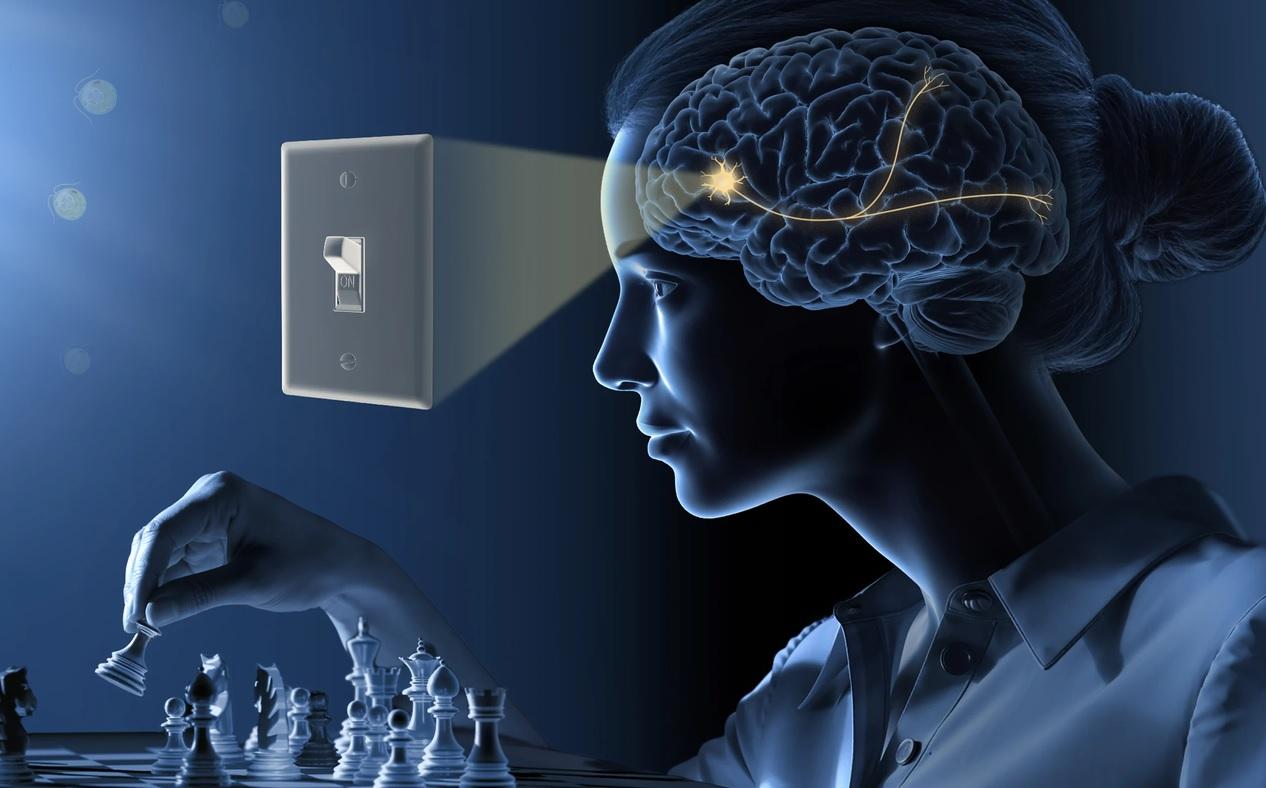
This year’s Nobel Prize in Medicine has been awarded to German and American scientists who made significant discoveries in the field of optogenetics and laid the foundations for new advances in neuroscience. Their discoveries helped explain how nerve cells in the brain influence human sensations, behaviour and memories.
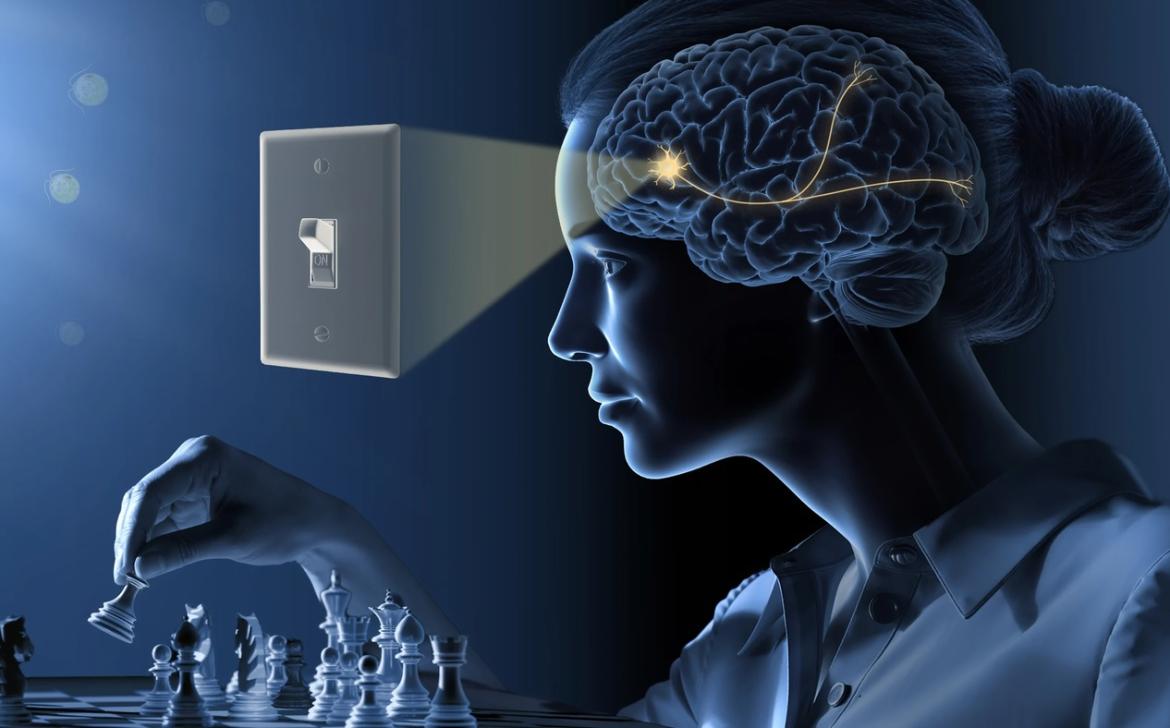
German scientists Peter Hegemann and Georg Nagel discovered a special protein, channelrhodopsin, in a unicellular alga, while American scientist Karl Deisseroth transformed this protein into a switch for nerve cells that can be controlled with light.
Scientists have long sought to understand how the brain controls human behaviour and bodily functions. Researchers have tried to determine which parts of the brain influence specific functions of the body.
“How can this organ, which weighs only about 1.3 kilograms, contain childhood memories, dreams and creative expression? How can it be the source of joy, love and jealousy? How does it control the rhythm of the heartbeat, breathing rate and the sleep cycle?” asks the Nobel Committee.
“Optogenetics has made it possible to map the brain in ways that we could once only dream of,” concludes Per Svenningsson, Chair of the Nobel Committee for Physiology or Medicine.
Using optogenetics, scientists have succeeded in identifying neural pathways that influence human behaviour and sensations. This opens up new possibilities for treating neurological and psychiatric disorders. Optogenetic methods are also being used in efforts to restore vision in people with visual impairments.
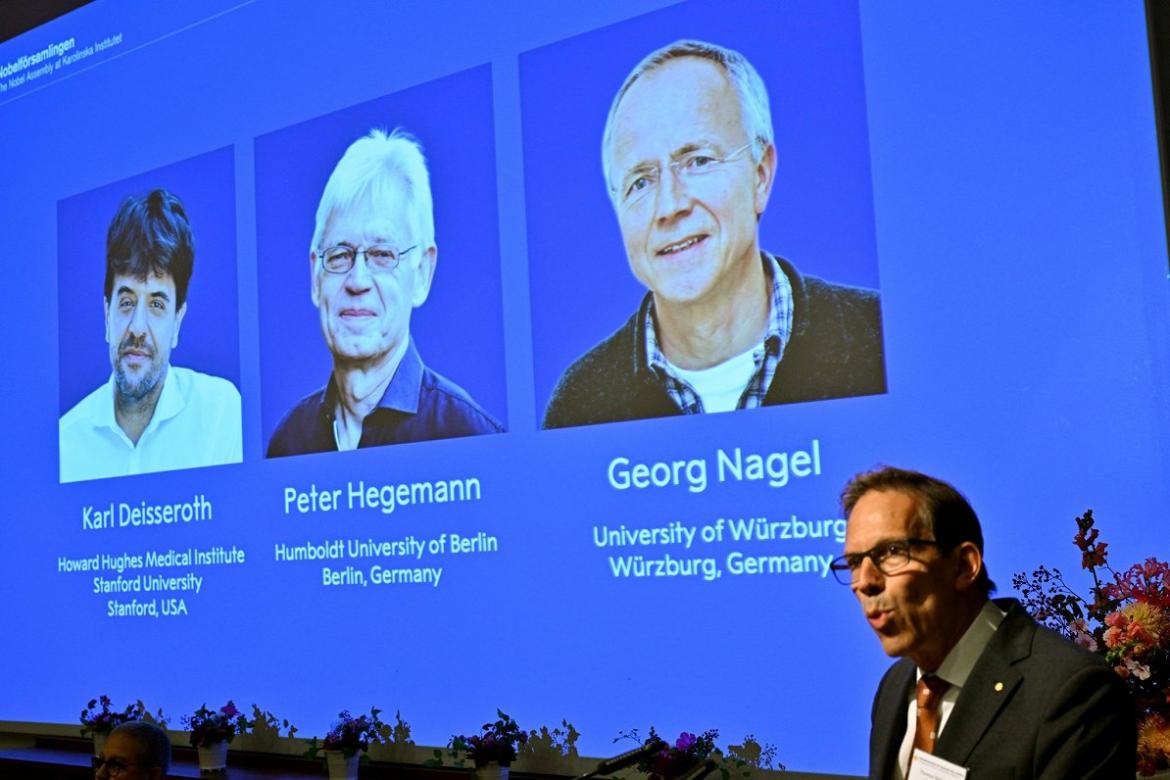
German scientist Peter Hegemann from the Max Planck Institute of Biochemistry studied why the unicellular alga Chlamydomonas reacts so rapidly to light. Together with his colleague Georg Nagel from the Max Planck Institute of Biophysics, he discovered a unique protein, channelrhodopsin, whose ion channels open in response to light. Positively charged ions flowed through these channels, generating an electrical impulse. The scientists concluded that this protein could be used as a switch to generate impulses in nerve cells using light.
American scientist Karl Deisseroth advanced this research by demonstrating that this method could be used to activate impulses in the brains of living organisms. The new research method was named optogenetics.
The adult human brain contains up to 90 billion nerve cells, and each of them is connected to thousands of other cells. Optogenetics has helped scientists understand which cells control specific brain functions.
Researchers hope that these discoveries will help to treat various disorders and diseases more effectively, such as depression, schizophrenia, Alzheimer’s disease and Parkinson’s disease.
Last year, the Nobel Prize in Medicine was awarded to American scientists Mary Brunkow and Fred Ramsdell, as well as Japanese scientist Shimon Sakaguchi, for discoveries in the field of immune system regulation.
On Tuesday, the winners of the Nobel Prize in Physics will be announced, on Wednesday – in Chemistry, on Thursday – in Literature, while on Friday the name of the Nobel Peace Prize laureate will become known. The laureates of the Nobel Prize in Economics will be announced on Monday, 12 October. The monetary value of the Nobel Prize is 12 million Swedish kronor (1.06 million euros), which is divided equally among the laureates in each category.
The award ceremony is scheduled for 10 December, the anniversary of the death of its founder, Alfred Nobel.