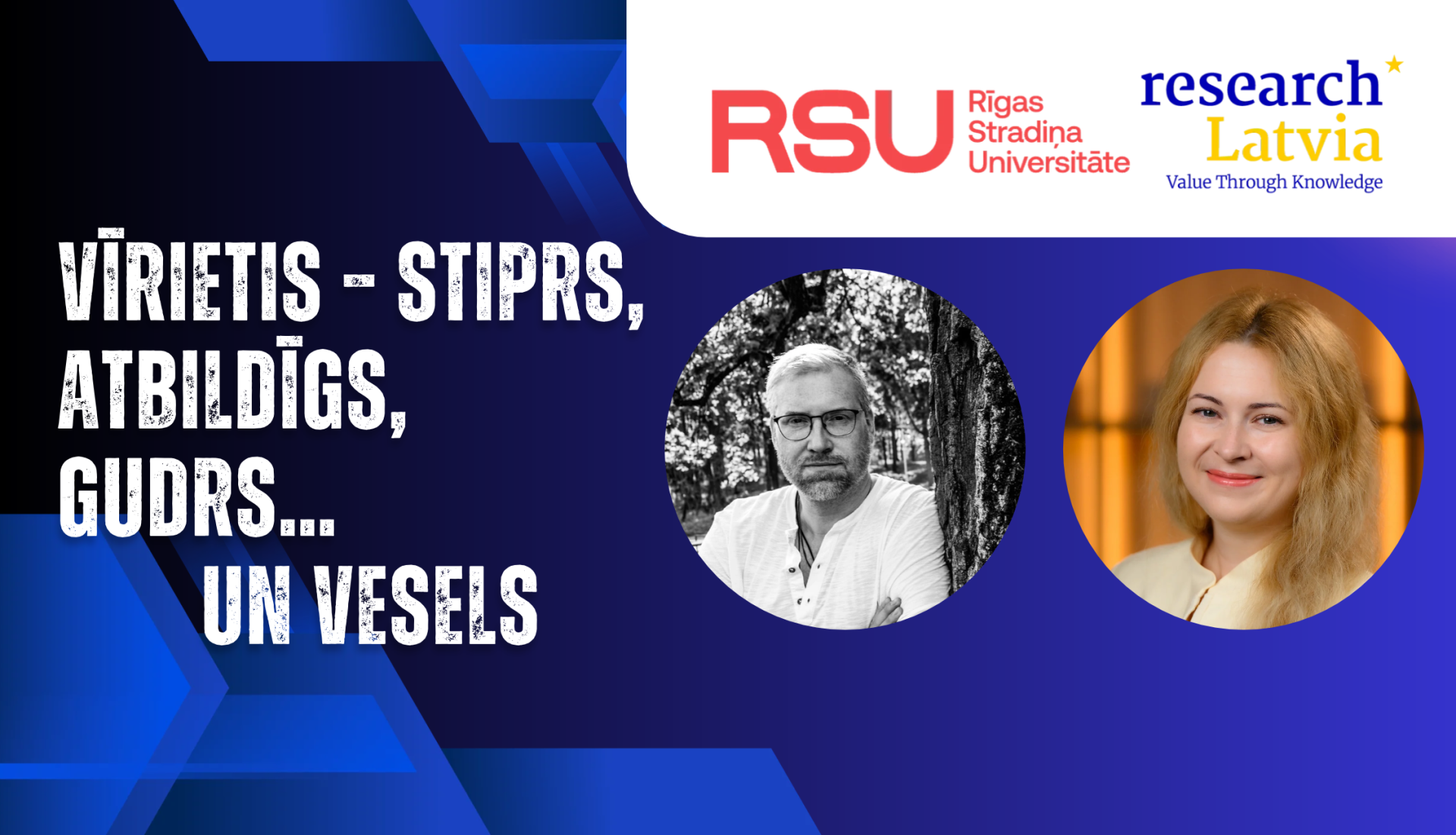
Just recently, on November 19, we celebrated International Men's Day. We express our sincere gratitude for men's everyday contributions in caring for their families, carrying out their work professionally and responsibly, and protecting our homeland. At the same time, everyone – both women and men – needs time to take care not only of those around them, but also of themselves.
We spoke with Ļubova Tihomirova, a researcher at the Institute of Public Health at Rīga Stradiņš University, and Vents Sīlis, Associate Professor, Philosopher and Psychologist at Rīga Stradiņš University, about men's health indicators, the reasons behind them, and possible solutions for improving these indicators.
Biological and Behavioural Factors
The shorter life expectancy of men compared to women is partly related to biological differences. “Part of the difference is determined by biology, for example, the protective effect of oestrogens on the heart and blood vessels and chromosomal differences. Worldwide, this biological component accounts for approximately 3 to 5 years,” explains researcher Ļubova Tihomirova. Oestrogens are sex hormones that have a beneficial effect on blood vessel function and certain cholesterol metabolism processes. Therefore, women of reproductive age, who have significantly higher oestrogen levels than men, have, on average, a lower risk of certain cardiovascular diseases than men of the same age.
Consequently, women have certain biological advantages in terms of life expectancy, but the particularly large difference in life expectancy observed in Latvia, which is one of the largest in Europe, indicates that a significant proportion of premature mortality among men is associated with factors that could potentially be changed. The remaining difference in Latvia is determined by behavioural and social factors: alcohol consumption, smoking, injuries and accidents, suicides, and delayed visits to the doctor.
The researcher points out that, according to OECD data, premature mortality from non-communicable diseases in Latvia is 318 cases per 100,000 inhabitants among men, compared to 163 among women. Excessive alcohol and tobacco consumption and an unhealthy diet contribute to high mortality from preventable diseases, and among Latvian men, this mortality rate is the highest in the entire OECD.
“So this is not about ‘weaker immunity’. Most of the difference is preventable. It is determined by risk-taking behaviour that accumulates over decades and norms of masculinity that discourage seeking help,” explains Ļ. Tihomirova.
But why is risky and reckless behaviour so “popular” specifically among men?
“Partly, it is a socially constructed phenomenon. Risk-taking often serves as a way of demonstrating status and masculinity in the eyes of other men, which is why drinking and subsequently getting behind the wheel or swimming while intoxicated often take place in groups. Then it becomes a question of which values dominate in groups of men and why they choose these groups, since they could also choose other groups and values,” explains researcher Vents Sīlis.
Mandatory Health Check-ups
Men should undergo preventive check-ups with their family doctor at least once a year. During the check-up, blood pressure, weight, body mass index and waist circumference are measured, and smoking, alcohol consumption, physical activity and mood are discussed. What else should be done besides visiting the family doctor?

After the age of 40, blood glucose and cholesterol levels should be checked regularly, or even earlier if risk factors are present. A dentist and dental hygienist should be visited once a year.
“From the age of 50, men should participate in the state-organised colorectal cancer screening programme. Prostate cancer screening (PSA testing) should be discussed with a family doctor, usually from the age of 50, but earlier if their father or brother has had prostate cancer,” comments Ļubova Tihomirova.
However, it is often said that men visit doctors less frequently and are more likely to believe that nothing is wrong with them, even when symptoms of illness have already appeared. “Married men and men living in relationships have lower mortality rates, and this is partly because their partners notice symptoms, encourage them to seek medical attention and arrange appointments. This works, and the involvement of a partner is valuable,” comments Ļubova Tihomirova.
Not Only a Physical but Also an Emotional Being
While men visit the doctor at least occasionally and take medications to treat illnesses and maintain physical health, considerably less attention, or none at all, is paid to mental health.
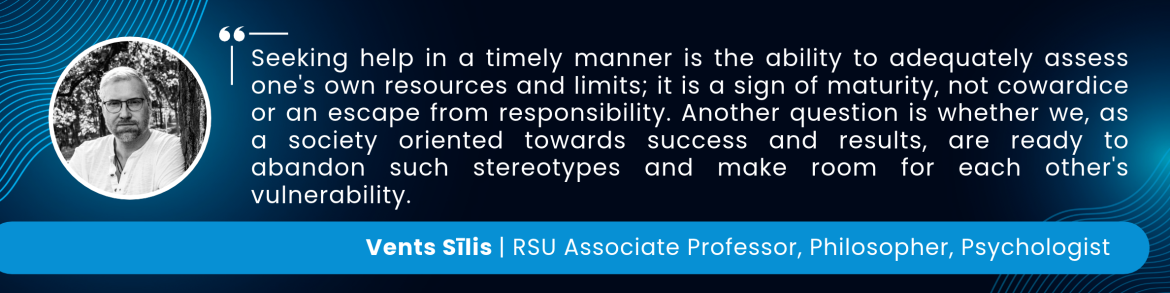
The stigma surrounding mental health problems stems from societal expectations that men should be strong, control their emotions and solve problems on their own. Seeking help is then perceived as a weakness. Vents Sīlis considers this perception destructive and misguided, explaining that vulnerability is important for both sexes and that seeking help at the right time is a sign of maturity.
“Vulnerability is actually not a demonstration of weakness, but rather a prerequisite for an adequate perception of oneself and the world. No human being is all-powerful – that would be an infantile, narcissistic fantasy of oneself as the eternal Hero,” adds Vents Sīlis.
If help is not sought, unresolved emotional problems can gradually escalate into serious mental health problems – depression, alcoholism and even suicidal tendencies.
“In men, depression often manifests atypically: as irritability, anger, risky behaviour, overworking or alcohol consumption. Therefore, it is less frequently recognised by both men themselves and doctors. The consequences are severe. Women are diagnosed with depression more often, but significantly more men die by suicide,” points out Ļubova Tihomirova.
Depression in men is indeed more difficult to diagnose, especially when society has taught and maintained the norm that the “stronger sex” must not cry, feel sadness or grieve. In this case, it would be useful to consult a psychotherapist or psychologist who could help identify unconscious, destructive thought patterns that prevent men from building healthy relationships both with themselves and with those around them. However, even in this respect, traditional talking about feelings in a psychologist's office is not always the most suitable form of therapy for men.
“The problem is not simply that ‘men do not ask for help’, but rather that the language and format of psychotherapy are closer to the form of socialisation in which women have been raised. Many believe that only a male therapist can understand them, which is not really true, but this perception has arisen due to the symbolic ‘feminisation’ of psychological support – women overwhelmingly predominate in the field of psychology, making it difficult for many men to imagine how to apply all of this to themselves,” emphasises Vents Sīlis.
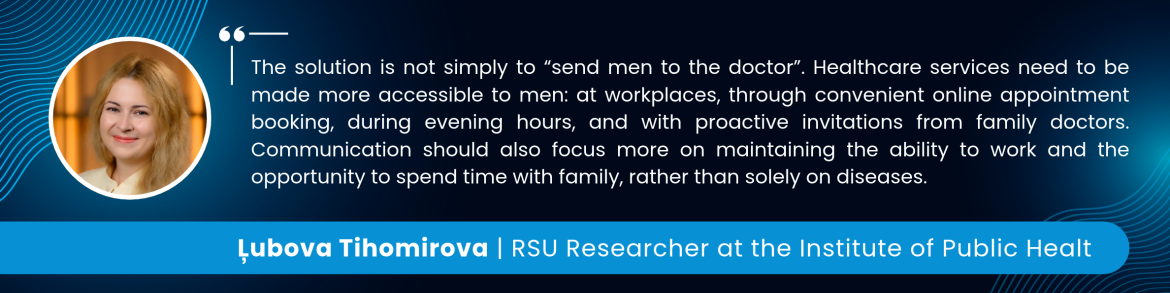
Ļubova Tihomirova also points out that, according to research, practical, action-oriented approaches are effective in reaching men: physical activity and sports, group activities, workplace programmes, and digital and anonymous support tools. “Open accounts of their personal experiences by well-known men also play an important role.”
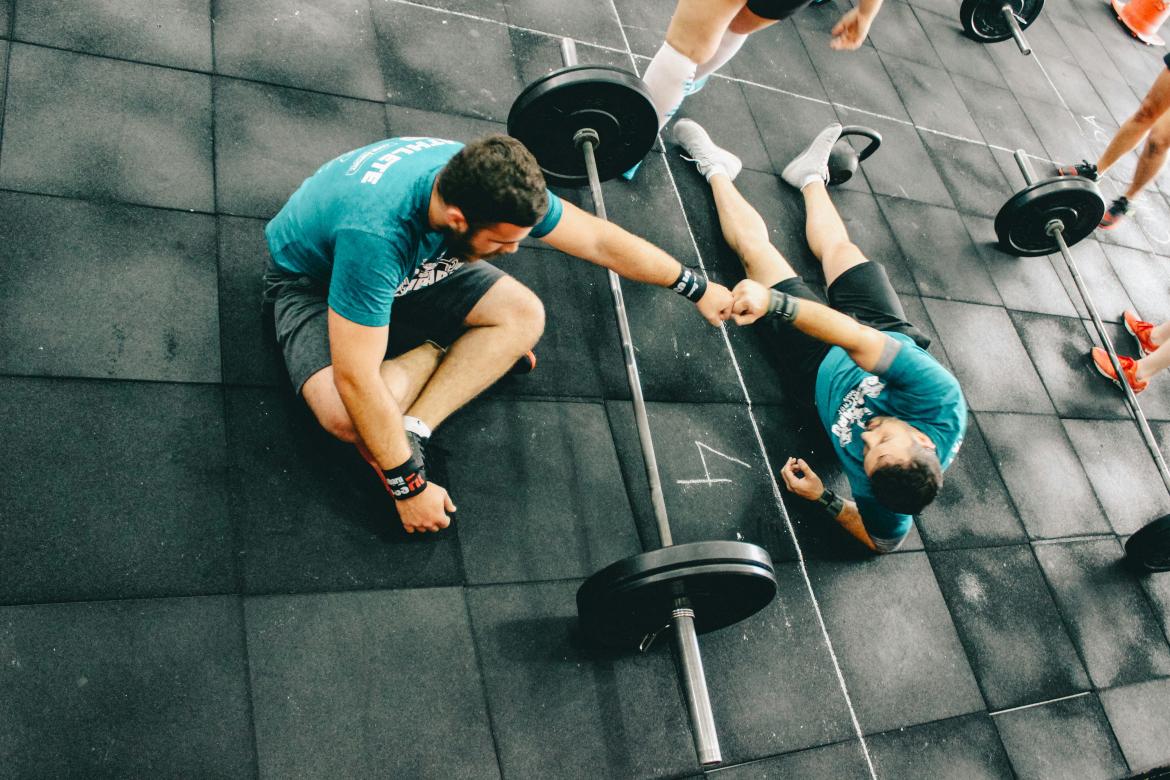
Conversations about emotions are not exactly an environment in which men are accustomed to finding themselves. “For a man, therapy can turn out to be like learning a foreign language. In other words, in order to say something about his feelings, emotions and needs, he must first learn the names of emotions and his own internal processes, which is not some kind of natural skill. The good news is that this culture is nevertheless changing, and men are visiting psychologists and psychotherapists increasingly often,” explains Vents Sīlis.
The Importance of Men's Communities
One of the healthy tools available today for maintaining emotional and mental health is participation in various men's groups. The most important difference lies in the purpose of the groups – there are men's groups where discussions focus on emotions, relationships, life's difficulties, masculinity, self-esteem and personal growth. There are also groups that help strengthen family relationships, understand the role of a father and parents' emotional well-being, while some groups provide psychological support to fathers going through divorce. There are also professionally led and specialised psychotherapy groups in healthcare institutions.
“Men's groups are created and led by men themselves. This means that men themselves are looking for a language and a way to talk about themselves and their internal processes – and it is possible that this language will differ from the generally accepted language of psychology,” explains Vents Sīlis.
“Of course, when a man attends a men's group for the first time, there is an initial emotional tension between his desire to open up emotionally and his fear of humiliation. To reduce this tension, clear safety rules have been introduced into the group's working methodology: confidentiality – everything said stays within the circle, listening with the heart – without judgement or the desire to compete, and refraining from giving unsolicited advice,” explains Vents Sīlis, who himself participates in the “Telpa Vīriem” group.
“Openness and depth emerge gradually, after a particular man dares to open up first. Usually, it is one of the group leaders who has gained some experience in practising vulnerability and authenticity, but just as often it is one of the men attending who is desperate and tired of struggling with his problems alone. And this is a powerful psychosocial mechanism: one man's openness paves the way for other men's authenticity.”
Men's groups are proof that men can address emotional difficulties in healthy ways – through courage, openness and acceptance of their own humanity.

In conclusion, I would like to add that every man should take care of both his physical and mental health in various ways – by eating a varied diet, engaging in appropriate physical activities, undergoing regular health check-ups and, when necessary, consulting mental health professionals or seeking support in men's groups. There are certainly other ways to take care of oneself in a healthy manner.
There is no one-size-fits-all solution. However, everyone can certainly do the things mentioned above and also find individual approaches that suit them to help them live a long and healthy life.
We wish you good health!