QUANTA
October 21, 2026
The University of Latvia Centre for Quantum Computer Science is engaged in long-term collaboration with two leading European quantum research centres — the Quantum Software Research Centre (the Netherlands) and the Paris Centre for Quantum Technologies (France) — based on a memorandum of cooperation signed by the three institutions. This collaboration strengthens Latvia’s research capacity in quantum software, helps develop international projects, and provides Latvian researchers and students with opportunities to participate in the European knowledge ecosystem.
Cooperation Partners
The Quantum Software Research Centre (the Netherlands) is a research centre for quantum software and technologies established in Amsterdam by CWI, the Dutch national research institute for mathematics and computer science, and the University of Amsterdam. The centre brings together theoretical and applied research in quantum algorithms, quantum information, cryptography, and quantum software technologies.
The Paris Centre for Quantum Technologies (PCQT) brings together units of universities and research organisations in the Paris area that conduct research in quantum technologies. Its activities cover quantum computing hardware and software, quantum communications and post-quantum cryptography, quantum sensors and metrology, as well as the materials and engineering solutions required to advance these technologies.
Main Project Objectives
Attracting international projects: Develop long-term cooperation with the Quantum Software Research Centre in the Netherlands, the Paris Centre for Quantum Technologies, and other member organisations of the European Quantum Software Institute, preparing at least two joint project proposals for European Union research and innovation programmes by 2029.
Joint research in quantum software: Conduct research into quantum algorithms and their mathematical methods, with a particular focus on search, optimisation, and graph theory problems; quantum walks; shell programs; transducers; and polynomial methods.
Researcher mobility and knowledge exchange: Support collaborative visits by Latvian and international researchers, joint seminars, and regular exchanges of experience, including organising a visit by a larger group of Latvian researchers to one of the partner organisations.
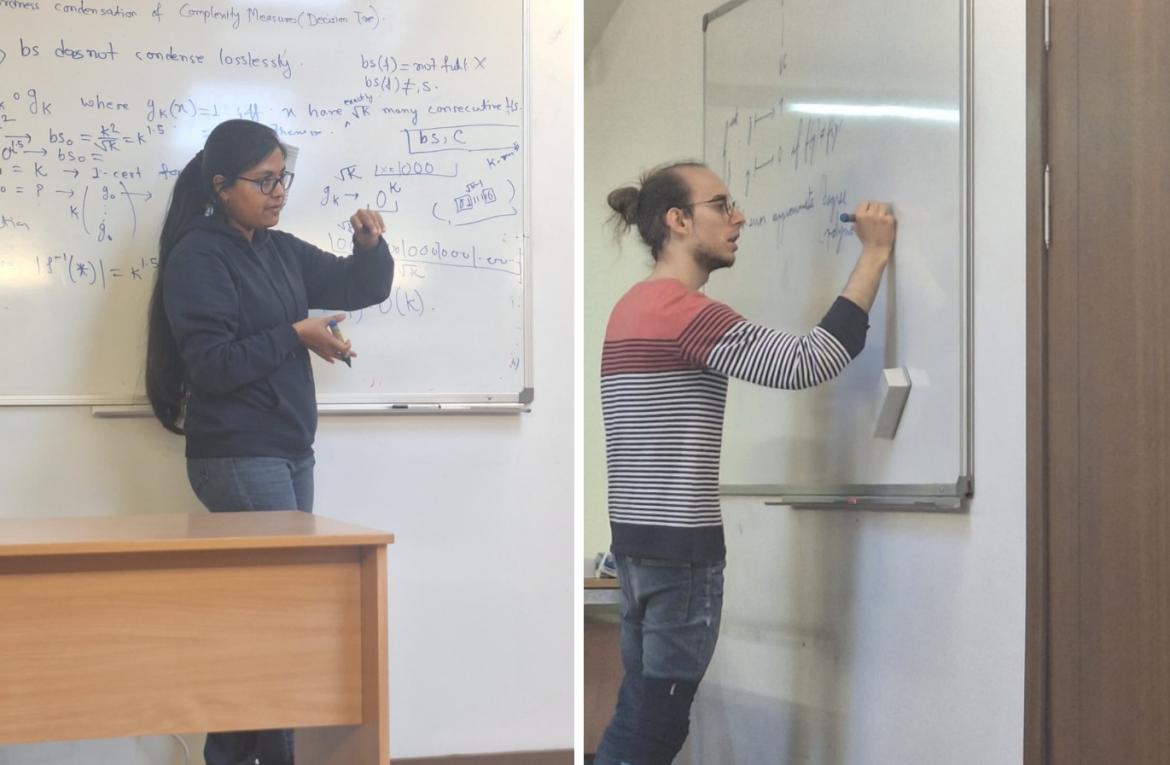
Enhancing scientific expertise and developing early-career researchers: Organise at least one in-person seminar or guest lecture series and at least one online seminar each year, featuring internationally recognised researchers from abroad.
Strengthening long-term institutional cooperation: Develop the European Quantum Software Institute as a joint research and education platform, promoting exchanges of master’s and doctoral students, joint supervision of early-career researchers, and the possible development of joint degree programmes or components thereof.
Knowledge dissemination and cooperation with Latvia’s innovation ecosystem: Raise awareness among researchers, students, businesses, start-ups, and the wider public about developments in quantum computing and opportunities for collaboration through the University of Latvia’s scientific conference, World Quantum Day events, quantum technology colloquia, public lectures, and other communication channels.