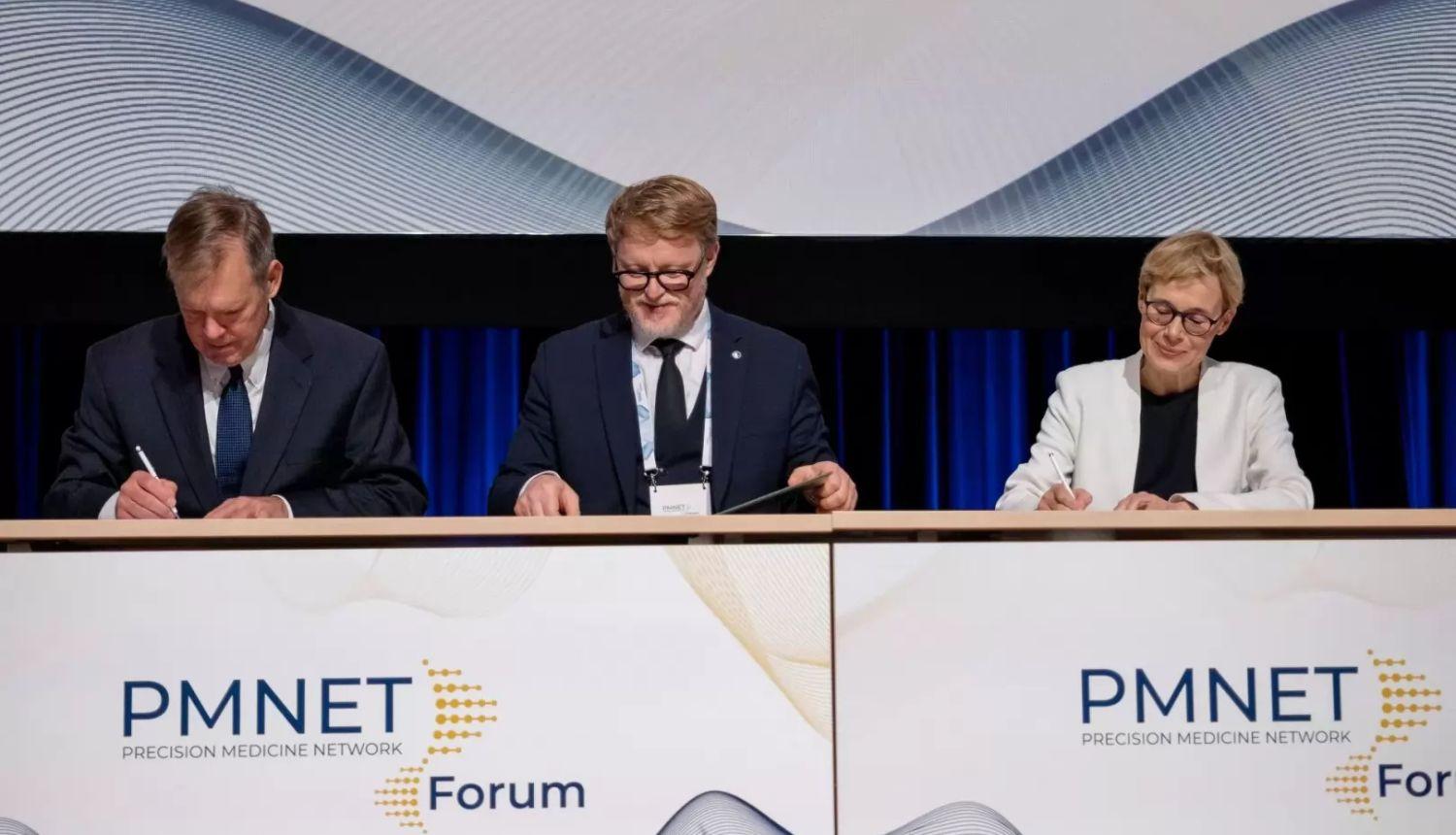
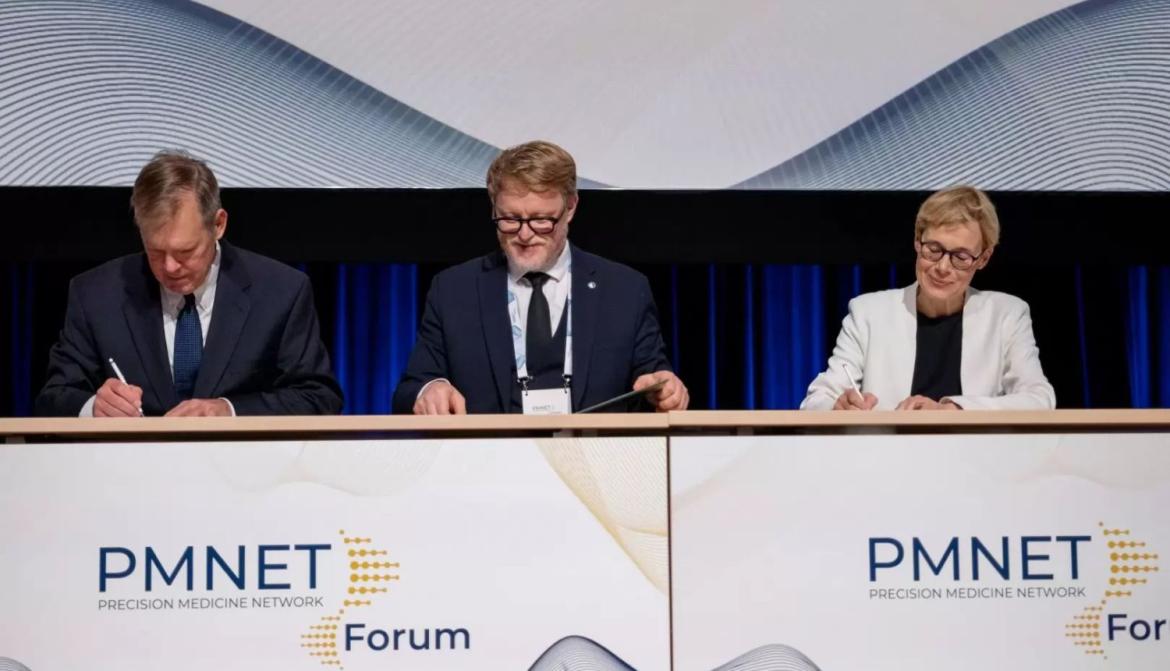
By signing a memorandum, Latvian computer network equipment manufacturer MikroTik, Riga Technical University (RTU), and the Artificial Intelligence Centre have agreed to collaborate on creating an artificial intelligence data centre for early cancer diagnostics and other applications necessary to society and businesses.
With the support of a donation from MikroTik, RTU’s High-Performance Computing (HPC) centre infrastructure will be expanded by the end of this year with an artificial intelligence data server. This will enable much faster processing of large-scale data analyses, artificial intelligence, and simulation solutions, particularly in the fields of biomedicine and early pediatric oncology diagnostics. The AI data centre infrastructure will be available not only to RTU but also to researchers at the Children’s Clinical University Hospital (BKUS), Riga Stradiņš University (RSU), the Latvian Biomedical Research and Study Centre (BMC), the University of Latvia (UL), and companies. It will serve as a modern resource base for research and business, increasing AI and HPC competencies and applications in Latvia. The partners will also support infrastructure users by providing training, consultations, technical support, and access to experts.
Artificial intelligence and HPC are vitally essential technologies that drive innovation and economic growth. Targeted development of these technologies will help Latvia increase the international competitiveness of science and industry, improve industrial productivity, create high-value jobs, strengthen digital sovereignty, and enhance public services, including healthcare. Until now, progress has been limited by restricted access to data centres and resources, an insufficient number of specialists, and a lack of synergy among industry, academic institutions, and state organisations.
The memorandum of cooperation was signed at the Precision Medicine Networking Forum PMNET, encouraging medical research and business organisations to actively utilise the latest technologies and AI solutions to improve public health. PMNET in Riga is held for the fourth time, bringing together healthcare specialists, scientists, entrepreneurs, and policymakers from the Baltics, Scandinavia, Western Europe, and the USA. It is organised by the Children’s Hospital Foundation, BKUS, RSU, the Latvian Children’s Oncology Fund, the Ministries of Economics and Health, the Investment and Development Agency of Latvia, and several patient organisations. Partners of the forum include RTU, UL, BMC, the American Chamber of Commerce in Latvia, Riga East Clinical University Hospital, and Pauls Stradiņš Clinical University Hospital.
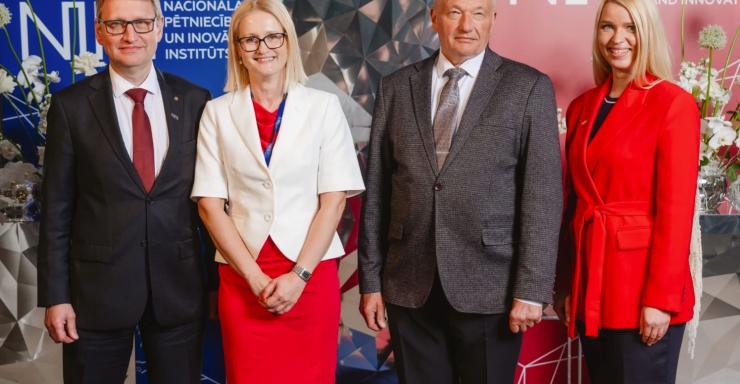
The memorandum is signed by RTU Rector Tālis Juhna, MikroTik co-owner and philanthropist John Martin Talley, and Artificial Intelligence Centre Director Natālija Čerņecka.
With the support of MikroTik, RTU has already modernised its high-performance computing infrastructure and enhanced students’ skills in health technology, particularly focusing on the use of big data for oncology diagnostics. The RTU Development Fund administers the donation.