When Daniela Godiņa talks about chemistry, it immediately becomes clear that for her it is far more than a dry science of formulas and laboratory calculations. In her view, chemistry is one of the most creative fields, where every day offers opportunities for new discoveries and ideas that can later be transformed into practical solutions to challenges important to society. In her postdoctoral research, Daniela is exploring ways to further utilise extractive compounds obtained from a by-product of the wood-processing industry—birch bark. She synthesises biomass-based polymer sorbents. Alongside her research work, she also stands out as an active ambassador of science for children, young people, and aspiring scientists.
Daniela’s interest in chemistry emerged already during her school years, when the exact sciences seemed particularly appealing, helping her understand how much of the world around us can be explained through science. As a result, there were no doubts about her professional path: Daniela earned her Bachelor’s, Master’s, and Doctoral degrees in Chemistry at the University of Latvia. During her studies, while working on her bachelor’s thesis, she became involved in a collaborative project with researchers from the Latvian State Institute of Wood Chemistry (LSIWC), a cooperation that later developed into an employment relationship.
As Daniela herself admits, her journey in science has evolved naturally and consistently—without major breaks or doubts about her chosen direction:
“Everything in my life has somehow progressed very steadily—there were no moments where I stopped and started wondering what to do next. I just keep moving forward and working. I have always been interested in chemistry because, in my opinion, it provides answers to very fundamental questions.”
For Daniela, chemistry is also a highly multilayered discipline—it requires precision, analytical thinking, and the ability to continuously search for new solutions. In her opinion, chemistry is not just about formulas and predictable outcomes, but a process in which even a carefully planned experiment can lead to an unexpected discovery.
“Chemistry is an extremely creative field because you constantly have to think of new solutions, new ideas, and innovations. Even when it seems that an experiment has been designed down to the smallest detail, something unforeseen can always happen—and that is exactly what makes this work so exciting,” she says.
Research on biobased sorbents
Continuing her scientific career after completing her studies, Daniela has focused her postdoctoral research on one of the wood-processing industry’s by-products—extractives from birch bark—and the possibilities of transforming them into innovative biobased polymer sorbents. Simply put, sorbents are materials that have the ability to absorb or bind various substances.
“The most typical sorbent that we have all seen is the small sachet with beads that you often find, for example, in a shoebox,” Daniela explains.
The key difference lies in the raw materials used. Traditional sorbents are often produced from petroleum-based materials, whereas Daniela’s goal is to develop a more environmentally friendly, biobased alternative by using renewable local resources.
In the future, this material could have a wide range of applications—from laboratory analytics and purification of various samples to environmental pollution remediation and biomedical solutions, including the processing of blood samples.
“We don’t usually notice sorbents in everyday life, but they play a very important role in many processes—both in laboratories and in addressing environmental issues. My goal is to explore how these materials can be further developed to be not only effective, but also more environmentally friendly,” Daniela explains.
The research is also significant in a broader context, as it aligns closely with the principles of the circular economy and sustainable resource use in Latvia, where the wood-processing industry is one of the most important sectors of the national economy. Birch bark, which is often regarded merely as a processing by-product, thus becomes a valuable raw material for creating high added-value products.
Science beyond the laboratory
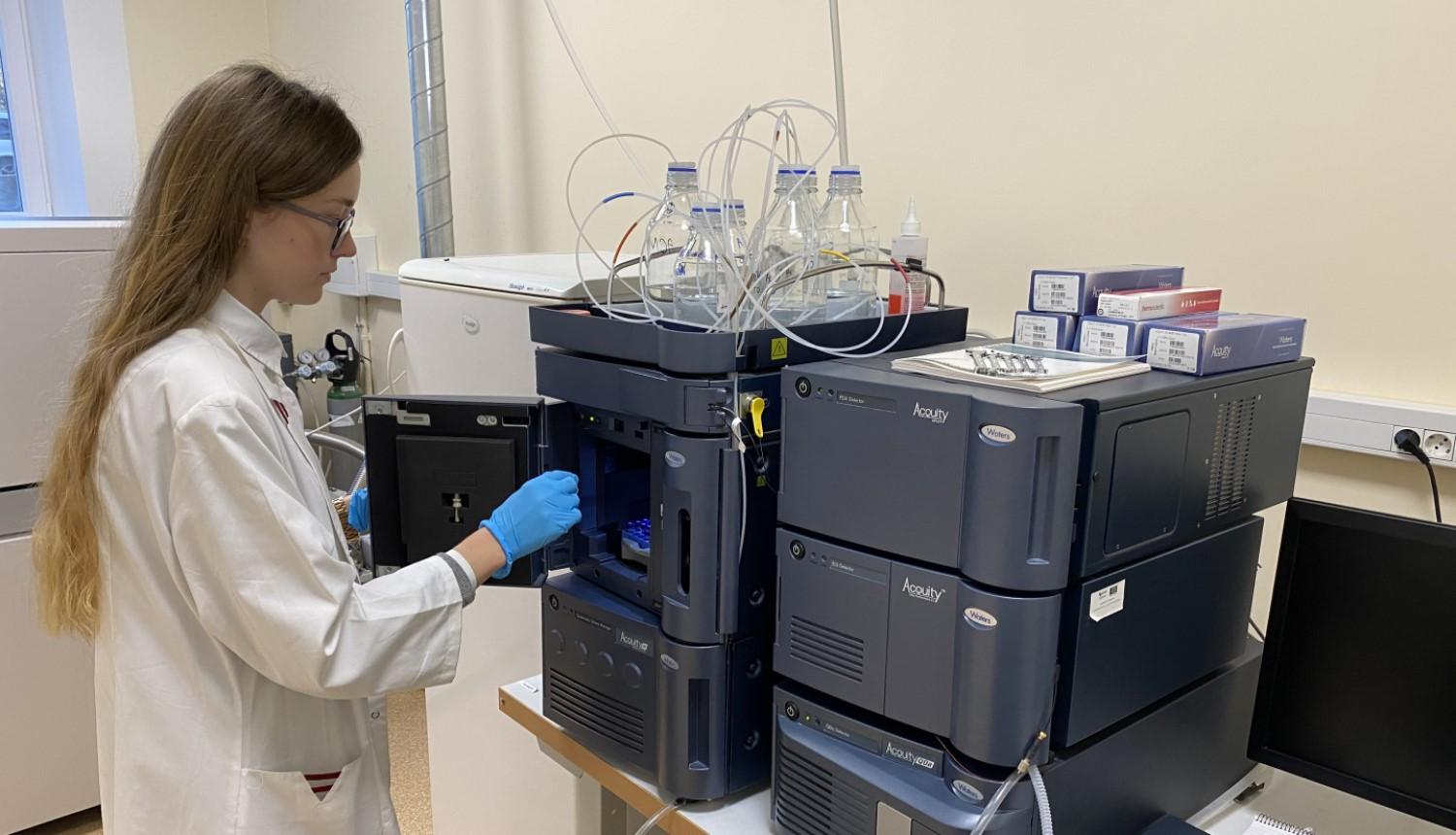
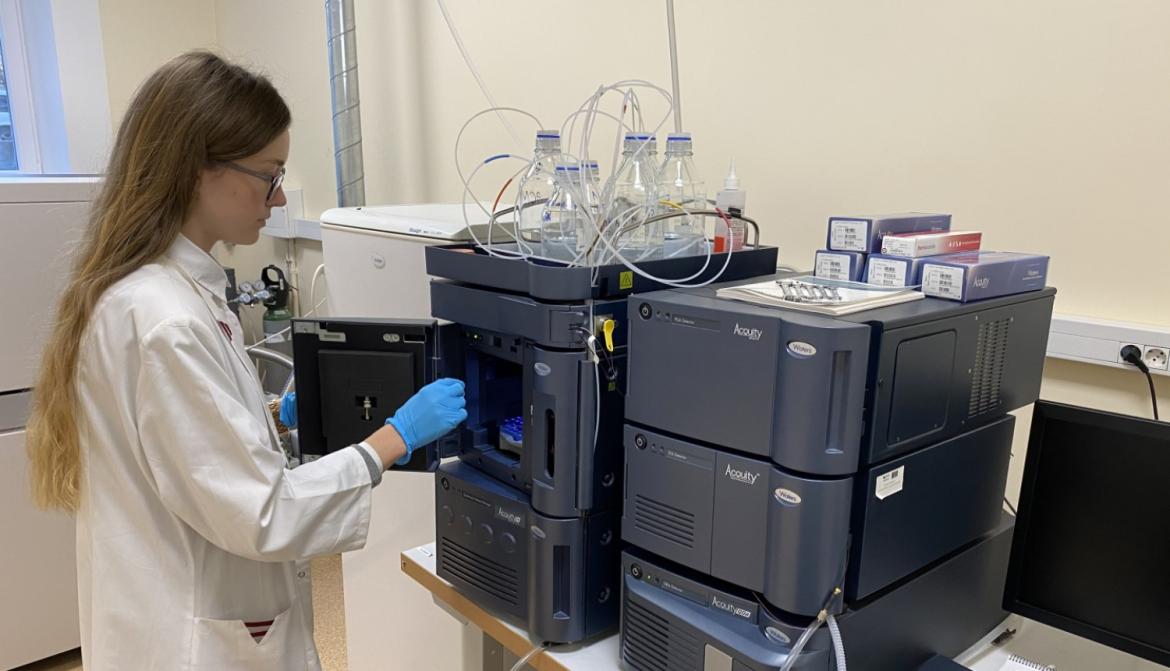
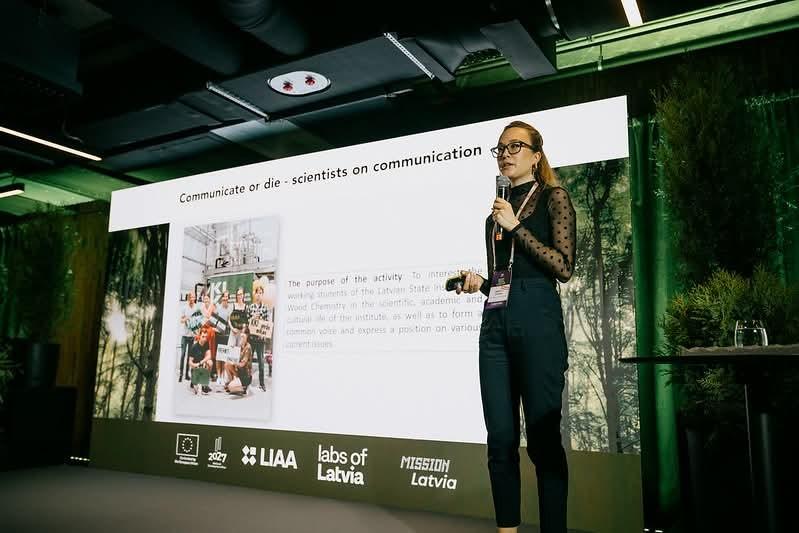
Working at the Latvian State Institute of Wood Chemistry, Daniela specialises in analytical chemistry—her daily work involves analysing various samples, developing methods, and studying the properties of substances. However, laboratory work is only one aspect of her professional life, as no two days at the institute are alike. In parallel, Daniela regularly engages with school pupils and students who visit the institute, leads tours, demonstrates experiments, and explains how science works in real life—beyond textbooks.
Working with children and young people has become a particularly important mission for her. Daniela believes that interest in science most often arises not in theory, but at the moment when one can see a process in action and understand how it relates to the real world.
“It is very important to me to go out and talk about science and scientists. My inner goal is to break stereotypes—that we, scientists, are boring, that there is no place for personality in science. I find it important to show that you can be creative, vibrant, and interesting even in a laboratory,” she emphasises.
In Daniela’s view, society still tends to perceive science as complex and distant, which also negatively affects children’s and young people’s attitudes toward the exact sciences. Although the importance of STEM is discussed more and more, interest in these fields does not always grow as quickly as hoped. One of the problems, she believes, is the frequent lack of practical experience and real-life connections in the learning process.
“If a child sees only theory, interest quickly fades. Interest emerges when they see how it works in real life—in an experiment, a laboratory, real work. Very often children do not even know what a scientist actually does, and that is why it is so important to show them this environment,” Daniela explains.
She also believes that scientists themselves must play an active role in building this connection between schools, universities, and future professions, as early experiences often determine whether a young person will later choose a career in the exact sciences. Therefore, working with young visitors to the institute is not merely an additional activity alongside research—it is an essential part of her professional identity and a personal investment in the future generation of scientists.
Daniela describes herself as a person in whom two seemingly different worlds coexist naturally—analytical thinking and creativity. On the one hand, she enjoys structure, precision, and logic; on the other, the ability to present ideas engagingly, inspire others, and create lively dialogue about science. This balance between professional excellence and public engagement is also reflected in the recognition she has received—after earning her doctoral degree, Daniela became one of the recipients of the Baltic Scholarships for Women in Science.
About the Postdoctoral Research Programme
The Postdoctoral Research Programme in Latvia is implemented with co-financing from EU funds. Its goal is to develop the skills of early-career researchers, enhance their scientific capacity, and provide career start-up opportunities in research institutions and enterprises, strengthening the renewal of research human resources and increasing the number of qualified researchers in Latvia. Measure 1.1.1.9 “Postdoctoral Research” (2024–2029) is administered by the Latvian Council of Science.
More information about the programme: https://www.lzp.gov.lv/lv/pecdoktoranturas-programma