The first experiment in Latvia to build a road using a sustainable bio-asphalt mixture—replacing a large portion of petroleum-based bitumen with lignin, a by-product of wood processing, and reclaimed asphalt—has been successful. Scientists, working in close cooperation with industry, continue to improve the properties of bio-asphalt, including by adding rubber granules to enhance resistance to cracking, and are also studying how the use of lignin can help slow down asphalt aging.
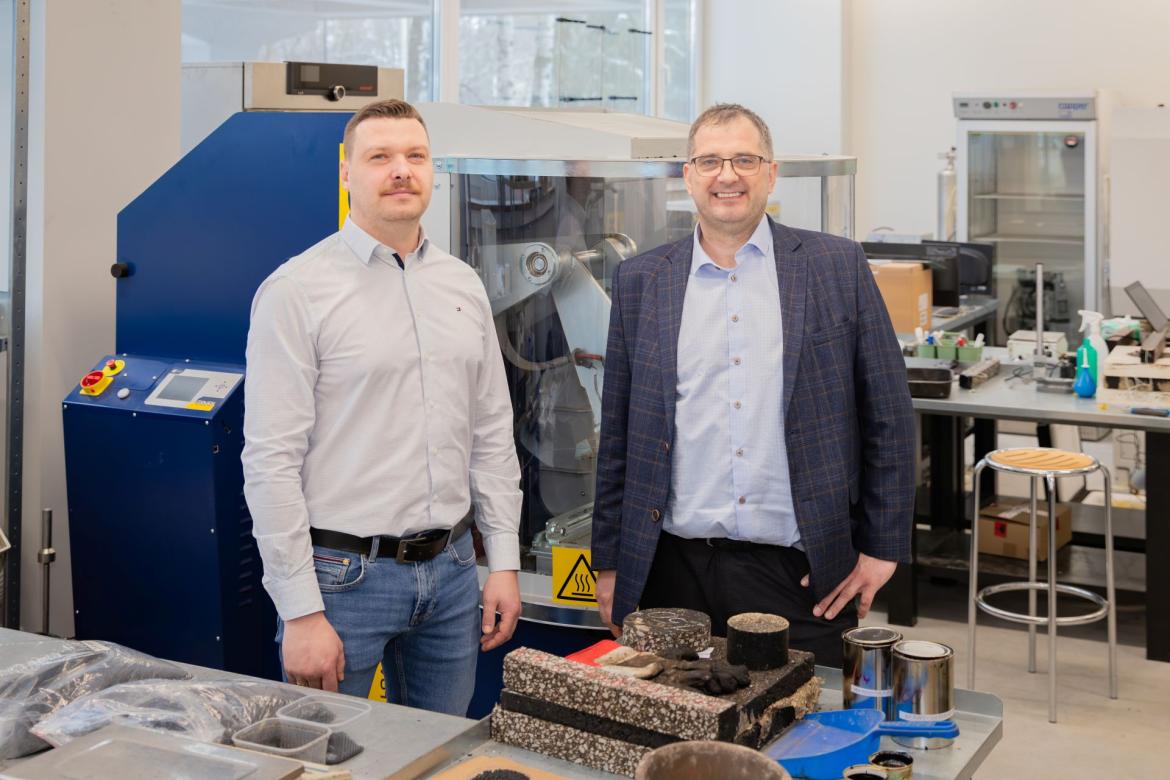
the Institute of Civil Engineering of the RTU Faculty of Civil Engineering and Mechanical Engineering, Viktors Haritonovs. Photo: Elīna Karaseva, RTU
The first experiment in Latvia to build a road using a sustainable bio-asphalt mixture—replacing a large share of petroleum-based bitumen with lignin, a by-product of wood processing, and reclaimed asphalt—has been successful. Scientists, working closely with industry partners, continue to improve the properties of bio-asphalt, including by adding rubber granules to enhance resistance to cracking, and are also studying how the use of lignin can help slow asphalt aging.
On February 27, a research team from Riga Technical University (RTU), SIA “Vianova,” and the Latvian State Institute of Wood Chemistry will receive a Certificate of Recognition from the Latvian Academy of Sciences (LAS) for a significant scientific achievement of 2025—the development of a bio-asphalt mixture incorporating the renewable biopolymer lignin. The LAS Certificate of Recognition will be awarded to the team of scientists: Mg. sc. ing. Rolands Īzaks, Dr. sc. ing. Viktors Haritonovs, Ph.D. Artūrs Riekstiņš, Dr. chem. Jevgenija Ponomarenko, Ph.D. Aleksandrs Aršanica, and Mg. sc. ing. Raivis Sparāns.
The novelty of the solution at the international level is evidenced by a publication in the high-impact scientific journal Construction and Building Materials, as well as interest from road industry professionals in other countries. It has also been recognized as one of last year’s best scientific papers by the RTU Faculty of Civil Engineering and Mechanical Engineering.
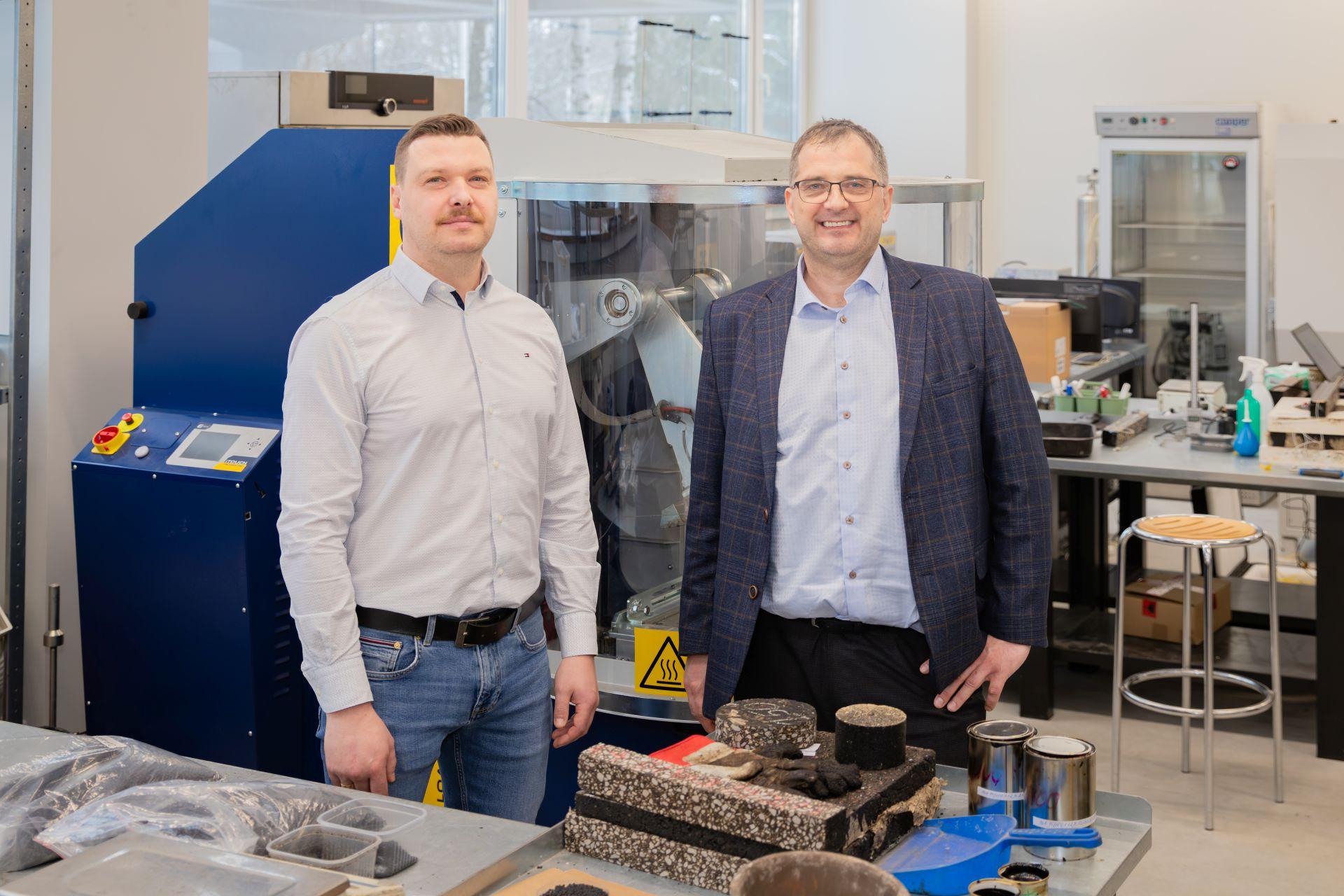
“The research project demonstrates that the gap between science and industry can be successfully bridged by creating practical and industry-relevant innovations. The researchers managed to replace 48% of the new bitumen binder—20% with lignin and 28% with bitumen from reclaimed asphalt. Reclaimed asphalt combined with the biopolymer lignin is a promising solution that reduces dependence on new fossil-based materials while also lowering CO₂ emissions, thereby significantly reducing the industry’s environmental impact,” explains Rolands Īzaks, researcher at the RTU Faculty of Civil Engineering and Mechanical Engineering and Head of Production at SIA “Vianova.”
The jointly developed innovation, tested under real operating conditions on the main state highway Riga–Sigulda, represents an important step toward more climate-friendly road construction. A life cycle assessment of the bio-asphalt indicates that the use of lignin and reclaimed asphalt reduces global warming potential by 24% to 55%. Testing and real-life operation confirm that the properties of bio-asphalt are equivalent to traditional asphalt mixtures. The road section, which is used daily by many passenger and heavy vehicles, has performed well one and a half years after construction, with no detected defects or visible differences.
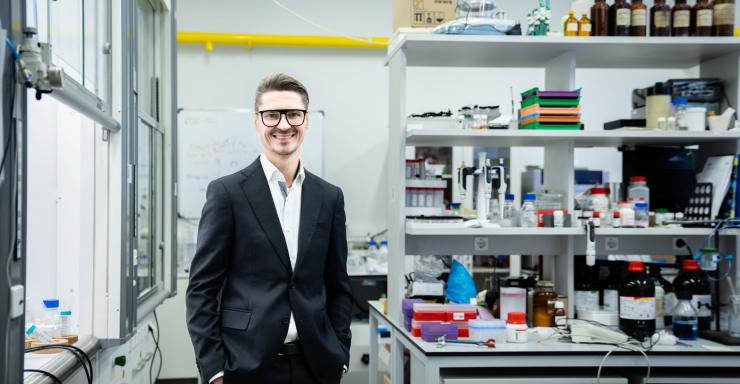
The use of lignin in road construction is currently attracting global scientific attention, notes Viktors Haritonovs, Associate Professor at the Institute of Civil Engineering of the RTU Faculty of Civil Engineering and Mechanical Engineering.
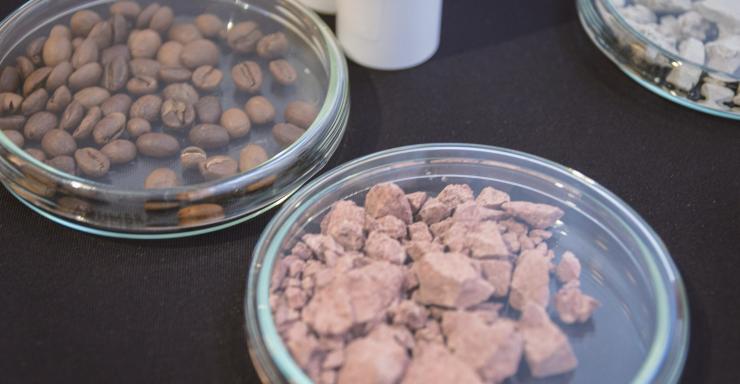
Latvian researchers have analyzed lignin from various sources. Lignin is found in all vascular plants and is generated industrially as a by-product of wood biorefining or paper production. Lignosulfonate, previously successfully tested by RTU researchers as a material for treating unpaved road surfaces, is not suitable as a bitumen binder substitute due to its high sulfur and ash content, which may decompose at high temperatures and pose environmental and health risks. Kraft lignin and hydrolysis lignin have been identified as the most suitable types, as they improve resistance to cracking at low temperatures and rutting at high temperatures.
After evaluating lignin’s properties, researchers are now actively testing the addition of end-of-life tire rubber and plastic waste to develop an innovative multifunctional bitumen modifier for asphalt pavements capable of withstanding heavy traffic loads and remaining resilient to climate change.
This research is being conducted in cooperation with the companies “Vianova” and “Air Glass Ceramics.” In collaboration with researchers from the RTU Faculty of Natural Sciences and Technology, the Swiss–Latvian Cooperation Programme’s “Applied Research” project LACHMAT is exploring the possibility of creating a bio-based anti-aging additive for asphalt concrete from lignin.
“Lignin has strong potential to replace bitumen and also acts as a good antioxidant, slowing road aging, while rubber makes the pavement more flexible, preventing cracking and rutting. By combining these properties, we obtain a sustainable and smart road construction material,” emphasizes V. Haritonovs.
Under his leadership, RTU has for years successfully developed and tested technologies for modifying bitumen and asphalt concrete with end-of-life rubber and plastic waste, as well as smart solutions for asphalt self-healing, through experimental road sections built in Latvia and abroad, including in the United States. These technologies extend pavement service life while significantly reducing the environmental impact of the road construction sector.
“Vianova” is also continuing its research, aiming to introduce asphalt concrete mixtures that significantly reduce CO₂ emissions throughout their life cycle—from production to maintenance and rehabilitation. The project is being implemented in cooperation with the Smart Materials and Technologies Competence Centre and RTU.
All these studies contribute to the development of more environmentally friendly road infrastructure and the decarbonization of the sector, moving toward the European Union’s climate neutrality goals.