On 7 April, World Health Day is celebrated across the globe. One of the most pressing public health challenges worldwide today is obesity and excess weight. Due to sedentary lifestyles and unhealthy dietary habits, an increasing share of the population — including children and young people — is affected. Obesity significantly increases the risk of cardiovascular diseases, diabetes and other chronic conditions, while placing a growing burden on healthcare systems and national economies. As a result, not only public health experts but also scientists are actively seeking ways to address the issue of excess weight and obesity. One such internationally significant initiative is the Horizon Europe project “4Sir2”, in which the Latvian State Institute of Wood Chemistry (LSIWC) is participating.
Latvian researchers, together with partners from nine other countries, are working on the development of a functional beverage made from grape pomace. It turns out that this by‑product of winemaking also contains valuable biologically active compounds — such as resveratrol and other polyphenols associated with metabolic regulation. The newly launched project is structured in several stages, with each country’s researchers responsible for a specific part of the overall process. Given their expertise, scientists at the Latvian State Institute of Wood Chemistry (LSIWC) are currently developing technologies for extracting and preserving these valuable compounds, while later stages will assess how sustainable and environmentally friendly this solution is in the production process.
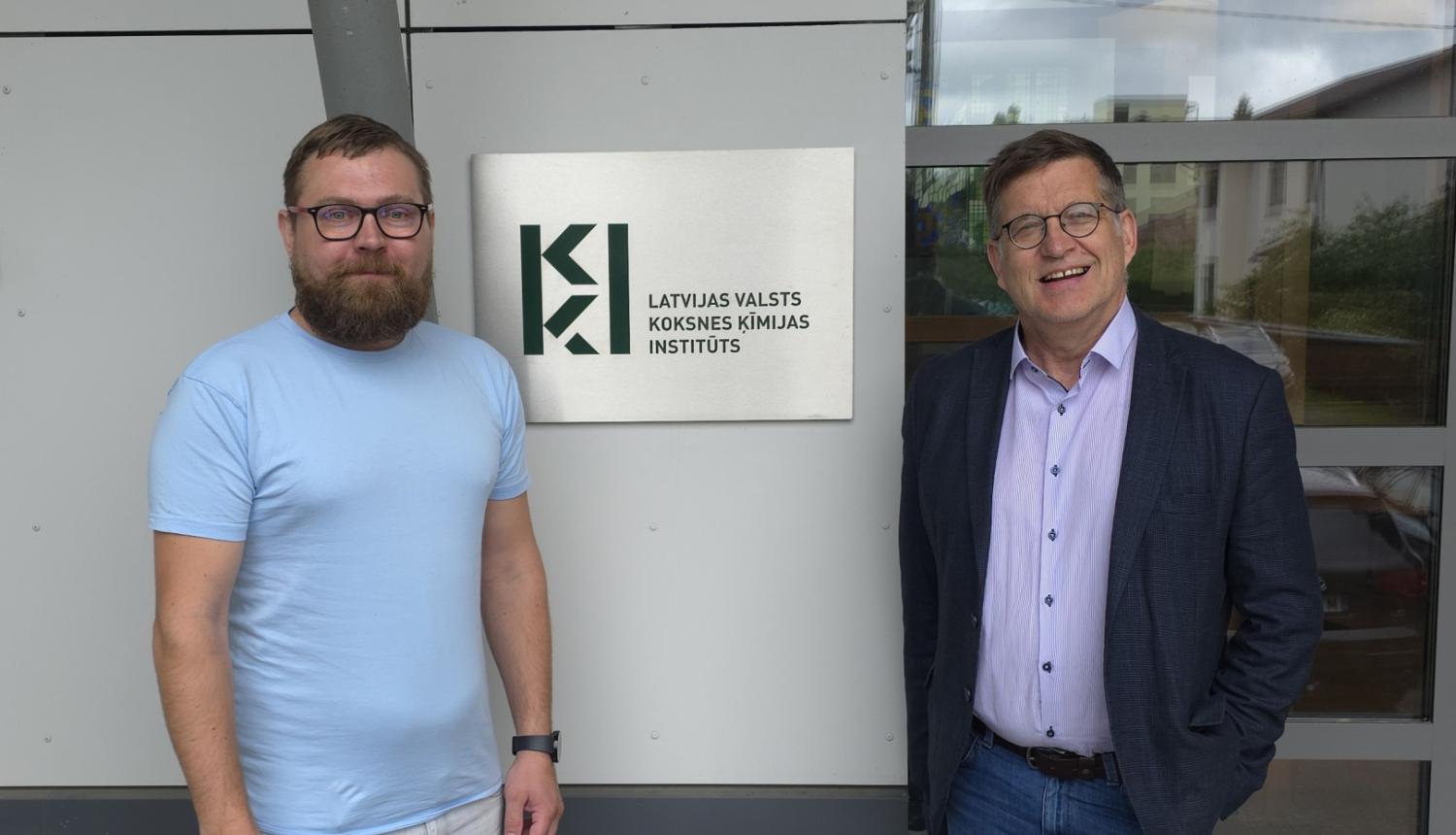
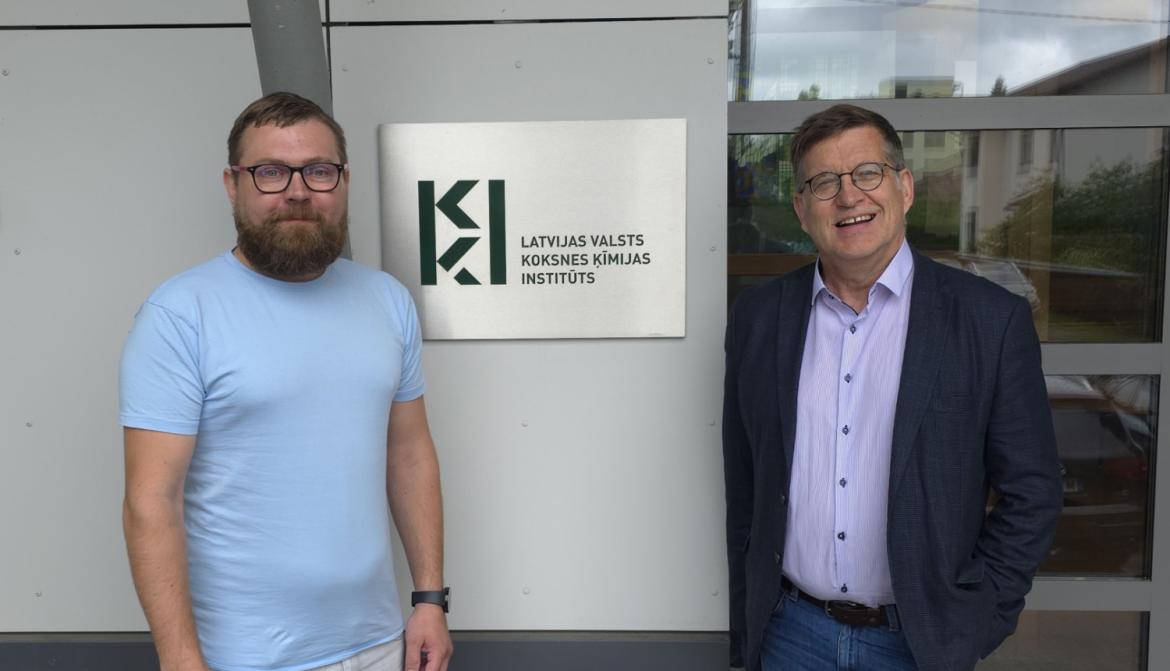
“The project covers the entire chain — from raw material to the final product — and involves both scientists and companies from the food industry. This means the work does not take place only in the laboratory; practical implementation is considered in parallel,” explains Dr.sc.ing. Uģis Cābulis, Deputy Director for Research and Leading Researcher at LSIWC.
The project focuses on a by‑product of grape processing — grape pomace, which still contains valuable biologically active compounds.
“Our task is to understand how to extract and preserve these high‑value substances from this raw material as efficiently as possible,” he says.
More specifically, the researchers are analysing how different processing methods affect the content of biologically active and metabolically beneficial compounds during production.
“After grape processing, the pomace is moist and spoils quickly, so proper handling is crucial. We are comparing different drying methods to determine which one best preserves these compounds,” says Dr.chem. Māris Lauberts, a leading researcher at LSIWC involved in the project.
Previous studies show that storage conditions also play a significant role — for example, ultraviolet radiation can reduce the concentration of active compounds, making it necessary to find solutions to minimise these losses already in the early stages of processing.
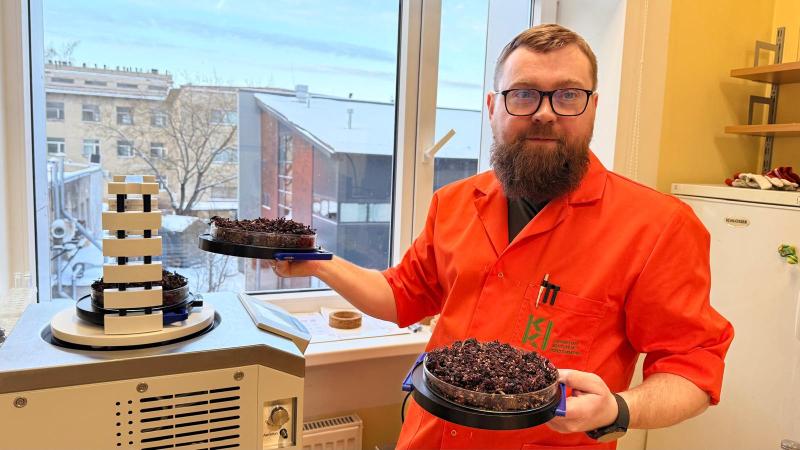
Alongside this, the scientists are also working on optimal extraction methods to obtain the highest possible amount of active compounds from grape pomace. This is essential to ensure that these substances can be effectively used in functional food products in the future.
“It is important not only to demonstrate that these compounds are present, but also to find a way to extract them in sufficient quantities and at the lowest possible cost,” emphasizes M. Lauberts.
The project covers the entire value chain — from raw material to final product — and involves both scientific partners and companies from the food industry. This means that, in parallel with laboratory research, practical applications are also being considered. Although the project is planned to run until 2030, the first results and product prototypes may emerge already in the earlier stages — within the next few years.
Participation in such international projects not only enhances the global visibility of Latvian science but also provides important opportunities for young researchers to begin their scientific careers. The Latvian State Institute of Wood Chemistry highlights that it is open to attracting young scientists — students are involved in research activities, have the opportunity to develop bachelor’s, master’s and doctoral theses under the guidance of experienced researchers, and can work with modern technologies.
“We attract highly motivated young people, and we immediately give them the opportunity to work on real research. It provides practical experience and helps them understand whether they see their future in science,” notes U. Cābulis. At the same time, researchers acknowledge that overall interest in STEM fields could be higher — unfortunately, even state‑funded study places at Latvian universities are not always fully filled. “For Latvia to develop, we need more young people choosing natural sciences, technology and engineering,” he emphasizes.
To strengthen its scientific capacity and fully participate in international projects of this scale, the Latvian State Institute of Wood Chemistry is purposefully developing its research infrastructure and actively using support from European Union funds. The institute is currently implementing the project WoodChemPlus – Development of a Bioeconomy Excellence Centre at the Latvian State Institute of Wood Chemistry, which provides more than one million euros for the acquisition of modern laboratory equipment and for strengthening the institute’s work in the fields of bioeconomy, smart materials and biomedicine. Part of this new infrastructure is already being used in the “4Sir2” project, enabling Latvian scientists to work with high‑precision technologies.