The European Commission has selected 70 companies within the framework of the European Innovation Council pre-acceleration call, with the aim of supporting the capacity of early-stage deep tech companies.

Support has also been granted to two Latvian startups – “P-Agro Minerals” and “PrintyMed”. Each will receive 500,000 euros for further development of technology, strengthening capacity in Europe, and the development of a globally competitive science-based solution.
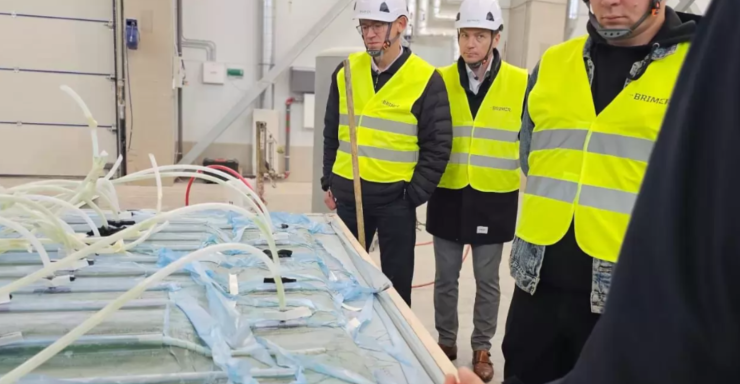
“P-Agro Minerals” is developing a filter capable of collecting phosphorus from wastewater, which could later be used as fertilizer in agriculture in accordance with the principles of the circular economy.
“Most of the funding will be allocated to the development of the “P-Agro Minerals” technology – strengthening the team and testing the letonite filter pilot system in real wastewater treatment conditions in industry, as well as protecting intellectual property and increasing production capacity. At the same time, a significant part of the investment is intended for the company’s commercialization, including the development of international partnerships, market validation and attracting investors, in order to ensure successful entry into the European market,” says the company’s co-founder Annija Emersone.
“We applied to the programme because this is a rare opportunity to attract the necessary funding for technology development without giving up company shares to investors, thereby allowing the founders to retain a majority stake in the company for as long as possible and to overcome the so-called startup “valley of death”, when the company is too early to attract private investment and generate profit, but still requires research and development resources before it is able to offer its technology to the market.”
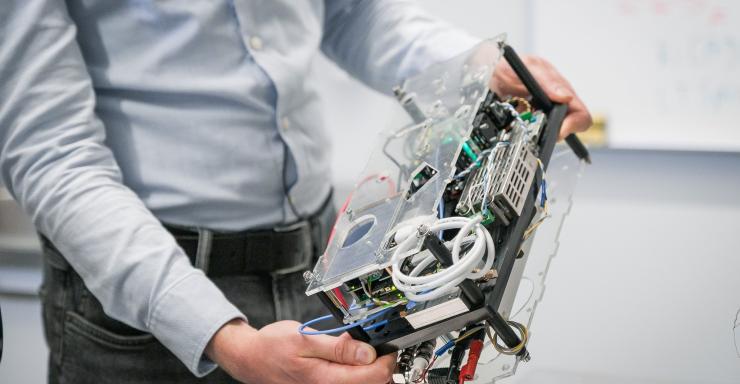
The second Latvian startup that will receive a 500,000 euro grant is “PrintyMed”. It has developed artificial spider silk in a biomimetic way from a technology created at the Latvian Institute of Organic Synthesis, imitating the process as it occurs in nature.
“Within the attracted funding, we will optimize and validate the functionality of the spider silk membrane for a specific application, as well as integrate this membrane into a selected organ-on-a-chip model. By the end of the project, we will have succeeded in raising the technology readiness level from level 4 to level 6. This means that we will already be able to apply for participation in the European Innovation Council Accelerator programme, where correspondingly larger funding is also available. There we could complete the membrane development and start sales,” outlines the startup’s plans, says “PrintyMed” co-founder Jekaterina Romanova.
The aim of the European Innovation Council pre-acceleration programme is to strengthen the capacity of small and medium-sized enterprises and startups, which would then help them attract private investment and access national or regional support programmes. In total, companies selected in this call will receive approximately 32.5 million euros in funding. The budget for the next European Innovation Council pre-acceleration programme call is planned at 40 million euros. The funding per company will be increased to 1 million euros. Applications will be open until November 2027.
“The requirements for receiving funding from the European Investment Council are very high. Depending on the programme, only 2–7% of applications are approved. Therefore, competition is very strong, and all applicants must pass several strict evaluation stages. Both supported Latvian startups have originated from research institutions. And we are very proud that the startup “P-Agro Minerals” graduated from our acceleration programme in 2023,” emphasizes Andris Baumanis, head of the Latvian university accelerator “UniLab”.