Expert estimates indicate that the deep tech, or knowledge‑intensive technologies, sector in Europe could reach a value of nearly one trillion euros by 2030 and create up to one million new jobs. Meanwhile, the Organisation for Economic Co‑operation and Development (OECD) currently highlights the development of this field as one of the most important instruments for economic transformation, strengthening technological competitiveness, and ensuring societal resilience in conditions of increasing geopolitical uncertainty.
Under the concept of deep tech lie solutions based on complex scientific discoveries and research — ranging from artificial intelligence, biotechnology, and medical technologies to robotics, photonics, quantum technologies, new materials, and defense solutions. The development of these sectors often requires long‑term research, advanced laboratory infrastructure, highly qualified specialists, and significant investments. At the same time, it is precisely knowledge‑intensive companies that generate higher added value, well‑paid jobs, and substantial export potential; therefore, the sector attracts increasing private investment, as well as support from national governments and the European Union.
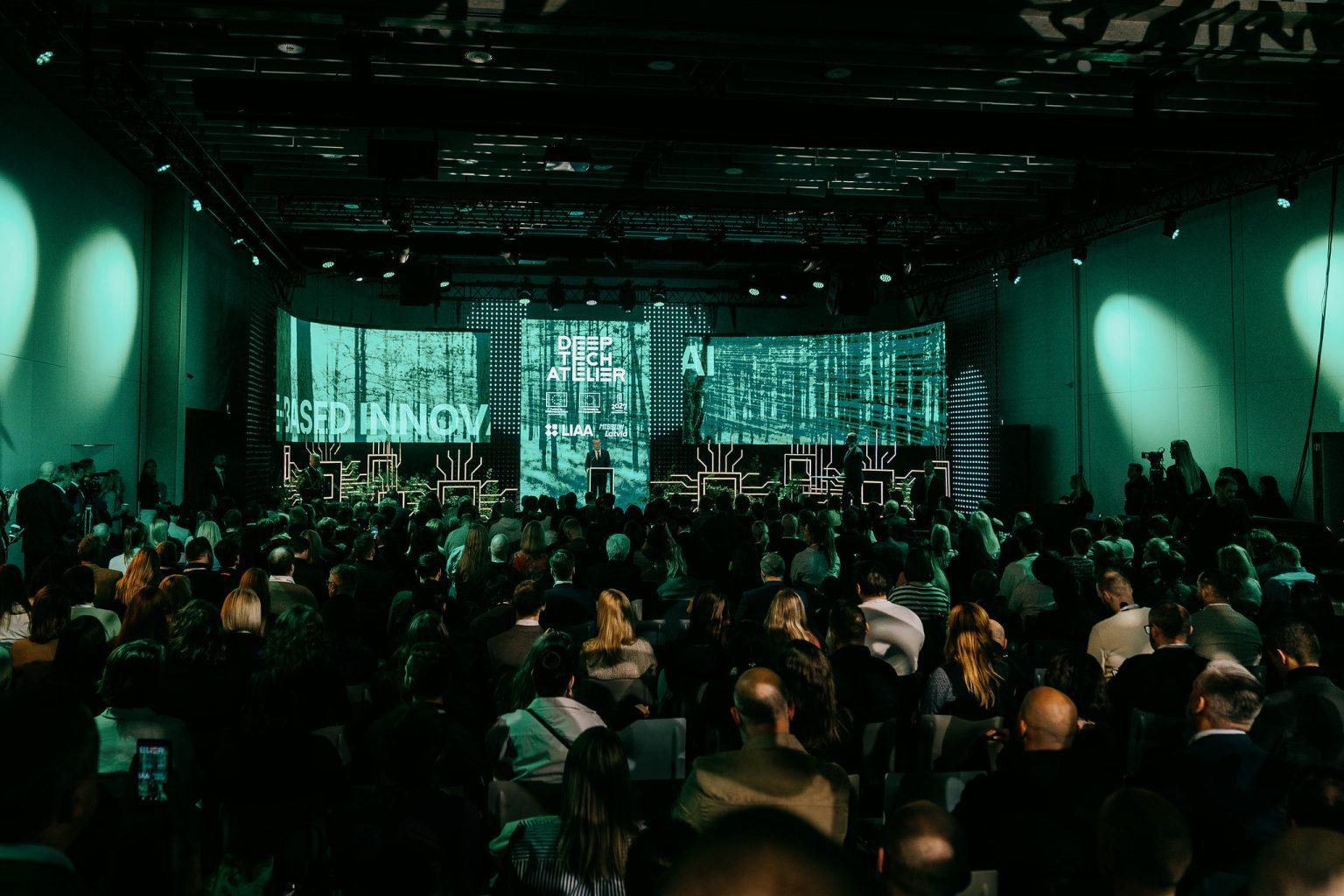
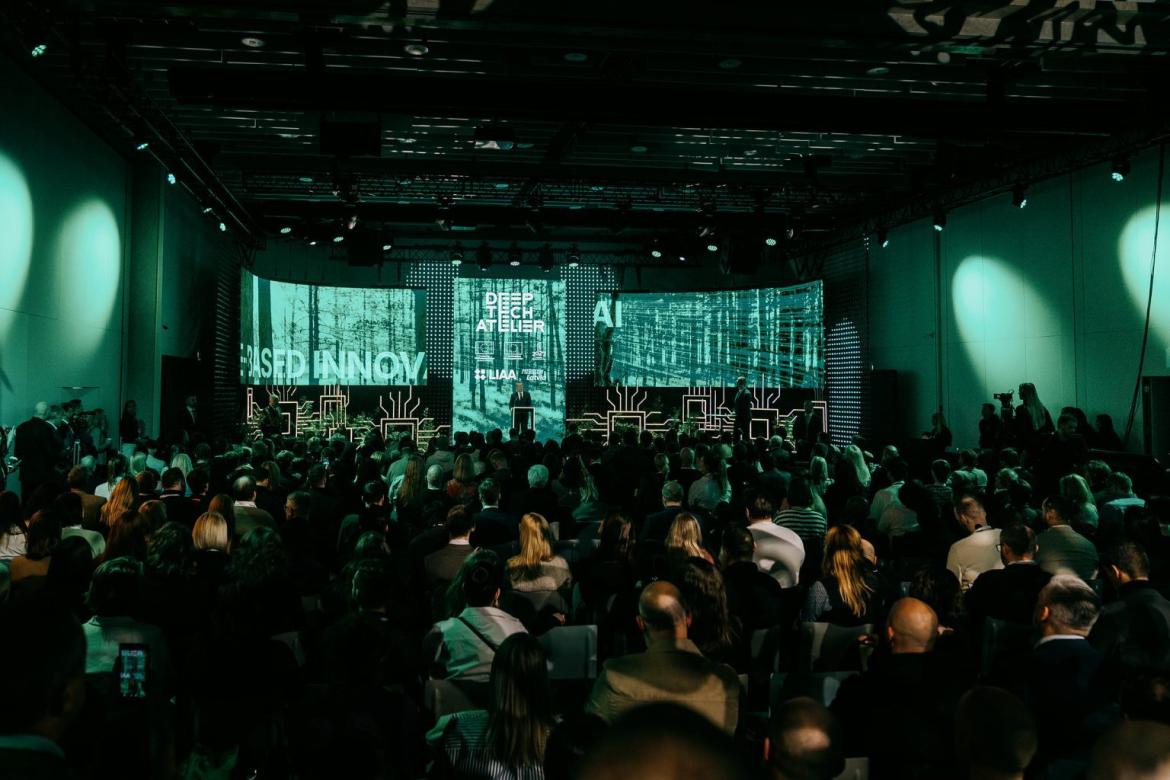
In Latvia as well, knowledge‑intensive technologies — and in particular biomedicine, medical technologies and pharmaceuticals, information and communication technologies, photonics, and smart materials — have been defined as one of the country’s strategic development directions. Special attention will also be given to these topics this year at an event organized by the Latvian Investment and Development Agency (LIAA) — the leading science‑based technology conference in Northern Europe, “Deep Tech Atelier 2026”, which on May 14 and 15 in Riga will bring together scientists, startups, investors, policymakers, and technology experts from more than 60 countries.
This year’s conference will focus on health technologies, bioengineering, artificial intelligence, and dual‑use solutions, with particular attention devoted to the practical application of innovations in healthcare and society.
The conference program will include investor presentations, startup pitches to investors, EXPO stands, and demonstrations of practical technological solutions, while more than 100 international experts and industry representatives will take the stage across three stages. One of them will be Ukrainian innovation expert Mariia Krasnoshchok, who in her professional work operates at the intersection of science, innovation, and policy. Mariia is an innovation expert at the Ministry of Education and Science of Ukraine and is involved in innovation policy and research development initiatives in Ukraine and Europe.
Ukraine as a global testing environment
In her view, one of the most significant accelerators of the development of medical technologies in recent years has been precisely the war in Ukraine, which has transformed innovations from theoretical ideas into practical solutions for real life‑saving situations. “After the outbreak of the war, science in Ukraine has shifted from being a driver of economic development to becoming the foundation of national survival. Whereas previously the research and development cycle could last for years, today innovations reach practical application within just a few weeks. They must be capable of addressing concrete and urgent problems, therefore most of the intellectual capacity is currently concentrated in the fields of medical and defense technologies,” she explains.
In Ukraine, under the impact of hostilities, both tactical medicine and rehabilitation solutions, telemedicine, bionic prosthetics, and applications of artificial intelligence in diagnostics are developing particularly rapidly. “At the forefront right now are clearly tactical medicine, the development of complex prosthetics, and the treatment of injuries caused by explosions. At the same time, psychological support systems for the treatment of so‑called ‘invisible wounds’ are becoming increasingly important, which is why Ukraine has now effectively become a global testing environment for new rehabilitation and medical treatment solutions,” says Mariia Krasnoshchok.
According to her, artificial intelligence (AI) is already being widely used in the analysis of computed tomography scans and X‑rays, helping doctors more quickly identify shrapnel and other injuries, while in the field of prosthetics AI technologies help adapt and “train” bionic limbs to the needs of a specific patient. “Immersive technologies and computer vision solutions are also developing particularly rapidly, helping patients reduce phantom pain after amputations and adapt to prostheses. Many technologies that were initially developed for military needs are now increasingly finding their way into civilian medicine as well,” the expert notes.
During the years of war in Ukraine, several internationally recognized medical technology solutions have also been developed, including Esper Bionics’ smart bionic prostheses, SYLA’s artificial‑intelligence‑powered knee prostheses, Allbionics’ 3D‑printed hand prostheses, Aspichi’s virtual‑reality rehabilitation solutions, as well as Tayra.ai — an AI‑powered assistant designed to automate medical documentation and reduce the administrative burden on healthcare professionals. Many of these technologies were initially developed to address problems caused by the war, but are now increasingly being used in civilian medicine and rehabilitation as well.
At the same time, telemedicine and remote healthcare solutions are developing rapidly, which in wartime conditions have in many cases become critically important for ensuring continuous patient care. “Telemedicine is currently vital, as it allows world‑class specialists to remotely assist surgeons near the front lines during particularly complex operations. For people in frontline areas, veterans, internally displaced persons, and patients with limited mobility, it is often the only way to receive continuous medical care and specialist consultations,” she explains.
Deliberately eases the bureaucratic burden
Ukraine’s experience vividly shows how rapidly the pace of innovation development and models of cooperation between the state, scientists, hospitals, and technology companies can change under crisis conditions. According to the expert, one of the most significant benefits has been a substantial reduction in bureaucratic obstacles and a much faster implementation of innovations in practice.
During this period, cooperation between the state, scientists, hospitals, and startups has also become closer. The Ministry of Health of Ukraine, for example, has introduced the “MedTech Sandboxes” model, which allows medical artificial intelligence algorithms and 3D technologies to be safely tested in hospitals, while the Ministry of Education and Science is developing a “state as a customer” approach, under which the state defines problems and scientists and innovators propose solutions.
“After the outbreak of the war, we experienced an almost immediate reduction in bureaucratic friction — regulatory sandboxes were introduced to significantly accelerate the testing, certification, and practical deployment of both defense and medical technologies. In a situation where technologies can directly affect the saving of human lives, the speed of innovation deployment became just as important as the solutions themselves. This created a much more flexible cooperation model between the state, hospitals, scientists, and startups. It can be said that Ukraine has proven that in the 21st century national security is just as biological and digital as it is territorial,” emphasizes Mariia Krasnoshchok.
“Deep Tech Atelier” – a place where science, investors, and industry meet
The need to swiftly transfer innovations from laboratories into real‑world application is also one of the central focuses. Over the course of two days, the conference will host expert discussions, startup pitch sessions for investors, investor presentations, an EXPO area, and demonstrations of practical solutions. The event will bring together an international innovation ecosystem — researchers, medical professionals, entrepreneurs, investors, and policymakers.
Mariia Krasnoshchok emphasizes that the importance of such platforms is only increasing today: “Such events function as synapses of the innovation ecosystem, connecting scientists, investors, startups, and policymakers. It is a place where trust‑based partnerships can emerge that cannot be created solely remotely or through a screen,” she notes. “In deep tech innovation, the opportunity to meet people who can help turn a technology into a real product and bring it to market is particularly important. For developers, it is also an opportunity to integrate into the European innovation space and find partners for the development of complex medical and dual‑use technologies.”
RIS3 – innovation specialization for Europe’s competitiveness
In Latvia, innovation development policy is implemented on the basis of RIS3, or the Smart Specialisation Strategy, which defines priority sectors with high development and export potential. RIS3 covers the bioeconomy, biomedicine, medical technologies and pharmaceuticals, photonics and smart materials, smart energy and mobility, as well as information and communication technologies. The aim of this approach is to create a coordinated innovation governance model by strengthening the links between science, industry, and investment, as well as by promoting technology transfer and international competitiveness.
In Mariia Krasnoshchok’s view, Latvia has the potential to become a significant partner in the Ukrainian and European health technology ecosystem: “Latvia’s competence in the deep tech field makes it an ideal partner for introducing Ukrainian innovations that have been tested in real‑world conditions into the European Union market. Ukraine provides unique practical implementation experience, while Europe offers the regulatory framework and growth resources,” she emphasizes.
She also emphasizes that investments in science, health technologies, and deep tech innovations should not be viewed solely from an economic perspective. “The development of science and deep tech should also be seen as a preventive instrument that can help reduce future geopolitical escalation and polarization in Eastern Europe. Strong innovation ecosystems foster societal resilience, cooperation, and long‑term stability — and this is becoming increasingly important for the entire region,” she stresses.
You can register to participate in the conference free of charge here: https://deeptechatelier.com/.
“Deep Tech Atelier” is implemented within the framework of the European Regional Development Fund co‑financed projects “Support for the Improvement of the Technology Transfer System” and “Development of Innovative Entrepreneurship for SMEs”, as well as with co‑financing from the European Union Recovery Fund (NextGenerationEU).