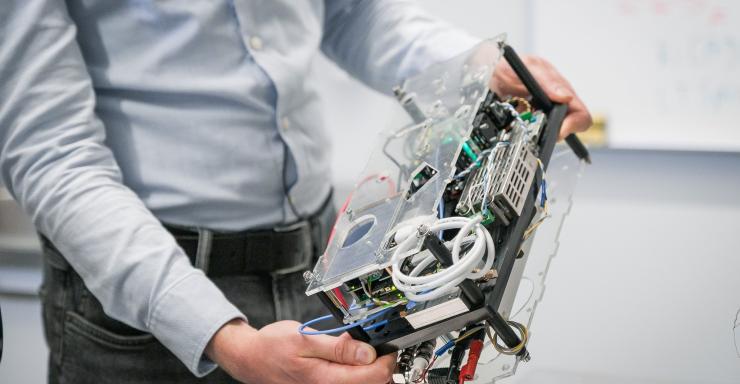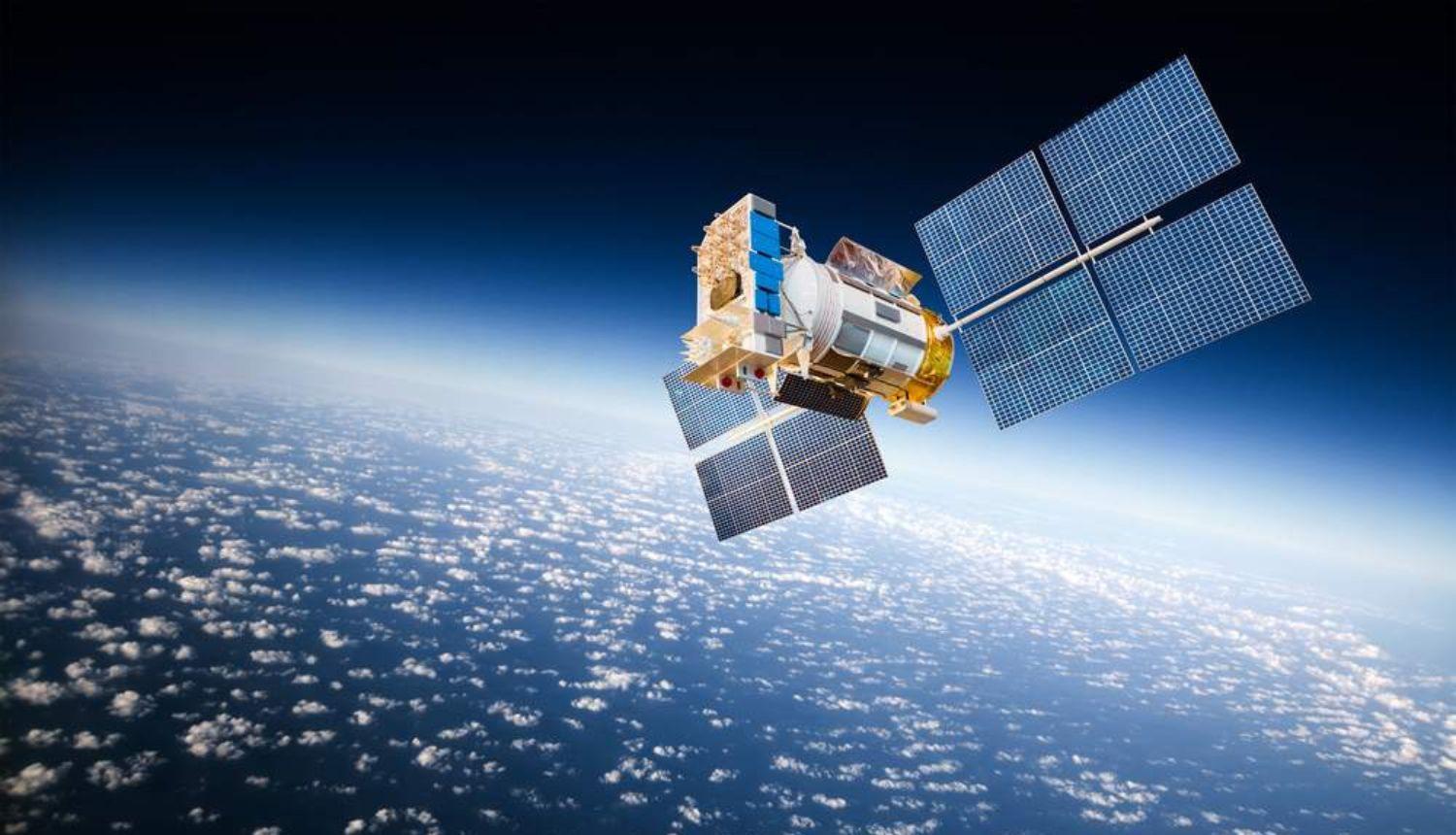
For the first time since the launch of the NATO Defence Innovation Accelerator for the North Atlantic (NATO DIANA) in 2022, a Latvian startup, "Deep Space Energy", has received programme support. The company competed in the category "Resilient Operations in Space." Deep Space Energy provides resilient power supply solutions for space applications based on scalable radioisotope systems.
"I congratulate Deep Space Energy, which is purposefully conquering the field of space technologies and is the first Latvian startup to receive support from the NATO DIANA innovation programme. This demonstrates that we must continue to support innovation and create an environment where Latvian companies can develop innovative and competitive next-generation technologies with high added value, including for the defence sector," emphasised Minister of Defence Andris Sprūds.
Companies selected for NATO DIANA support, including the Latvian startup Deep Space Energy, will receive a €100,000 grant, which can be increased to €300,000 upon continued successful progress in the accelerator. Participants also gain access to mentoring and to more than 200 testing centres across Europe and North America. NATO DIANA awardees will additionally receive insights into defence procurement processes and networking opportunities with end-users of defence sector products, potential investors, and industry partners.
"The principle behind Deep Space Energy's technology is based on the idea that everything needed for space should be created using space resources, without consuming Earth's resources. Our goal is to generate kilowatt-hours of electricity, just as on Earth, and supply it to space agencies and private companies that aim to use the Moon's valuable resources in the long term. Every activity requires electricity. On the Moon, there is an added challenge: one night lasts 14 days. It is dark, and the temperature drops to –150°C. If the equipment is not heated, everything freezes and cannot survive even a single night. Our technology uses materials from nuclear waste, radioisotopes that generate heat as they decay, which we convert into electricity with very high efficiency. Deep Space Energy is currently in the technology development phase. We have already validated the core principle in the laboratory. Now we are moving forward with specific technological solutions and various tests under space-relevant conditions. We are very pleased to join the NATO DIANA accelerator, as we want to develop our technology at a faster pace and reach the market sooner," says co-founder and CEO Mihails Ščepanskis.
"In the defence sector, our generator can support high-value satellites used for intelligence purposes, enhancing their resilience against potential attacks on their solar panels, or in situations where the satellite cannot 'see' the Sun. NATO's European partners have identified the expansion of such satellite fleets as a priority in strengthening Europe's strategic autonomy."
In the 2026 NATO DIANA accelerator call, 150 companies from 24 countries received support. For the first time within the framework of this programme, companies from Latvia, Slovakia, Iceland, Romania, and Slovenia were selected, marking an expansion into innovation ecosystems and demonstrating NATO's commitment to strengthening technological security across the Alliance.
For Latvia, this NATO DIANA call is particularly significant because, for the first time, six teams will have the opportunity to participate in the accelerator programme in Riga. This summer, the defence and dual-use technology branch of the Latvian university startup accelerator UniLab Defence officially became a NATO DIANA centre in Latvia.
"There is currently great interest in the defence sector. This manifests in both financial and knowledge support from organisations such as NATO, and in the growing desire of innovative companies to develop new technologies and solutions specifically for defence. Therefore, becoming a NATO DIANA accelerator centre in Latvia is a logical next step in UniLab's development. We will also soon establish a local defence technology accelerator. But for now, we eagerly await the arrival of three Canadian startups. They will be joined by one startup each from Norway, the United Kingdom, and Slovenia. All six companies will have access to the expertise of Alliance military and business specialists, as well as opportunities to collaborate with the local defence sector. And of course, we are rooting for the sole participant from Latvia," said UniLab director Andris Baumanis.
The goal of the NATO DIANA innovation programme is to strengthen cooperation among NATO, academia, and the private sector to accelerate the adoption of new technologies in defence and security. NATO DIANA focuses on technologies that enhance allied capabilities in tactically challenging situations.
As previously announced, from 2 June to 11 July 2025, applicants could submit proposals to the NATO DIANA innovation programme across 10 challenge areas aimed at developing next-generation dual-use technologies.