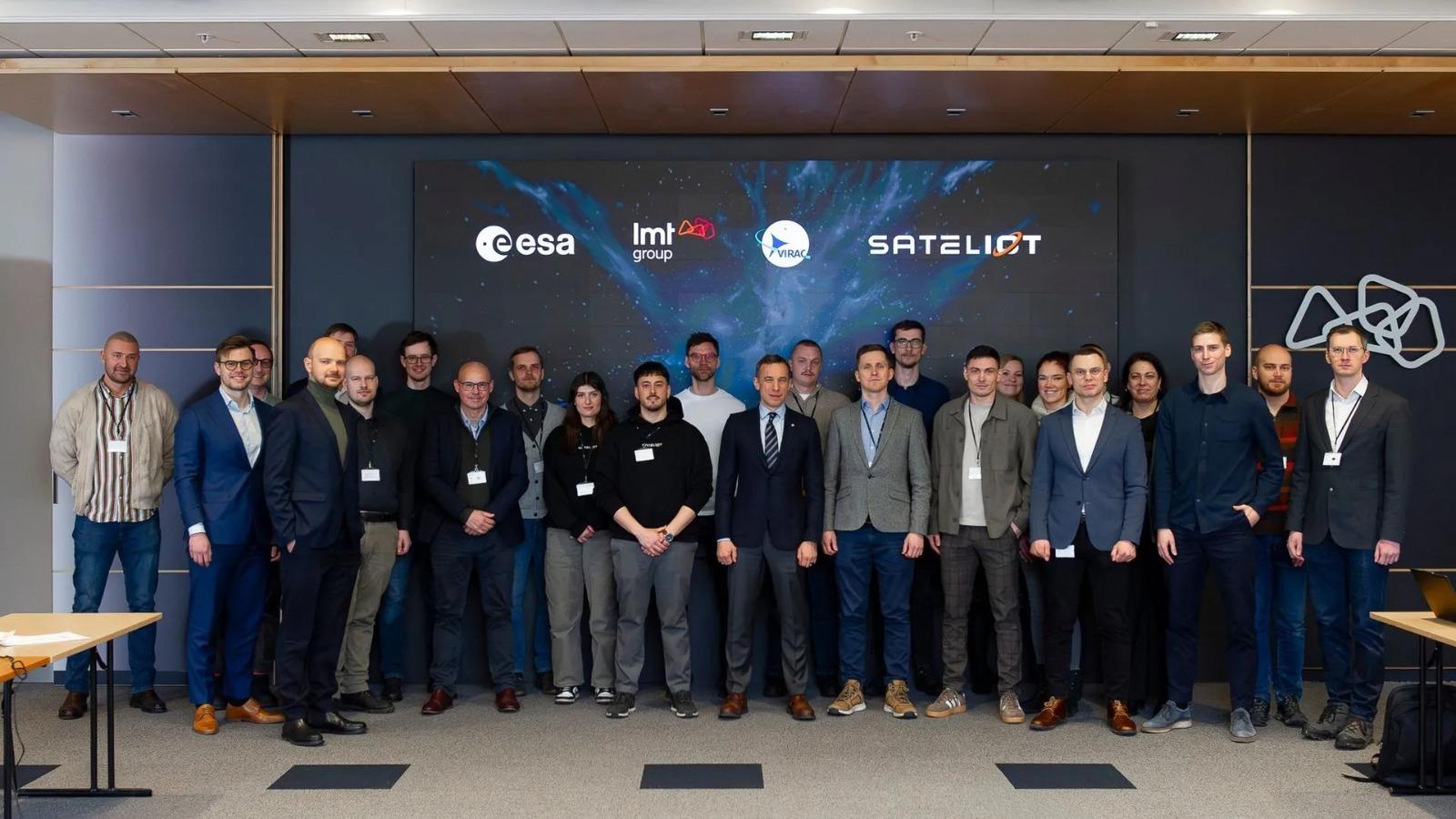
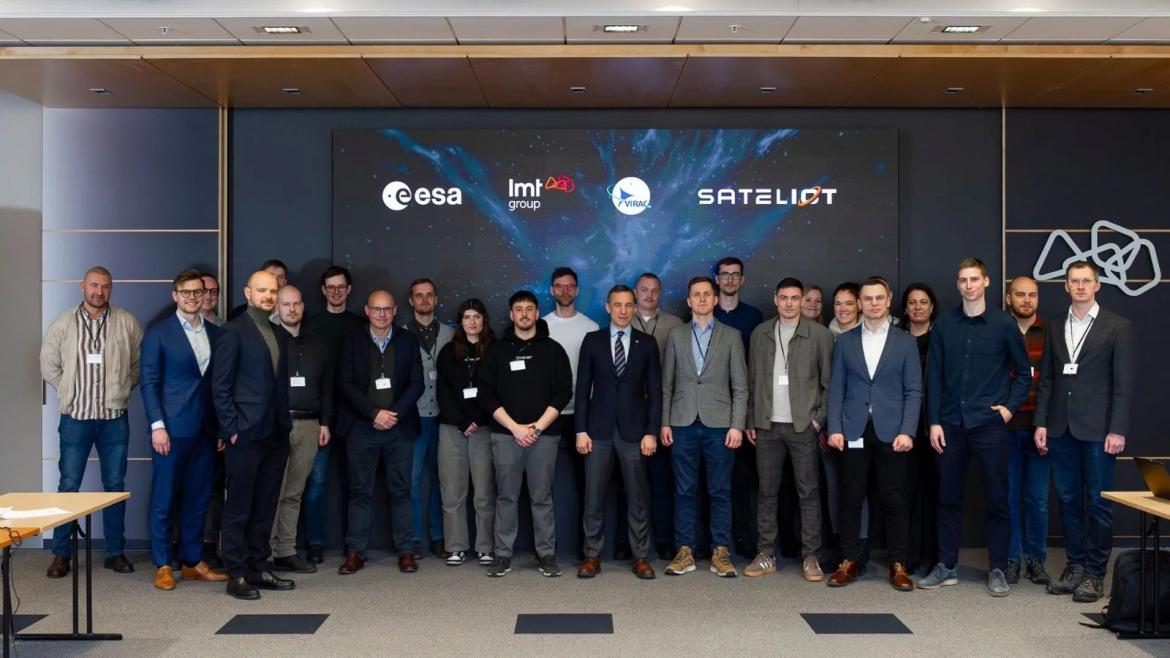
The engineering team of the mobile operator SIA Latvijas Mobilais Telefons (LMT) began work in February on a new project of the European Space Agency (ESA), aimed at developing mobile communications and satellite connectivity within one year. The Engineering Research Institute “Ventspils International Radio Astronomy Centre” of Ventspils University of Applied Sciences is also participating in this project.
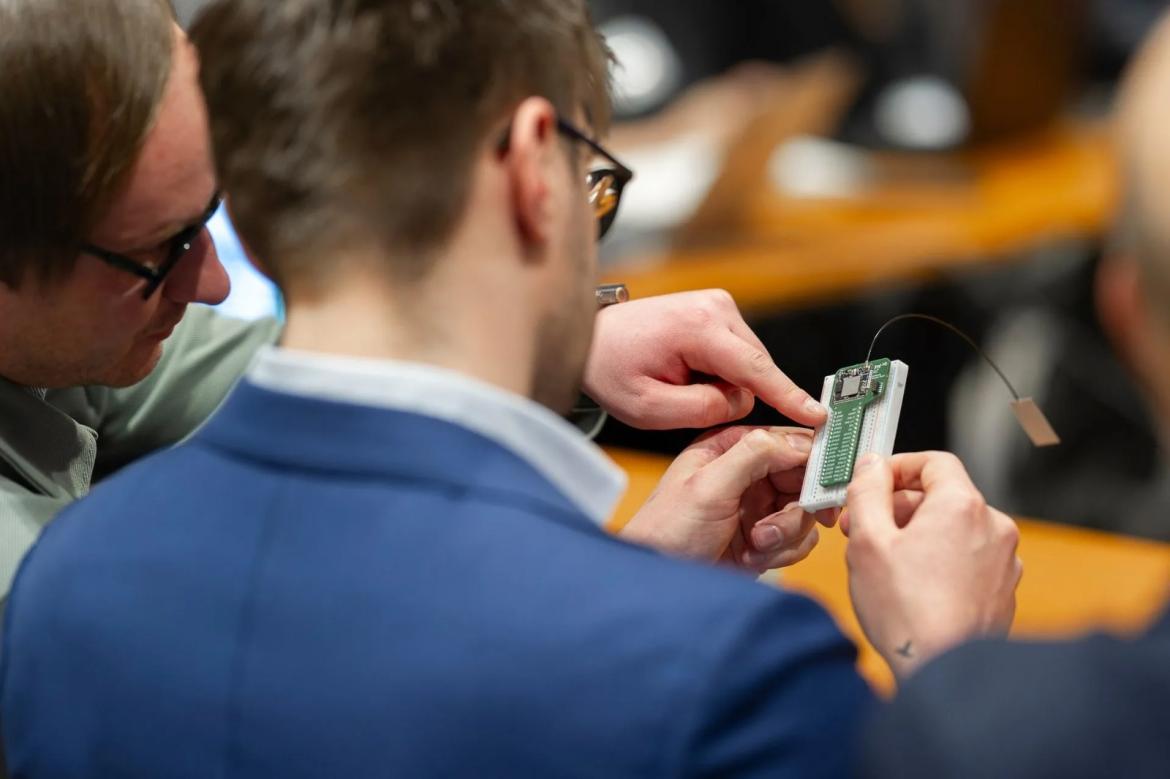
Latvijas Mobilais Telefons (LMT) explains that the aim of the project is to develop a dual-mode — cellular and satellite — IoT System-on-Module (SoM) solution that will allow devices to switch between mobile networks and satellites as needed, using a single module.
Many IoT solutions in logistics, agriculture, environmental monitoring, and other sectors require strong and stable mobile network coverage to operate effectively. However, such coverage is still unavailable across vast areas worldwide. This creates significant challenges for industries that increasingly rely on sensors, automation, and real-time monitoring. When devices lose connectivity, data is lost, systems cannot respond, and operating costs rise.
The joint project of LMT and the European Space Agency (ESA) envisions the development of next-generation connectivity through a unified IoT module that will function in both terrestrial mobile networks and satellite networks, ensuring device connectivity almost anywhere.
Over the next year, the partners plan to develop a functional prototype capable of operating on terrestrial mobile communication networks (such as LTE-M and NB-IoT) as well as satellite connectivity (NTN), automatically and seamlessly switching between them with minimal energy consumption. The module will be cost-efficient, suitable for various device types, and complemented by an easy-to-use software development kit, so developers will not have to deal with complex configuration issues.
This approach opens up broad opportunities for the development of the satellite IoT solutions market and strengthens European and Latvian technological sovereignty by advancing local expertise in next-generation wireless and space communication technologies.
Latvijas Mobilais Telefons (LMT) Vice President Ingmārs Pūķis explains that many devices are still too complex, too expensive, or not available in the formats required by the market—particularly for low-power IoT solutions. LMT is addressing this key barrier by developing a module capable of ensuring connectivity in cities, rural areas, and far beyond conventional mobile network coverage, without the need for two separate devices or complex configurations.
“This not only creates new opportunities for Latvian companies to participate in ESA and EU secure connectivity programmes, but also enables Latvia to take on a more significant role in the European space and telecommunications innovation ecosystem: it is here that essential technologies for a rapidly growing global market are being developed, allowing Europe to gain greater resilience, more secure communications, and a more competitive industry,” says Pūķis.
The European Space Agency (ESA) is an intergovernmental organisation that brings together European countries in joint space industry, satellite technology, and advanced connectivity development projects. In this project, ESA will be responsible for strategic management and alignment with the European Satellite Connectivity development roadmap.
Other project partners include the Spanish low Earth orbit satellite operator Sateliot and the Ventspils International Radio Astronomy Centre (VIRAC).
Latvia’s participation in the European Space Agency as an associate member state is ensured by the Ministry of Education and Science of Latvia, opening up opportunities for companies and research institutions to develop innovative space technology projects.