Researchers from the Faculty of Exact Sciences and Technology (FEST) and the Faculty of Humanities (FH) of the University of Latvia (UL) have launched a fundamental interdisciplinary study to find out how digital devices affect reading habits, attention and text comprehension.
Nowadays, texts available on screens are becoming shorter and more fragmented, while adults in Latvia often have difficulties understanding more complex written information. The project combines methods from linguistics, cognitive sciences and vision research, including eye movement analysis, in order to scientifically assess reading processes on computers and smartphones. The results obtained will help develop practical guidelines for presenting information more effectively in the digital environment, reducing the risks of manipulation and improving society’s ability to perceive information critically.
How do reading habits and text comprehension change at a time when more and more reading takes place on various screens?
Texts available on screens are becoming increasingly shorter, more fragmented and more diverse, including not only written information but also visualisations and sound. Although the average amount of time devoted to reading has remained unchanged, studies in psychology, psycholinguistics and cognitive sciences point to growing challenges in maintaining attention, engaging deeply with longer and more complex texts, analysing their meaning and distinguishing facts from opinions. Moreover, according to the latest OECD reading literacy assessment data, more than one in three adults in Latvia has difficulties understanding more complex written information in everyday life.
Broad and rapid access to information can be used not only for good purposes to improve information processing, but also to manipulate public opinion and behaviour. To address this current problem, it is important to determine the most effective way of conveying information on digital devices, which have now become the main reading environment. This fundamental UL study analyses in depth the factors that affect reading and information perception, providing scientifically grounded answers to important questions on this topic.
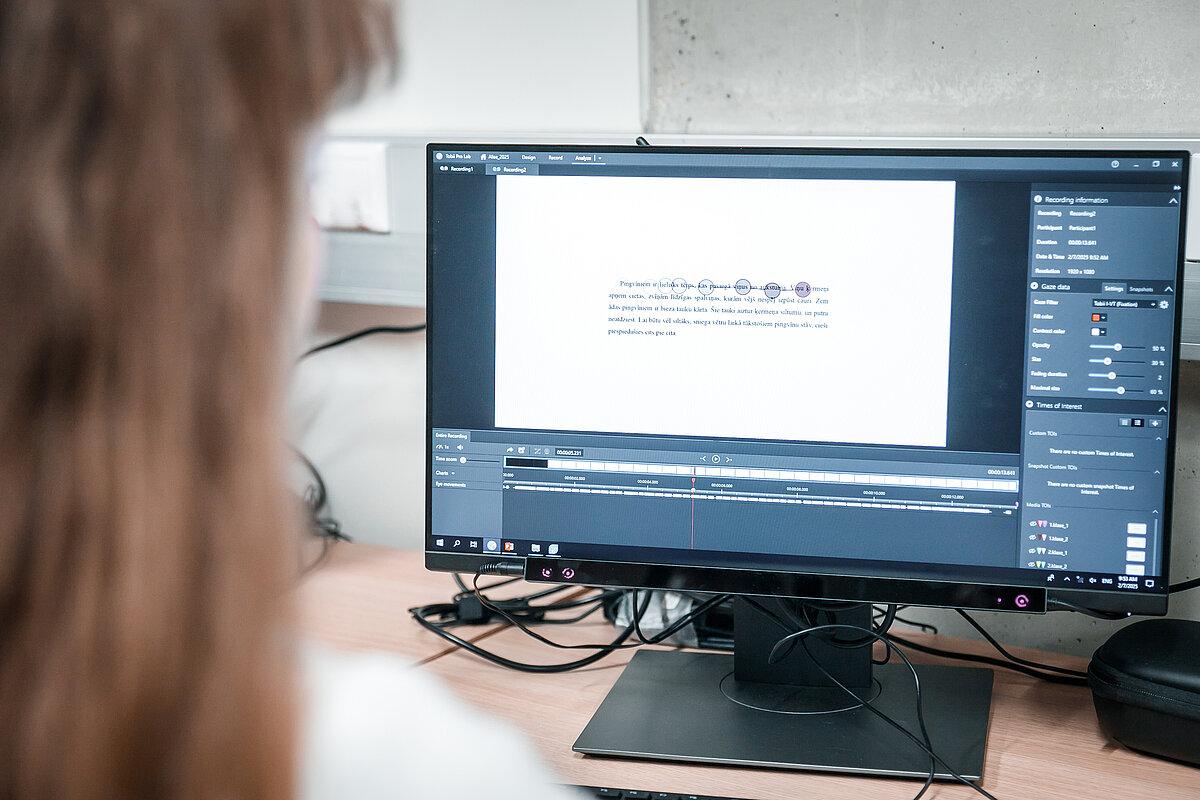
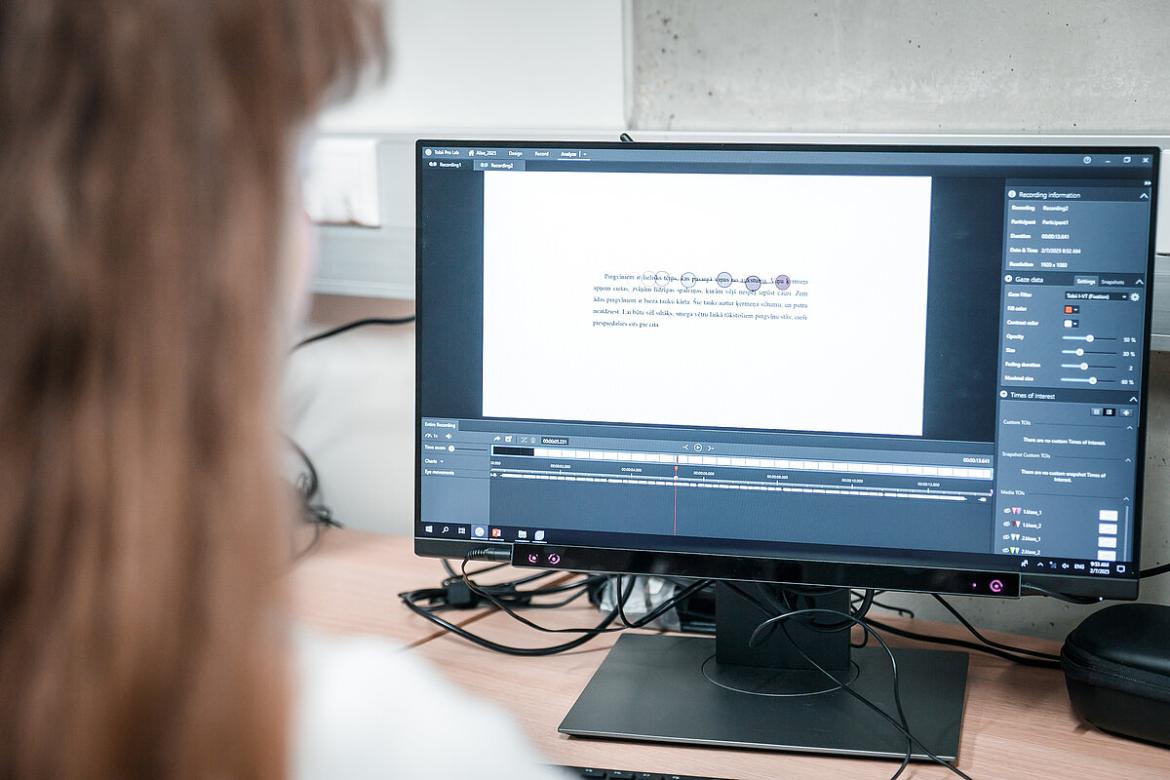
To study such a multidimensional issue, an interdisciplinary approach that combines the most effective methods from different fields plays an essential role. The project combines validated cognitive tests and tasks, as well as reading materials tested through international research experience and specially adapted to the Latvian language, with eye movement analysis, which makes it possible to objectively assess the reading process and obtain detailed information about reading strategies when reading texts on a computer and smartphone. The results obtained in the project will provide a comparable, scientifically grounded and multidimensional assessment of reading processes in the digital environment.
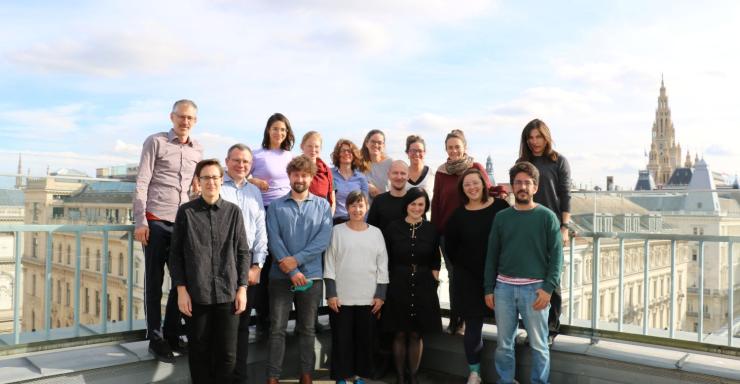
Given the multifaceted nature of the topic, it is particularly important in this project that research groups from several UL faculties have joined forces, each with its own competence, experience and in-depth knowledge from different fields. Within the framework of the project, experienced and young scientists from the Faculty of Exact Sciences and Technology (FEST) and the Faculty of Humanities (FH) of the University of Latvia cooperate. FH researchers develop reading tasks of different lengths and text types, analyse their syntactic structure and assess reading comprehension depending on various factors. The Department of Optometry and Vision Science of FEST, which has extensive experience in eye movement analysis, ensures the technical implementation of the study — specially developed eye movement recording solutions, data acquisition and processing, as well as measurement quality control. In turn, the Laboratory for Perception and Cognitive Systems of the FEST Department of Computer Science plays an essential role in assessing cognitive processes, thereby complementing the study with a multifaceted view of reading comprehension, attention processes, working memory and other cognitive aspects. This approach strengthens interdisciplinary cooperation between language research, vision science and cognitive sciences.
International scientific experts note: “This study is unique in the context of the Latvian language and will contribute to understanding the reading habits of new generations, as well as improve the communication of various textual information on digital platforms.”
The project results will help address the challenges of the modern digital age by enabling the development of practical recommendations and guidelines for presenting information more effectively, thereby improving residents’ ability to navigate the vast amount of digital content, critically evaluate information and reduce the risks of manipulating public opinion. The project will contribute not only to scientific understanding of reading and language processing, but also to the development of new research approaches. It will help improve research tools adapted to the Latvian language and expand the use of eye movement analysis in interdisciplinary studies. The results obtained will also provide significant insight into how reading takes place in the digital environment and how the perception of different texts is affected by the reading platform, thereby helping to create and adapt information more successfully so that it is easier to perceive and can be communicated more effectively to different audiences.
Researchers from the UL FEST and UL FH launched the Latvian Council of Science-supported fundamental and applied research project “The Reading Process in the Digital Age: Factors Determining Successful Reading on Digital Devices” (No. lzp-2025/1-0195) in January 2026, and it is planned to be implemented over three years.
***
OECD. (2024). Do adults have the skills they need to thrive in a changing world? Survey of Adult Skills 2023. OECD Publishing. doi.org/10.1787/b263dc5d-en
Annisette, L. E., & Lafreniere, K. D. (2017). Social media, texting, and personality: A test of the shallowing hypothesis. Personality and individual differences, 115, 154-158.
Hakemulder, F., & Mangen, A. (2024). Literary reading on paper and screens: Associations between reading habits and preferences and experiencing meaningfulness. Reading Research Quarterly, 59(1), 57-78.
Wilmer, H. H., Sherman, L. E., & Chein, J. M. (2017). Smartphones and cognition: A review of research exploring the links between mobile technology habits and cognitive functioning. Frontiers in psychology, 8, 251723.