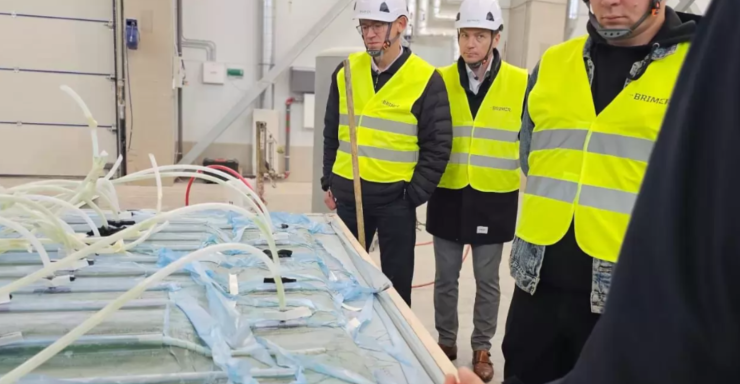
A new laboratory has started work at Riga Technical University (RTU), which will study human behaviour, decision-making and the impact of technologies, namely our attitudes, emotions and reactions to various external stimuli, such as advertisements or disinformation, RTU Faculty of Engineering Economics and Management Tenure Professor, founder and co-head of HyperLab Agnis Stibe revealed on the Latvian Radio programme “The Known in the Unknown”.
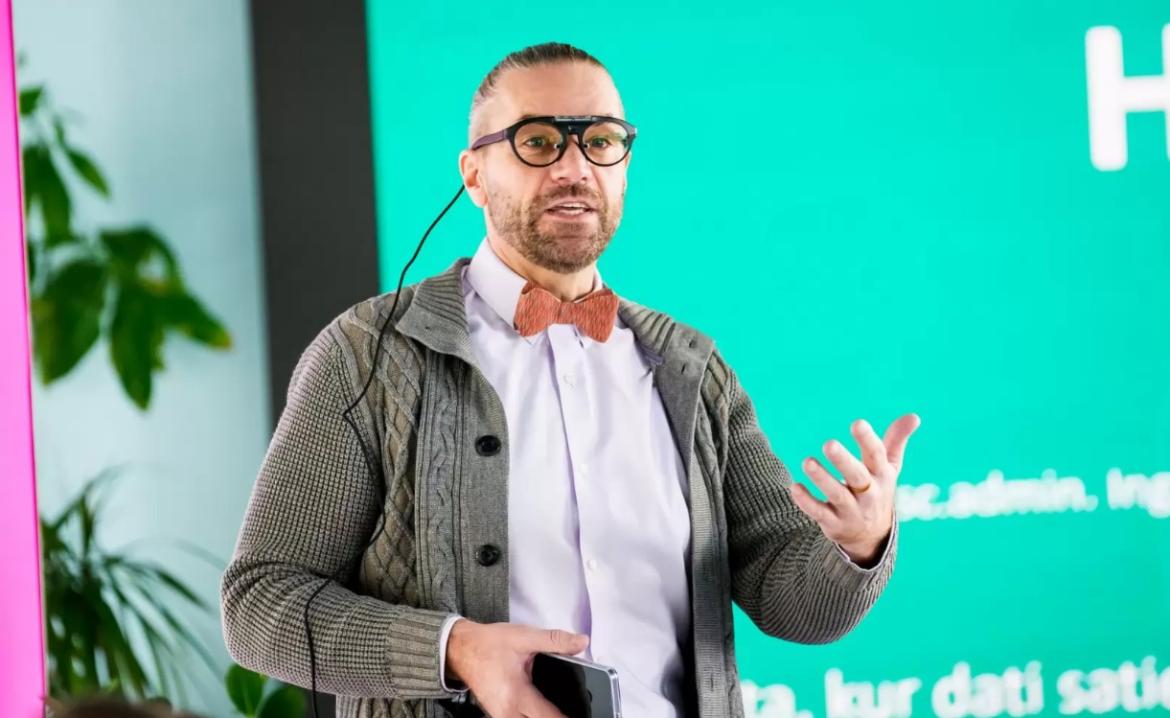
Grand Workshop
By carrying out physiological body measurements, such as heart activity or eye gaze, the laboratory equipment will make it possible to obtain objective information about a person’s reaction to information, a service, a product or an action. “In this laboratory, perhaps unlike many others, we will not only open the doors to all internal researchers, academic staff and students because it is our Grand Workshop, but another very major goal is access for business and society,” Stibe said.
He emphasised that the laboratory will, first of all, be open to research topics that are important to society and entrepreneurs.
“Neuromarketing has existed for many years, and there are already the first companies that are beginning to show interest in it — we have already had calls, and discussions have started.”
The laboratory could also make a contribution to public administration, for example, when an e-service is being developed that needs to be convenient, accessible and understandable.
How can attitude be measured?
Of course, many people may wonder how it is possible to measure a person’s reaction or attitude in a laboratory. After all, emotions are rather difficult to measure.
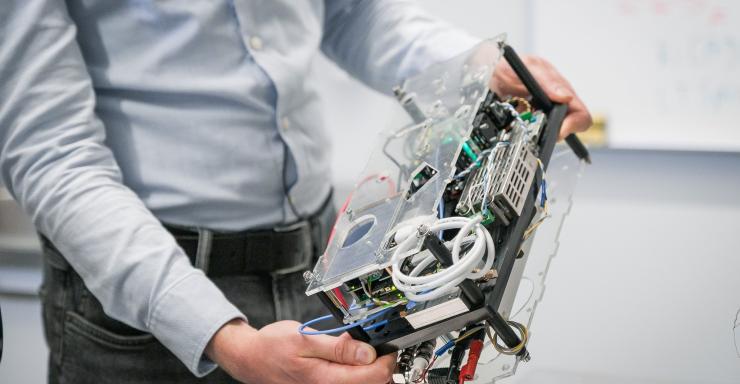
“We have various measuring devices — for facial expressions, eye gaze on a screen, as well as separate glasses for eye gaze in a space, which can also be used in a shop, for example, when looking at shelves. We have a brain reader, we have a skin reader, as well as a heart activity and breathing reader, and also a speech recognition device,” Stibe explained.
By equipping a person with all these devices, researchers are able to obtain a great deal of different data and also read what otherwise remains unnoticed or unsaid. For example, in the laboratory, the equipment can record where a person’s eye gaze first moves when they pick up a specific product or see it on a shelf — whether, for instance, it automatically searches for the Green Spoon or another recognisable label.
“What matters most is that for many decades, depending on what was available, both researchers and practitioners tried to obtain answers from people by asking questions. Now we can simply observe what a person’s behaviour is like, how the body behaves, and we believe that the body does not lie,” says Agnis Stibe.
It is also possible to record and study people’s reactions to fake news or disinformation, which can be very useful nowadays.

Reconstructing the feeling of joy
The Head of the University of Latvia Laboratory for Perception and Cognitive Systems, Professor Jurģis Šķilters, said that perception research is currently in the right place at the right time, and wished his colleagues success. “The most important thing when thinking about perception studies is that we do not have a single measurement with which, by looking at a person’s body or behaviour, we could reconstruct their prejudices or attitude. We cannot do that,” Šķilters admitted. This is not possible because human prejudices and attitudes, as well as emotions, are multidimensional.
“However, the scientific answer to this problem in 2026 is that, both in the case of emotions and decision-making, we carry out various measurements from which we reconstruct what, for example, the feeling of joy or the feeling of fear, or the feeling of hatred or disgust, is,” the professor said.
Therefore, the more varied and high-quality measurements there are, taking different factors into account, the closer scientists can come to answering questions about human perception.
“We study perception and cognitive processes using various measurements, different approaches and different tools, which, truth be told, we combine, and the more we combine them, the better we actually understand what is happening in the head,” Šķilters concluded.