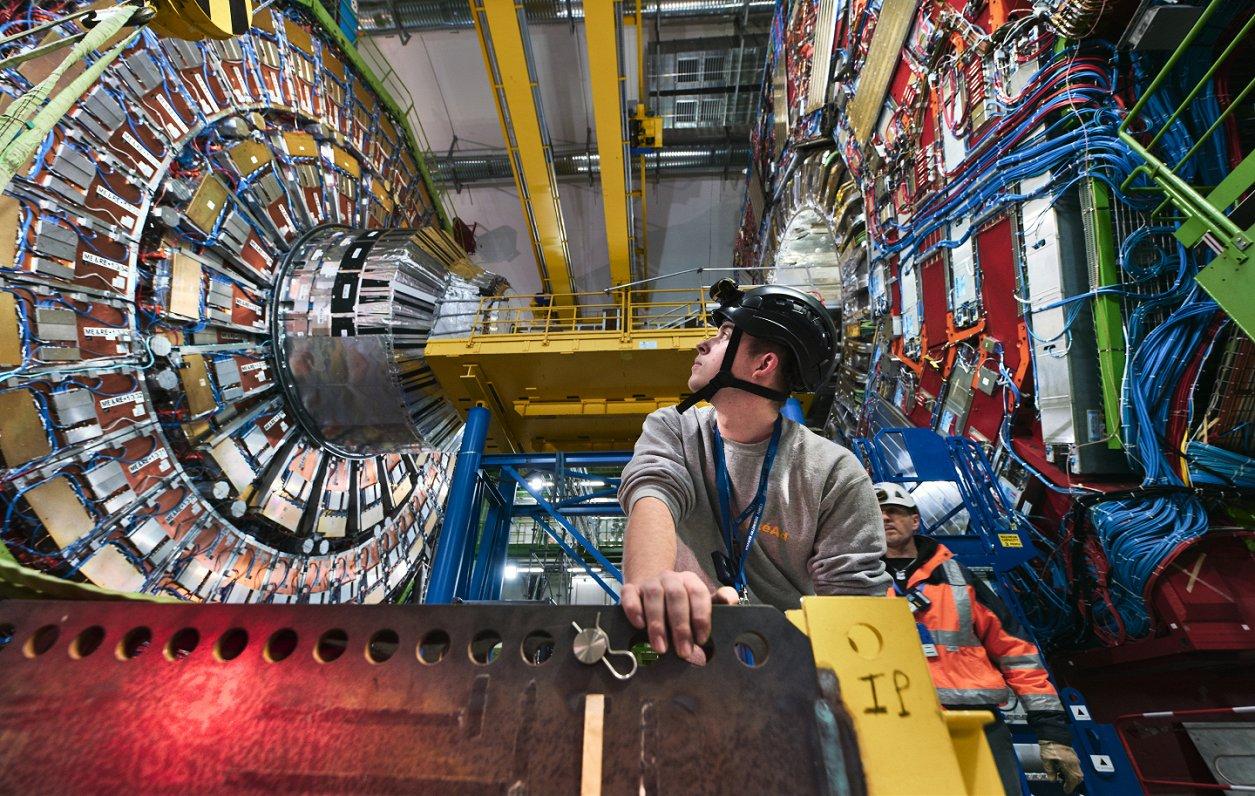
Scientists at the European Organization for Nuclear Research, or CERN, have completed the final work required to suspend for four years all experiments that rely on the 27-kilometre-long Large Hadron Collider (LHC). This is related to the maintenance required by the accelerator, during which it will be upgraded to enable even more detailed analysis of the particles produced in proton collisions. This maintenance is also special because scientists from Latvia are working on one of the sensors that will be installed in the detector.
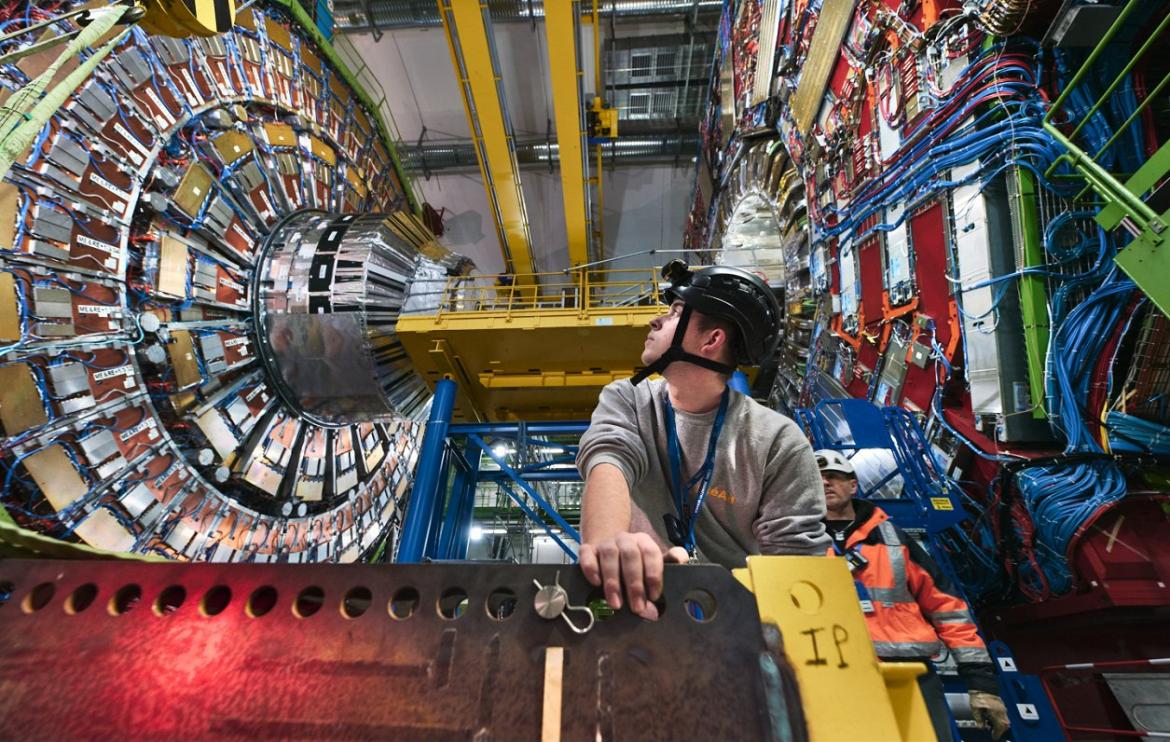
The previous LHC maintenance period, or long-term shutdown, ended two years later than planned — due to the Covid-19 pandemic, the work was completed in 2022. This time, the work is expected to be completed by 2030, when the LHC will reach its high-luminosity phase, during which it will be able to collect much more data generated by proton collisions, while the data collection period will continue until 2040. Following the upgrades, the LHC will be able to detect many more proton collisions, making it possible to obtain more data from them.
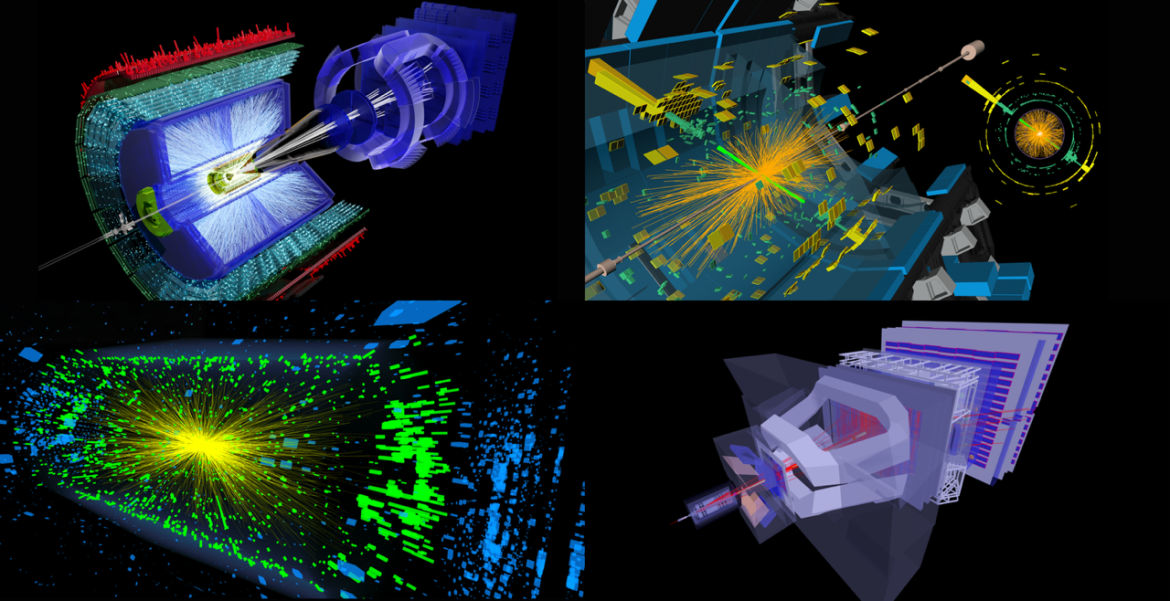
Another step towards answering questions about the origins of the Universe
Scientists estimate that, following the upgrades, the LHC will provide up to 10 times more proton collisions than originally planned. As a result, physicists from around the world will be able to analyse a larger volume of data, thereby increasing the chances of discovering signs of new physics beyond the existing Standard Model — the theory of physics that describes fundamental particles and the forces through which they interact.
At present, the LHC is capable of producing approximately three million particles of the so-called “God particle”, or Higgs boson, which is an essential part of the Standard Model, each year.
It is planned that, already in the first experiments following the upgrade, the number of particles produced will reach at least 15 million, providing scientists with a much broader and, hopefully, clearer understanding of the behaviour of fundamental particles.
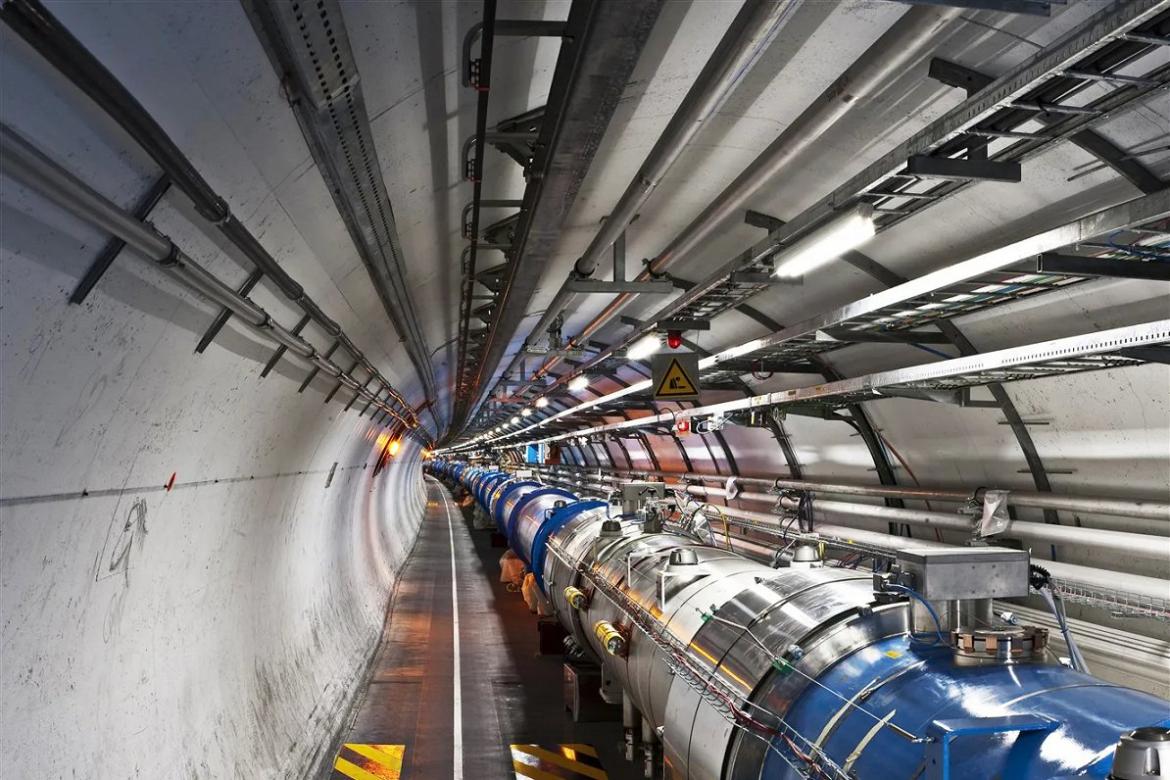
The HL-LHC project is one of the largest projects CERN has undertaken in the past 20 years. According to CERN representatives, when combined with advanced instruments and data-processing tools, and with all components working together, it will be possible to shed light on the first moments of the Universe. The HL-LHC project will also make it possible to explore previously uncharted areas in which something new may be discovered.
At the same time, new magnets will be installed in the LHC ring, doubling the magnetic field and helping to separate the particles detected in collisions.
It should be noted that it was precisely CERN and the LHC that enabled scientists in 2012 to prove the existence of the Higgs boson particle, which had first been described in the 1960s.
The Latvian team’s work also has a place in the upgrades
Work on the HL-LHC began during the previous shutdown, in 2018. Since then, underground caverns and various surface buildings have been constructed at CERN facilities. At the same time, more than one kilometre of the current LHC is planned to be replaced with innovative components.
Alongside the larger-scale work, scientists have been working on various sensors and other equipment that will help increase the volume of observable data. The systems that form and bend the beams until they collide, causing fundamental particles to split, will also undergo significant upgrades.
One of the main detectors that observes these collisions is the Compact Muon Solenoid, or CMS. It is located 15 kilometres from Geneva, in the small French town of Cessy, and it is here that the detector being built in Geneva by Latvian scientists will be installed.
A group of Latvian scientists has been involved in the CMS experiment since 2017. Officially, it is a consortium of Riga Technical University (RTU) and the University of Latvia, which currently consists of 13 specialists from various fields, including specialists from abroad.
The detector built by the Latvian team is 15 metres wide and 15 metres high, and its main task is to collect as many particles produced by the collisions as possible.
“The subdetector that we are building here will be installed in the large detector. It is a timing detector — it will be a small layer that will improve the overall efficiency of the detector. The main task of our detector is to record timing information about the particles,” RTU doctoral student Ojārs Mārtiņš Eberliņš said in an interview with Latvian Television.
In January, when I visited CERN, the Latvian team inserted beams into the tube, onto which the detector plates and sensors are later mounted.
“The detector will add a new dimensionality to the data already available to us. We will obtain a time dimension for the particles passing through the sensors, and the time markers will allow us to identify the new particles,” Eberliņš explains.
The sensors to be installed in the detector have been designed specifically for the Latvian scientists’ project and are based on calculations carried out by them. In total, the detector will consist of 72 sensor panels.
An ambitious future with a new accelerator
At present, the LHC is a 27-kilometre-long ring located beneath Switzerland and France, but in order to look even deeper into the history of the Universe, scientists already understand that an even larger accelerator is needed.
The idea, which is currently still at the discussion stage, envisages the creation of a 90-kilometre-long ring, which could initially serve as a Higgs boson “factory”, giving scientists the opportunity to study it in even greater detail. The second stage of the project envisages creating proton collisions in the accelerator whose power would be many times greater than what CERN can achieve more broadly.
The first public consultations began on 18 May in Switzerland and on 4 June in France.
“The higher the energy density that can be created at the collision point, the more massive the particles that can be produced. At present, we can produce top quarks (fundamental elementary particles that form the basis of matter in the Universe – ed.), but if there are more massive particles somewhere beyond our Standard Model of physics that, according to some theories, could explain dark matter, then we are unable to reach them because we lack the necessary collision energy,” Kārlis Dreimanis, head of Latvia’s CMS experiment group, told Latvian Television in 2024.
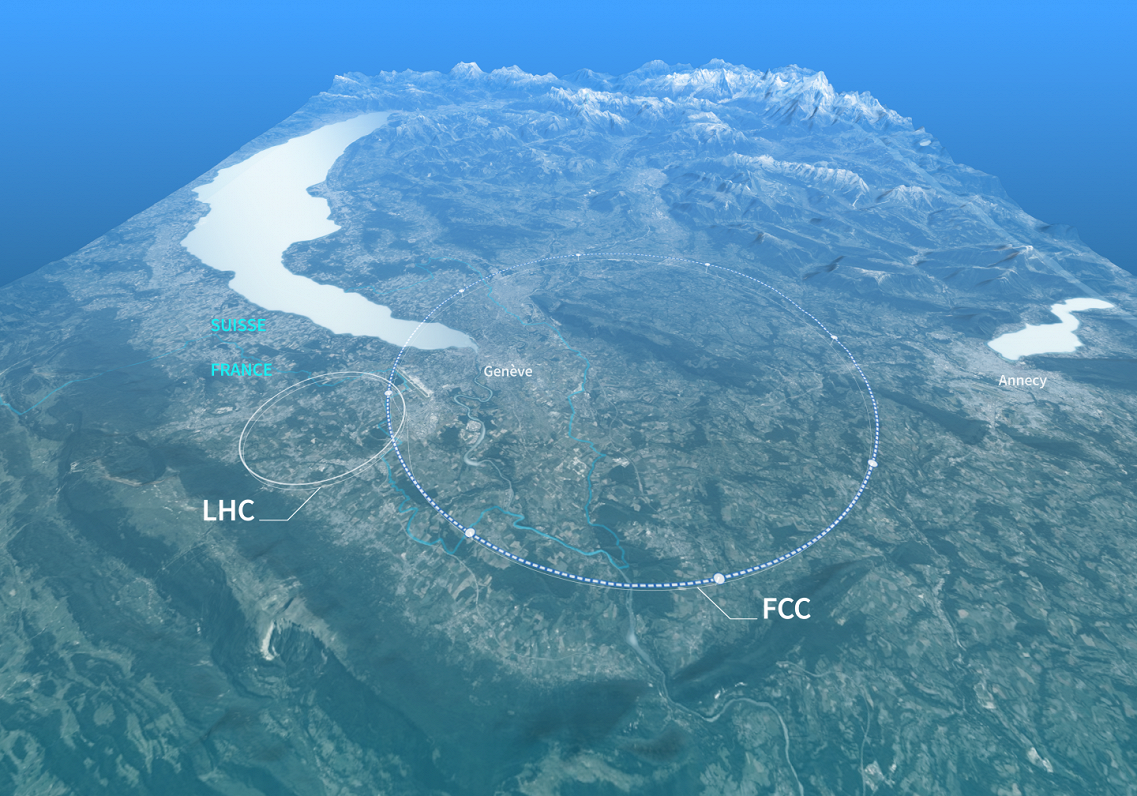
If built, the planned hadron accelerator will not only be an impressive engineering structure, but its cost is also currently estimated at around 20 billion euros. If construction of the accelerator begins and everything proceeds according to plan, scientists hope to launch the first phase in the mid-2040s, and it will last approximately 15 years. After that, starting in 2070, the high-energy accelerator is planned to be put into operation.