The company has just received a EUR 10,000 grant in the “She’s Next 2026” competition, organised in the Baltic States by the digital payment technology company Visa. The company’s CEO, Annija Emersone, explains that P Agro Minerals was founded four years ago to address a specific problem: wastewater treatment plants in Europe are unable to remove phosphorus from water and are therefore forced to pay fines.
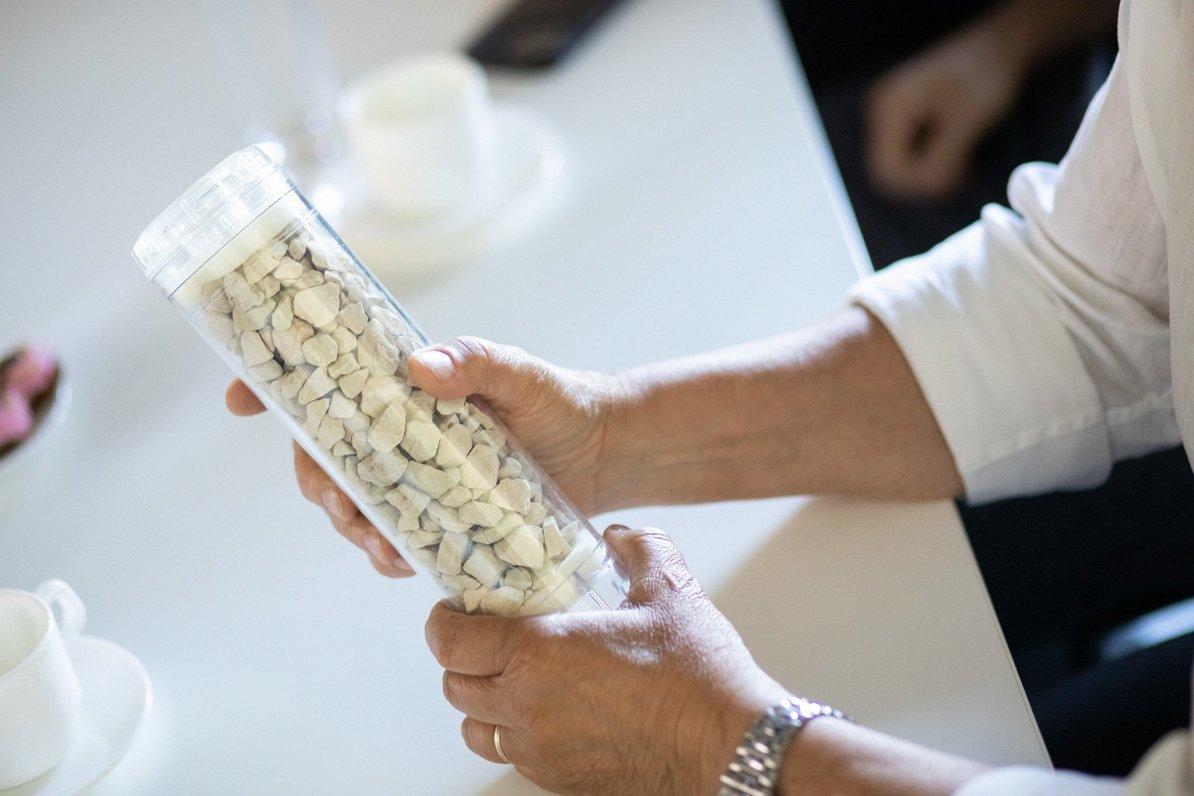
To purify water, the company uses letonite, a unique natural mineral material available in Europe and Latvia which, through a special production process, is able to bind phosphorus.
“Letonite is our innovation – a specially developed material capable of absorbing phosphorus. Once it has done its job in the water, we can take the mineral material, now enriched with the collected phosphorus, and apply it directly to fields as a fertiliser product,” Emersone explained.
Latvian participants in the grant competition were evaluated by a jury that also included Anna Andersone, Head of Riga TechGirls and StartSchool.
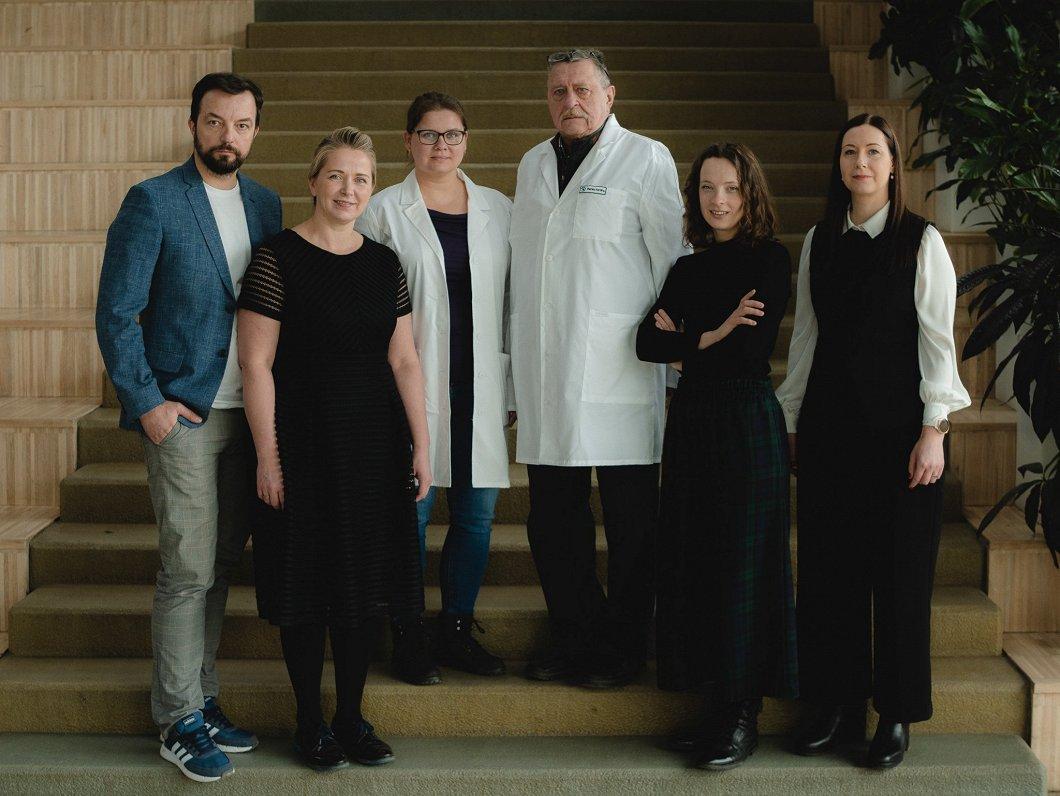
“What we on the jury particularly appreciated was that this is a research-intensive company. They have a very strong team with considerable scientific expertise as well as extensive business experience,” Andersone emphasised. “There is very strong demand across Europe and worldwide for what they will offer, so we saw this company as a potential rising star.”
The grant programme is not the first competition in which P Agro Minerals has participated. The company’s CEO, Annija Emersone, explained that a EUR 10,000 voucher received from the Investment and Development Agency of Latvia (LIAA) was used to test the agricultural effects of phosphorus recovered at water treatment plants.
“With the help of this voucher, we established a partnership with the Austrian Institute of Technology, whose experts helped us carry out various cultivation trials. We grew tomatoes, and the Austrian institute helped us determine where the recovered phosphorus would be most suitable and for which types of soil,” Emersone explained. “We concluded that this recovered phosphorus has very high potential: it genuinely helps plants grow, it is non-toxic, and the technology is truly innovative. We must continue our work so that both the fertiliser and the water filtration system can reach the market as soon as possible.”
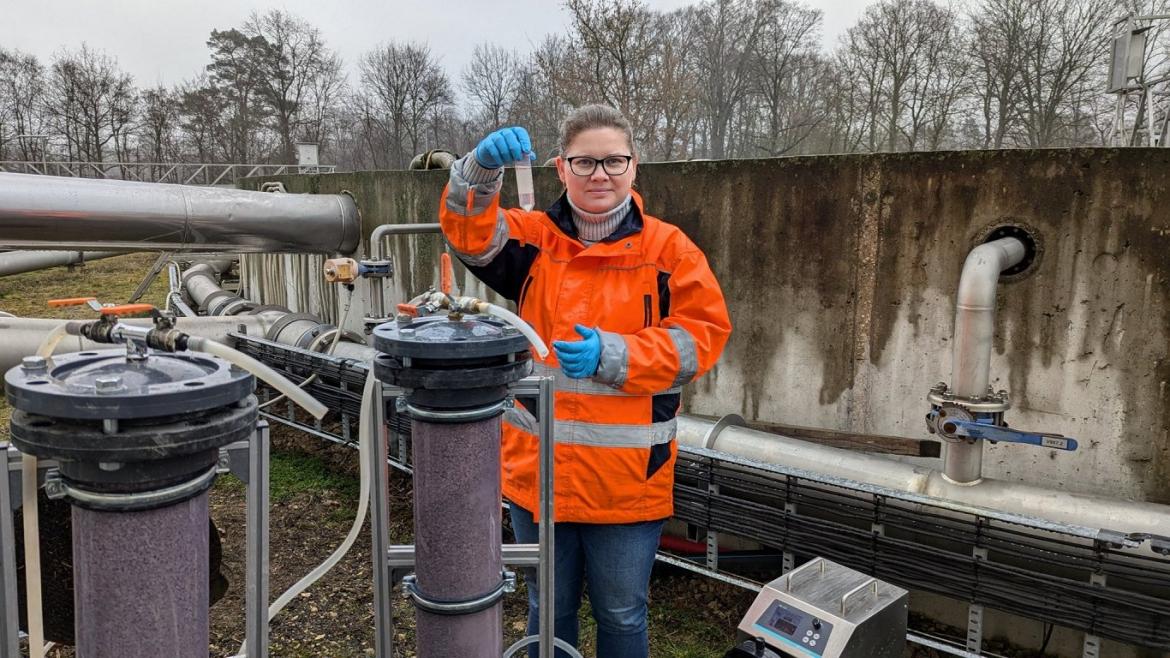
This summer, P Agro Minerals will begin testing a prototype water filtration system developed while participating in the Saldus Business Incubator.
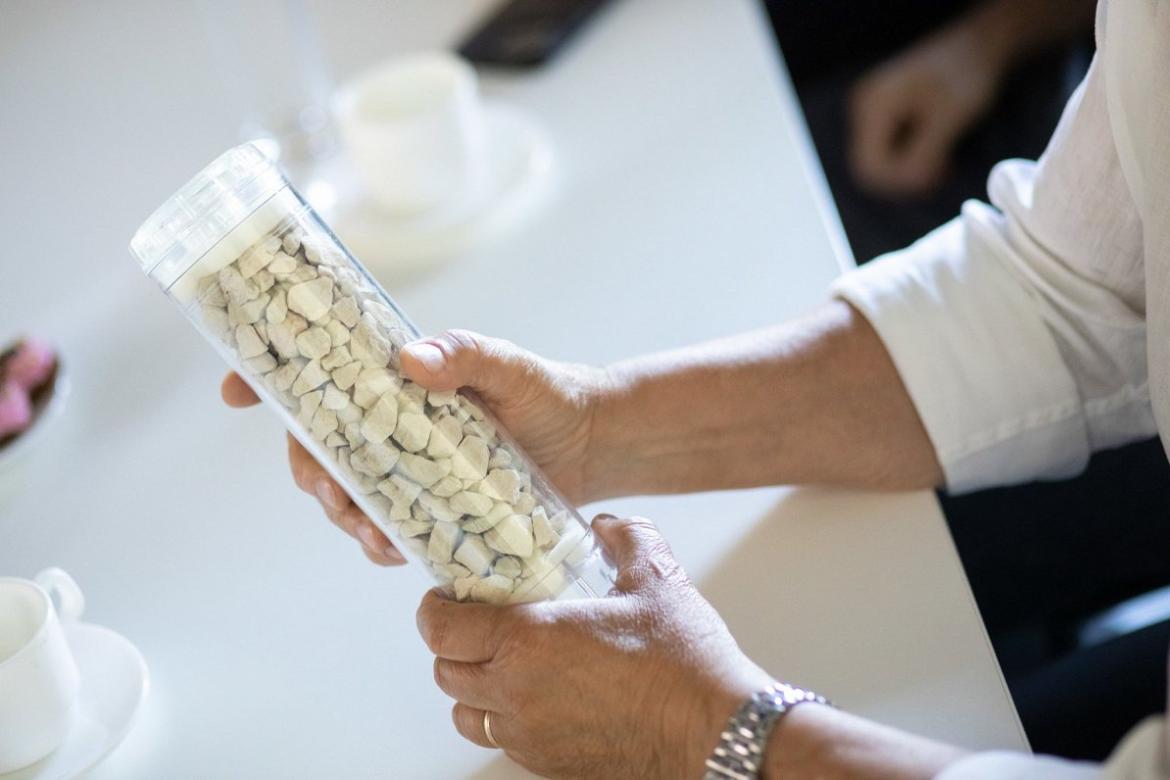
“With the support of the incubator, we have now essentially completed the construction of our next-level prototype,” Emersone emphasised. “This summer, we will begin testing it at an operational wastewater treatment plant – the Ādaži wastewater treatment plant. We will test a wide range of parameters and collect a large amount of data. After a few months, we will build an even larger system and continue through the scaling process so that we can treat very large volumes of wastewater.”
The “She’s Next 2026” competition awarded grants to small businesses led by women. Anna Andersone, Head of Riga TechGirls and StartSchool, also involves women in her programmes, so Latvian Radio asked her why support is particularly important for women leading start-ups with the potential for rapid growth.
“These are companies that can grow into large businesses within just a few years. They will create jobs and generate exports, meaning that international funding will flow into Latvia, which is very beneficial for the Latvian economy as a whole,” Andersone explained.
“Why is it particularly important to support women in this field? Because women make up half of our society, of course, and it has been demonstrated around the world that where women are active and involved, society as a whole is better off. That is why we specifically want to support women in this field. Women take on many roles, including the role of a mother and responsibility for maintaining the home, while founding a start-up is not a typical role. This makes such support all the more necessary for women.”
P Agro Minerals aims to test and implement the technology within the next two to three years, not only in Latvia but also in Germany and the Netherlands, and later in other countries.