The research project POLYCLAY-UV, implemented by the Latvia University of Life Sciences and Technologies (LBTU), is reaching its final stage, introducing a new approach to valorising coffee and tea industry by-products as high-value ingredients for cosmetic applications. The project focuses on the development of a polyphenol–clay composite material with potential application in sustainable UV protection solutions.
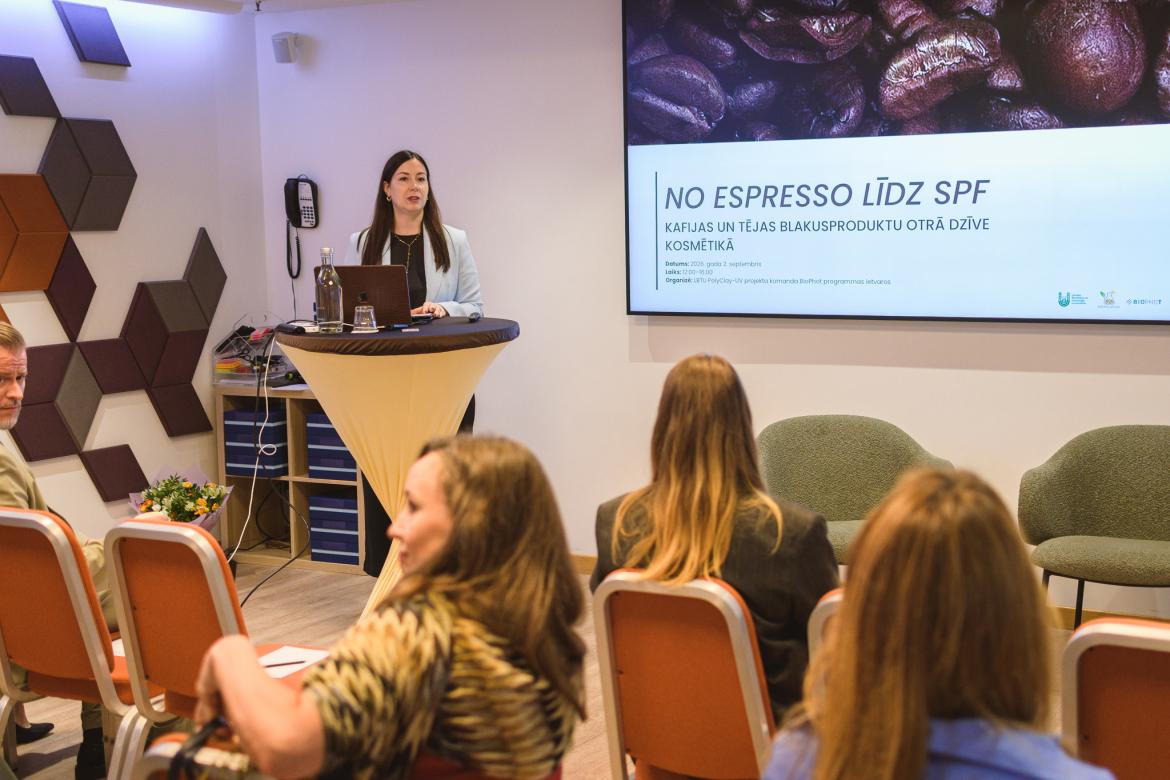
To mark the closing stage of the project, the event “From Espresso to SPF, Giving Coffee and Tea By-products a Second Life in Cosmetics” was held in Riga on 2 September, bringing together representatives from research, the beverage industry, cosmetics, bioeconomy and innovation. Alongside presenting the results of POLYCLAY-UV, the event opened a broader discussion on what it takes to move a scientific idea towards practical application and the market.
Turning by-products into resources for innovation
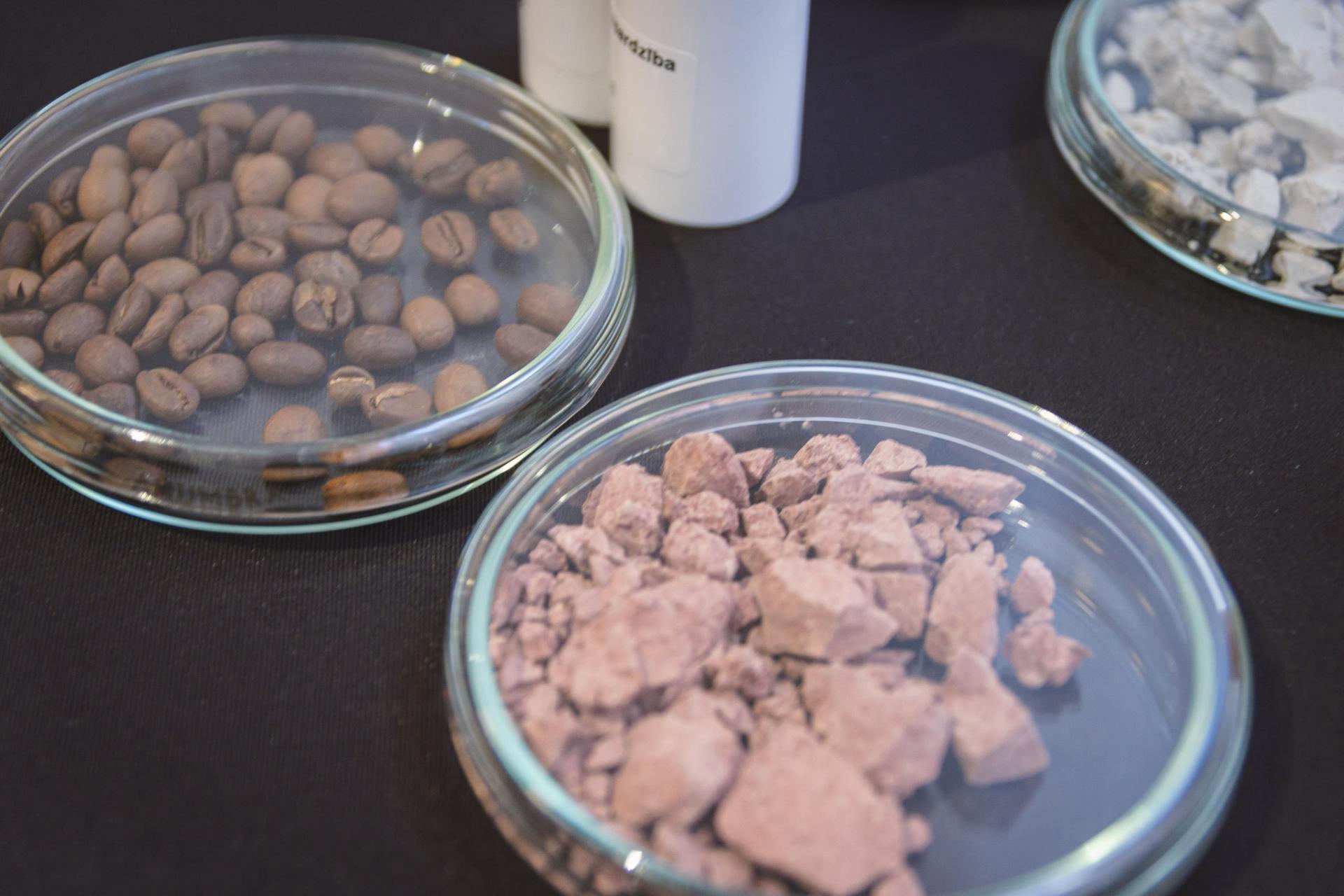
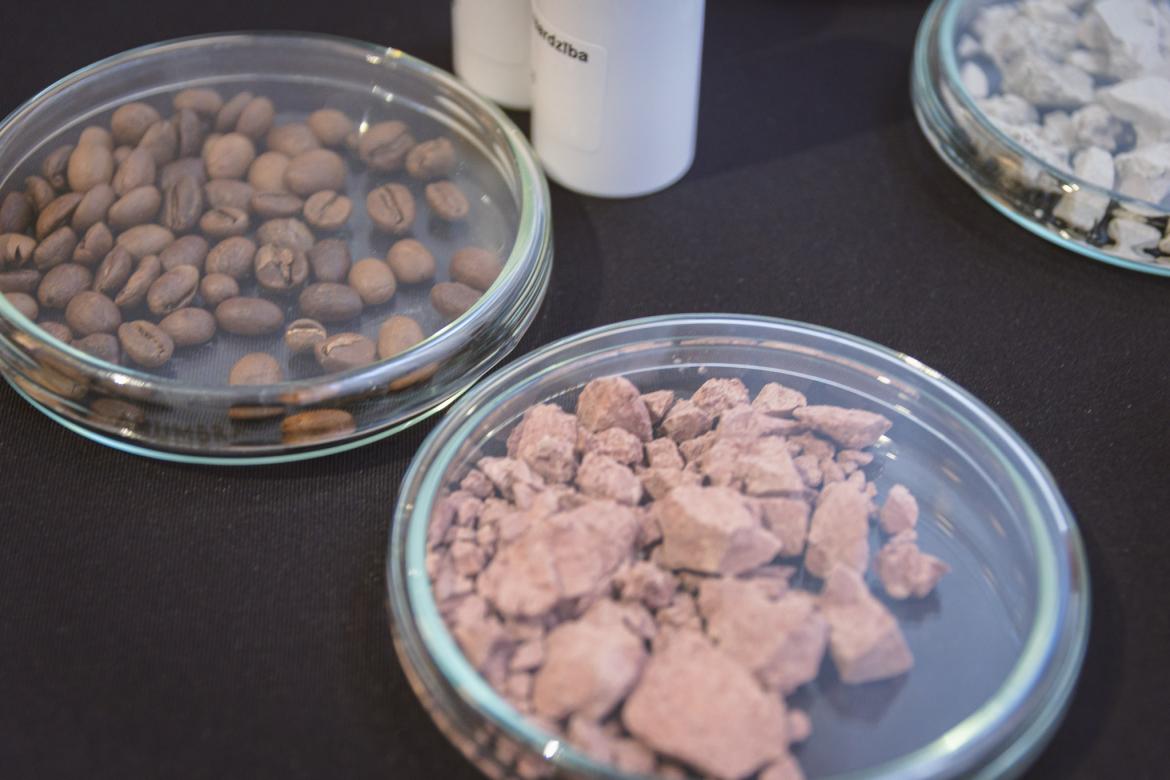
POLYCLAY-UV is based on the development of multifunctional clay–polyphenol composite materials using naturally derived raw materials. Particular attention is given to the recovery of polyphenols from food and beverage industry by-products, including spent tea leaves and coffee grounds.
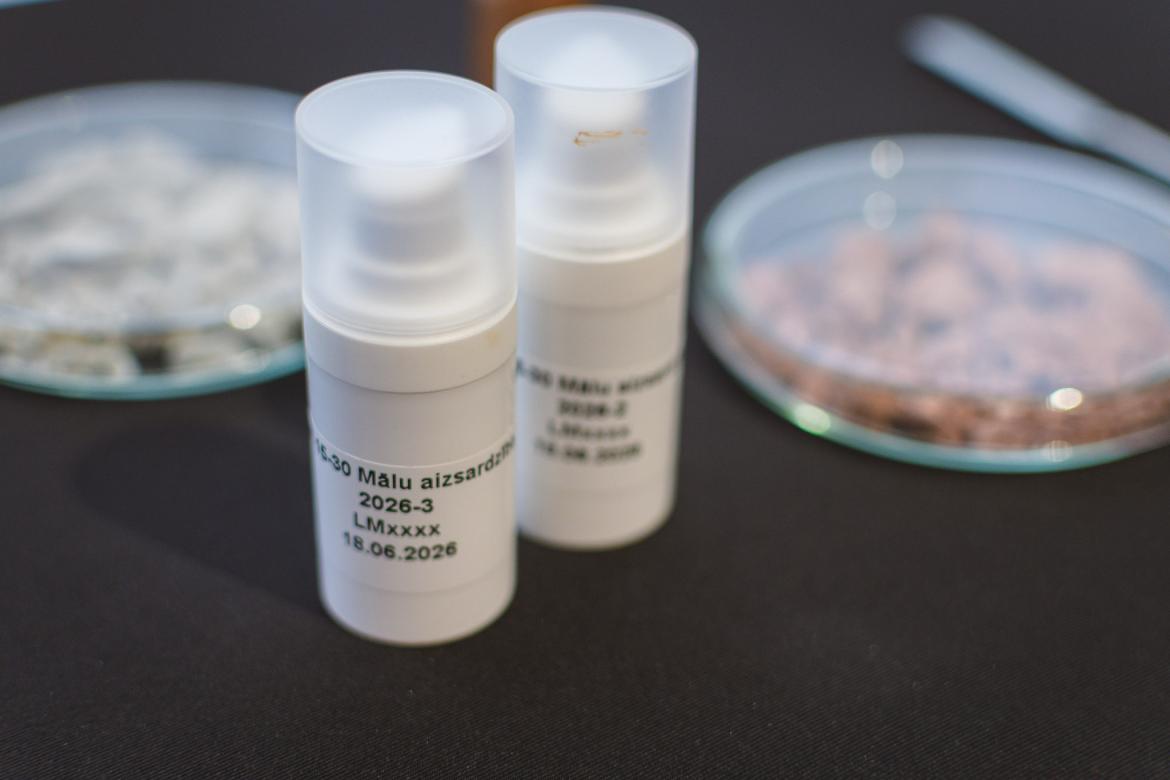
The project investigates the stabilisation of polyphenols within clay mineral structures, the UV-protection potential of the resulting composite materials, their antioxidant and anti-inflammatory activity and safety in skin-cell models, as well as the development of initial cosmetic prototypes. The approach therefore combines the search for new skin-protection solutions with resource valorisation and circular-economy principles.
In the future, the project results could enable more efficient use of coffee and tea by-products by transforming them into sustainable cosmetic ingredients for the development of UV protection products.
Bringing science and industry together
The closing event was opened by Rūta Ozola-Davidāne, Associate Professor at LBTU and scientific leader of the POLYCLAY-UV project. Researcher and PhD candidate Aiga Mazurenko presented the project concept, development process and results.
Osvalds Pugovičs, Head of the BioPhoT platform, introduced the platform’s broader vision for supporting science-based innovation and the practical application of research results, while business development and innovation expert Kaija Kurme-Jansone addressed collaboration between researchers and entrepreneurs and the role of mentoring in the innovation process.
Food scientist and coffee researcher Ilze Laukalēja-Broka presented findings from the consumer study conducted within POLYCLAY-UV, highlighting how consumers perceive sustainable ingredients, the use of by-products and new solutions in cosmetics.
The first panel discussion, “When the Beverage Industry Becomes a Source of Innovation”, brought together representatives of “Rocket Bean”, “Rudy’s Kombucha” and “Virši” to discuss how companies view production by-products and what new opportunities can emerge through collaboration between the beverage sector, researchers and other industries.
A good idea alone is not always enough
The second panel discussion, “What Makes an Idea Market-Ready?”, brought together representatives from “MÁDARA Cosmetics”, AS “Latvijas Finieris”, “Alternative Plants” and the Institute for Environmental Solutions to discuss innovation development, market needs and the journey from a research result to a market-relevant product.
One of the key messages from the discussion was that a good idea alone is not always enough. Even a promising technology may fail to reach the market if the industry or consumers are not yet ready for it. Successful innovation therefore requires not only persistence, but also an understanding of market timing, the ability to adapt and the willingness to recognise when an idea should be developed further and when a change of direction is needed.
The discussions also highlighted the importance of bringing researchers and industry together at an early stage of development. Early interaction can help identify industry needs, potential technological and regulatory barriers, and realistic application opportunities before substantial resources are invested.
BioPhoT- creating a meeting point for science and industry
POLYCLAY-UV is implemented within the BioPhoT research platform, which supports the visibility and commercial relevance of research results generated by Latvian scientists and helps promising research ideas move closer to practical application and commercialisation. BioPhoT has supported dozens of research and innovation projects across Latvia.
The POLYCLAY-UV closing event demonstrated the value of this approach. Bringing researchers and representatives of different industries into the same conversation creates opportunities not only to evaluate research results, but also to identify new research directions, applications and future partnerships.
About the project
POLYCLAY-UV – “Multifunctional Polyphenol-Clay Composite for Natural UV Protection and Skin Health” (No. OSI_PIP_BioPhoT-2025/1-0065) – is implemented by the Latvia University of Life Sciences and Technologies (LBTU) within the BioPhoT platform.