Join the ESA Teach with Space Online Conference 2025

Author
ESA

April 11, 2025

Register now for the ESA Teach with Space Online Conference from 9 to 10 July 2025. The conference is open to Latvian school teachers and educators, and it’s free.

ESA_s_project_Astronaut_Slawosz_Uznanski_answering_live_questions_posted_by_teachers_during_the_2024_ESA_Teach_with_Space_Online_Conference.png
ESA’s project Astronaut Sławosz Uznański answering questions during the 2024 ESA Teach with Space Online Conference

The conference will provide an overview of the ESA Education Program, offer new resources, and highlight inspiring ways to teach STEM using space as a theme.

The two-day event will feature keynote lectures, interactive demonstrations, and virtual tours of ESA facilities. Teachers will also have the opportunity to share their own school projects and network with peers. Don’t miss the chance to learn new teaching methods that use space exploration as a context for STEM education. See the complete program here.

By participating, teachers will hear from ESA experts on a wide range of exciting topics, including:
• Earth Observation helping study biodiversity,
• Searching for Exoplanets,
• Reaching the Moon and Beyond,
• The use of Artificial Intelligence in Space Missions.

Teachers will also have the chance to meet an ESA astronaut, explore engaging STEM activities, and participate in interdisciplinary projects that showcase the real-world applications of STEM through space exploration.

To participate, teachers must complete the registration form. Space is limited, so be sure to register early. To ensure fair access for educators across all ESA Member States, registrations will be processed on a first-come, first-served basis by country of residency. Applications will close on 7 July 2025 (12:00 pm CEST). Apply now to reserve your place!


Source: esa.int


Recommended articles

space

An asteroid has been named Rozenštrauhs

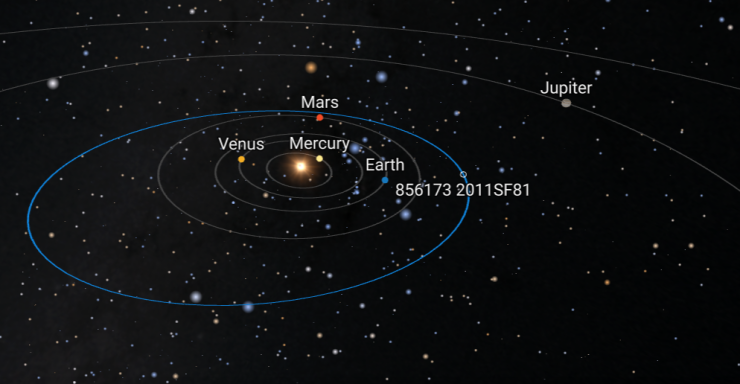
On September 3, 2011, after midnight, a new cosmic object was spotted in the Solar System's main asteroid belt at the University of Latvia (UL) Baldone Astrophysical Observatory. It was discovered using the Baldone Schmidt telescope by Ilgmārs Eglītis, a leading researcher at the UL Institute of As…

Ilgmārs Eglītis, Leading Researcher at the Institute of Astronomy, Faculty of Science and Technology, University of Latvia

November 17, 2026

space

From the First Telescope to an International Medal in Astronomy

Aleksandrs Jesiļevskis, a 12th-grade student at RTU Engineering High School, explores the Universe not only through books – he observes the sky through a telescope himself and attempts to calculate the orbit of an asteroid from the data obtained. He has been fascinated by astronomy for at least ten…

State Education Development Agency

November 9, 2026

medicine space quantum technologies

State Research Programme “Defence Innovation Research Programme” for 2026–2029 Announced

Based on Paragraph 17 of Cabinet Regulation No. 560 of 4 September 2018, “Procedures for the Implementation of State Research Programme Projects”, the Latvian Council of Science announces an open call for project applications under the State Research Programme “Defence Innovation Research Programme…

Latvian Council of Science

October 28, 2026

space

How Does a Solar Eclipse Occur and Why Is It So Rarely Observed

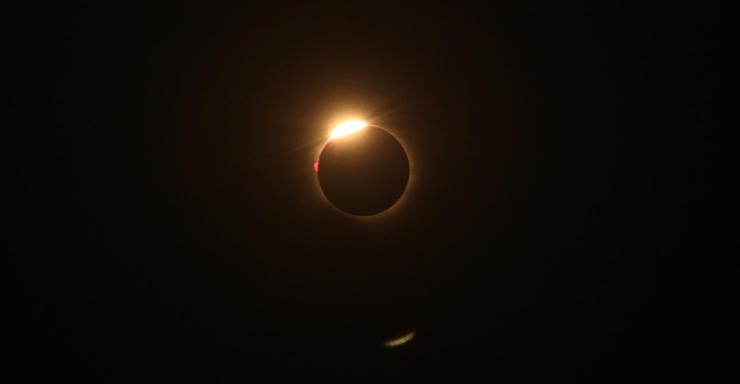
A total solar eclipse is one of the rarest and most spectacular astronomical phenomena observable from Earth. Although a total solar eclipse occurs somewhere on the planet approximately once every 18 months, it may not be seen again at a particular location for several generations. The last total s…

Ventspils University of Applied Sciences

October 27, 2026