On 7 July, at an international astrophysics seminar, Ventspils University of Applied Sciences Ventspils International Radio Astronomy Centre (VIRAC) researcher and University of Latvia doctoral student Vladislavs Bezrukovs presented the results of his research on the optical and radio variability of active galactic nuclei (AGN). The seminar was devoted to the topic “Optical and Radio Variability of Active Galactic Nuclei: From Intraday Fluctuations to Long-Term Cycles”, and provided an overview of observations and analysis carried out over several years.
The studies were carried out in broad international cooperation with the Institute of Radio Astronomy of the National Academy of Sciences of Ukraine in Kharkiv, the Astronomical Observatory of Odesa I. I. Mechnikov National University, the Vihorlat Observatory in Slovakia, as well as in cooperation with the radio astronomy group of University College Cork.
A window into the early Universe
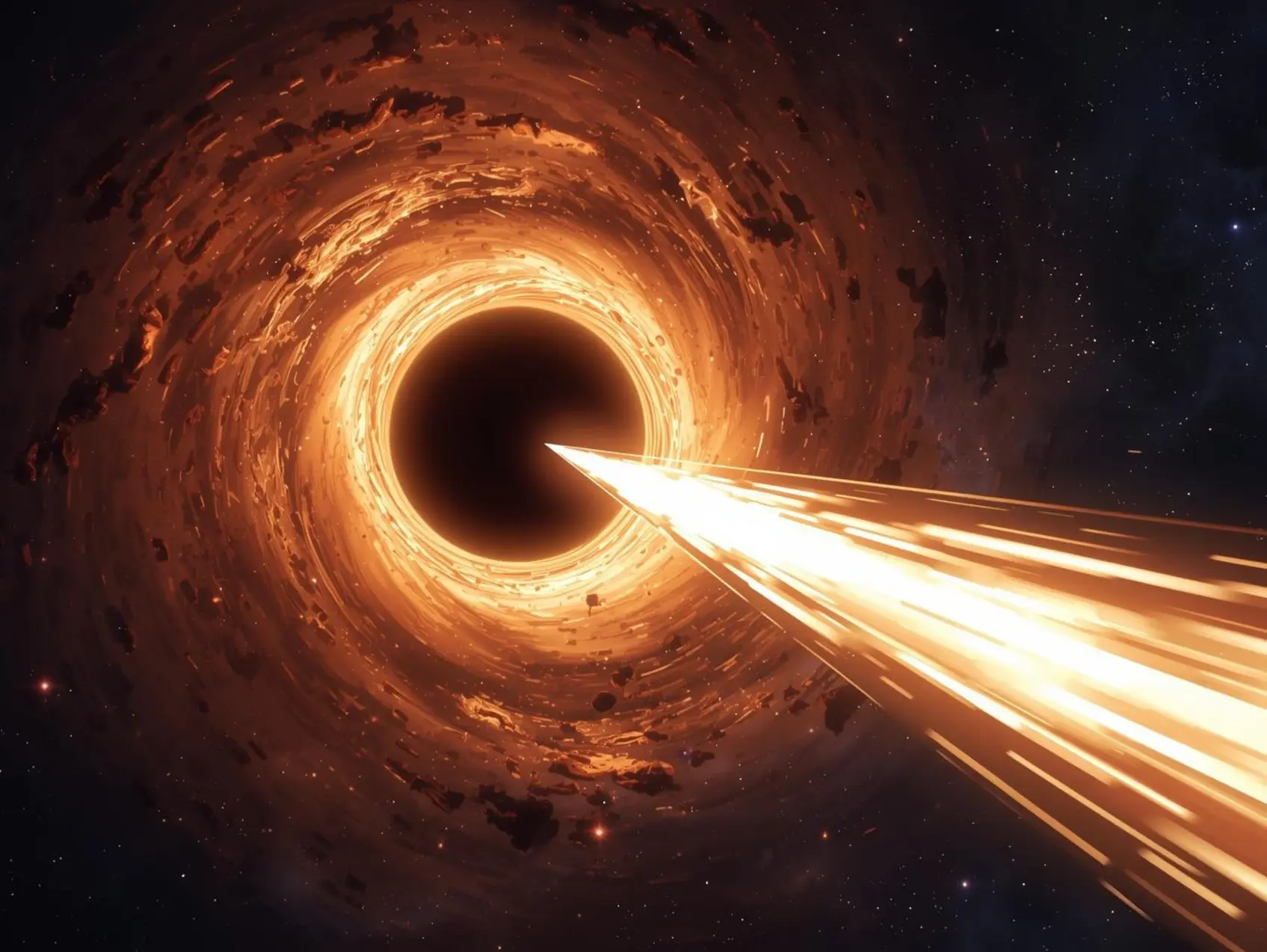
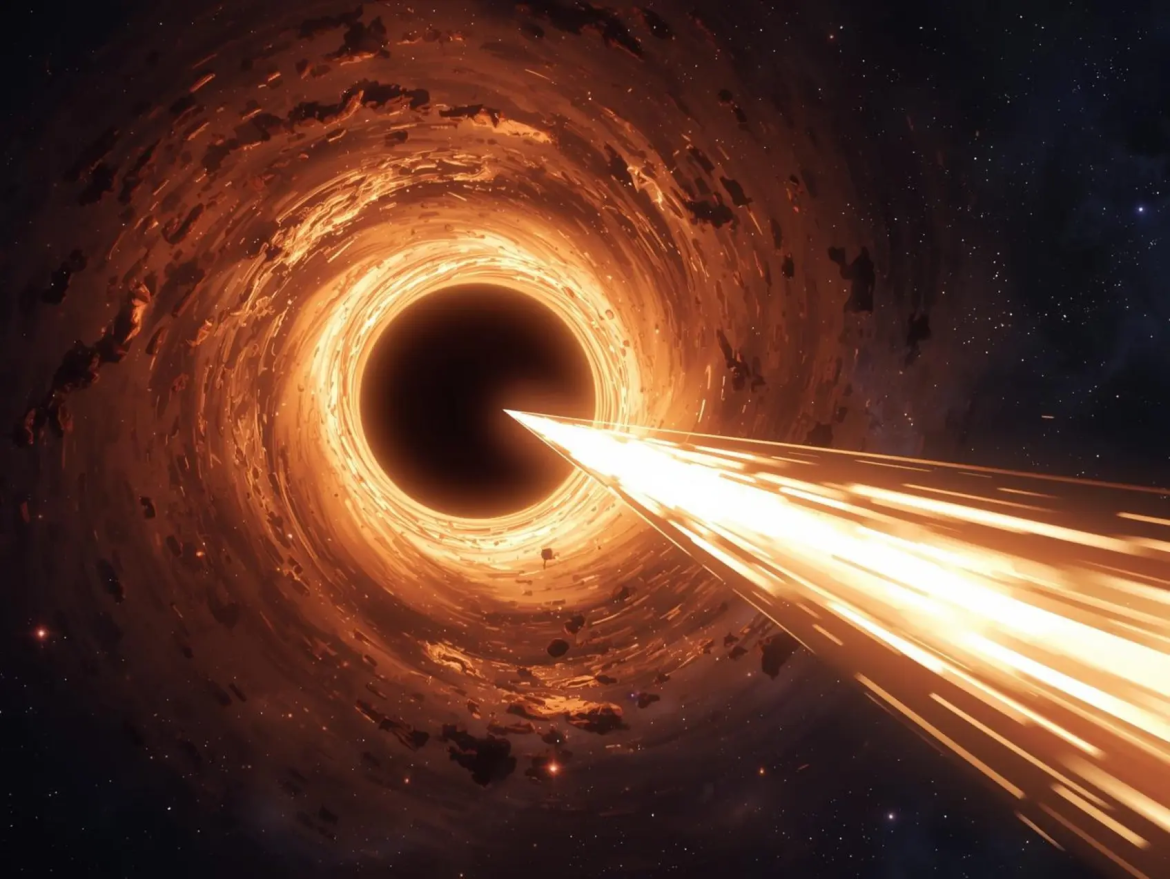
Active galactic nuclei (AGN) are among the brightest, most energetic and most mysterious objects in the Universe. They are powered by supermassive black holes, whose mass can reach billions of solar masses. Since many AGN are located billions of light years away, observations of them allow astronomers to look into the early past of the Universe and study processes that took place when galaxies were still forming.
AGN can be regarded as high-energy laboratories created by nature. Processes take place in their vicinity whose energies and magnetic field intensities far exceed what humanity is able to achieve even in the most advanced particle accelerators on Earth. Therefore, AGN studies provide a unique opportunity to test physical processes under extreme conditions that are otherwise not accessible to experimental research.
Unlike most astronomical objects, AGN are not static. Their brightness in the radio, optical and other ranges of the electromagnetic spectrum can change significantly over time intervals ranging from a few hours to several decades. These changes reflect processes near the black hole, in the accretion disk and in relativistic jets, where particles are accelerated to speeds approaching the speed of light. The fact that, in some cases, significant changes can be observed even within a single day indicates extremely rapid and energetic processes in the central regions of galaxies.
Observations in Latvia, Ukraine and Slovakia
The studies used radio observations from the VIRAC radio telescopes in Irbene, as well as optical data from Baldone Observatory in Latvia, Vihorlat Observatory in Slovakia and observatories in Ukraine. Several well-known objects were analysed, including 3C 84 (Perseus A), 3C 371, OJ 287, BL Lac, MRK 421 and MRK 501.
Using modern time-series analysis methods — Fourier transforms, Lomb–Scargle periodograms and wavelet analysis — it was possible to detect various variability cycles, ranging in duration from a few hours to several years and even decades
How to distinguish a cosmic signal from the influence of Earth
One of the most important results of the study is a methodology that makes it possible to separate brightness fluctuations produced by the source itself from changes in the signal caused by the environment between the source and the observer.
The studies showed that low-amplitude radio variability in the centimetre-wave range is often not related to the galaxy itself, but arises as a result of radio waves propagating through the interstellar medium, the solar wind and Earth’s ionosphere. The developed calibration and data processing methods make it possible to significantly reduce the influence of these effects and determine the true activity of AGN more accurately.
From variability to the structure of galactic jets
In addition to radio and optical variability, the internal structure of AGN was also analysed as part of the doctoral thesis, using high-resolution observations with the Very Long Baseline Array (VLBA) of the US National Radio Astronomy Observatory. The results indicate a complex structure of magnetic fields in AGN jets, including helical magnetic fields, which may play an important role in jet formation, stability and energy transport.

Successful international cooperation
Part of the results used in the doctoral thesis were obtained within the framework of the Latvian Council of Science fundamental and applied research project PERSEUS (“Joint Latvian–Ukrainian Study of the Peculiar Radio Galaxy Perseus A in Radio and Optical Bands”) and the ERDF postdoctoral project RISE of Dr Artem Sukharev. These projects have become a successful example of scientific cooperation between Latvian and Ukrainian radio astronomy researchers, bringing together observatories, telescopes and expertise across several countries.
A new platform for Latvian radio astronomy
At the seminar, it was emphasised that VIRAC has succeeded in creating a fully fledged high-cadence AGN monitoring and data processing system, which allows Latvia to actively participate in international studies on the physics of galactic nuclei and the evolution of the Universe.
The results obtained provide new information about the nature of active galactic nuclei, strengthen Latvia’s position in the European radio astronomy infrastructure and open up opportunities for further research into the most dynamic and mysterious objects in the Universe.
The seminar was organised within the framework of the European Regional Development Fund project No. 1.1.1.5/3/25/I/012 “International Cooperation and Innovation of Ventspils University of Applied Sciences for the Development of Latvia’s Smart Specialisation”.