A new innovative project has been launched at Stradiņš Hospital, bringing together pathologists and IT companies to train artificial intelligence to detect cancer. The initiative aims to save doctors’ time, improve diagnostic accuracy, and enable patients to begin treatment sooner.
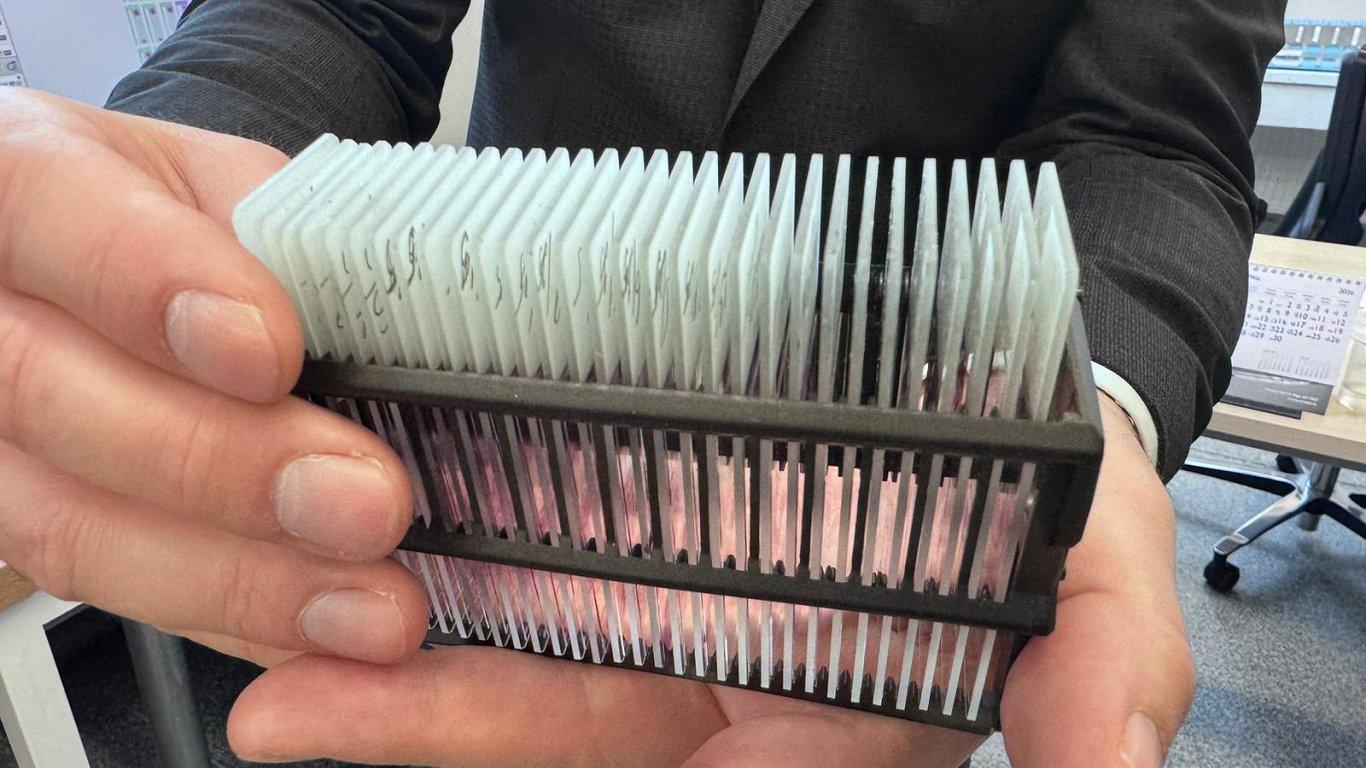
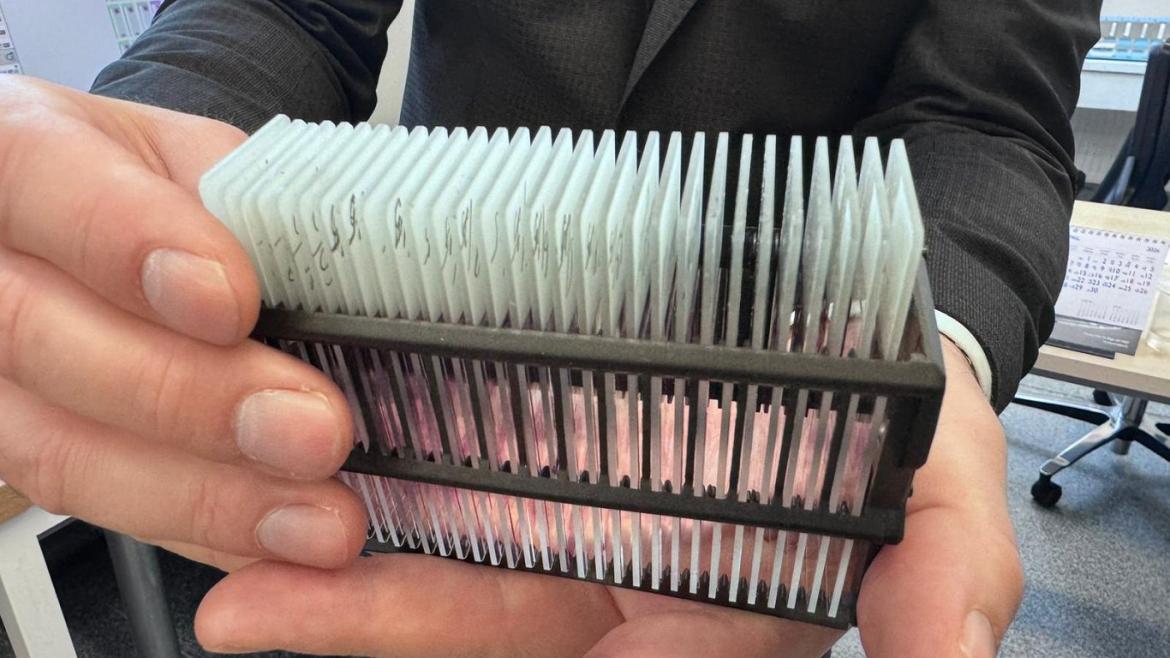
A biopsy slide may be tiny, but it contains the crucial information that determines whether cancer is present. Until now, each slide had to be examined manually under a microscope by a pathologist. Under the new project, this work will be digitised: a high‑resolution scanner will analyse the slides, creating detailed images that can be used to train AI models to recognise cancerous changes.
According to project representatives, cancer is becoming an increasingly urgent global challenge as people live longer and diagnostics grow more complex. Pathologists face a rising workload, yet their numbers are not increasing — Latvia has fewer than 50 practising pathologists. To address this, pathologists have joined forces with IT specialists to develop a new AI‑based tool called Onco‑Aim, an innovative technology project launched last August.
Stradiņš Hospital’s Pathology Institute, the second‑largest in Latvia, holds an extensive archive of microscope slides — more than one million samples collected from surgeries and biopsies. For the project, 120,000 slides from last year’s archive are being digitised. Each scanned slide contributes to training the AI model, which requires vast amounts of data. As project lead Nazarovs noted, “the more images the AI receives, the smarter it becomes.”
To be useful in pathology, the AI must learn to recognise a full spectrum of tissue types and conditions — not only cancer, but also precancerous changes, inflammation, other pathologies, and healthy tissue. As Edgars Grīnbergs of Dhanvantari Solutions explained, the model must be trained on the entire morphological landscape to make accurate distinctions.
The developers emphasise that the AI tool will not replace pathologists, but will serve as a powerful assistant. The scale of the digitised material is enormous: the image data from 120,000 slides would cover an area comparable to the size of Liepāja.
Aldis Gulbis, board adviser at Dati Group, noted that the final product developed in Latvia is intended for international use. The AI models will be released as open‑source, making them accessible to researchers in Latvian universities and scientific institutions, as well as globally. The project is planned to be completed within two years.
The initiative is led by Dati Group in cooperation with pathologists at Pauls Stradiņš Clinical University Hospital. The scientific phase will continue until the end of next year. The total project cost is €2 million, including €1.5 million in support from the European Union.