The specifics of melanoma treatment have confirmed the embryonic theory of human cancer and demonstrated that effective treatment is not possible without an understanding of oncogenesis, as well as suggesting that cancer is almost as ancient as life on Earth, according to the study’s lead researcher, academician Jekaterina Ērenpreisa.
On March 12, 2026, an important paper was published in the journal Cancer Letters (IF = 10.4), focusing on cancer disease—particularly late-stage melanoma—and its resistance to targeted therapy, based on experimental work and patient database analysis. The study identified the mechanism of melanoma resistance to the widely used drug Vemurafenib (VEM), a targeted inhibitor of the BRAFV600E mutation.
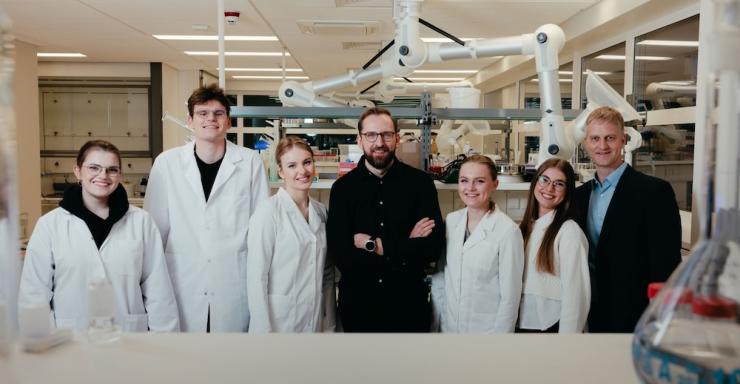
This complex study was carried out by a large team of scientists led by academician Jekaterina Ērenpreisa. Among the 16 authors are young talented researchers, doctoral candidates, and students, as well as experienced scientists from the Latvian Biomedical Research and Study Centre, University of Latvia, and Riga Stradiņš University, along with three international collaborators, including Mark Cragg. The study, supported by two grants (ERAF and FLPP), lasted six years.
The research was initiated by melanoma researcher, RSU professor Dace Pjanova. The second grant was led by Jekaterina Ērenpreisa’s former student, Doctor of Science Kristīne Salmiņa (PhD, h-index 21). The first author of the study is doctoral candidate Fēlikss Rūmnieks, and the second author is bioinformatician Dr. Nineļa Vainšēlbauma.
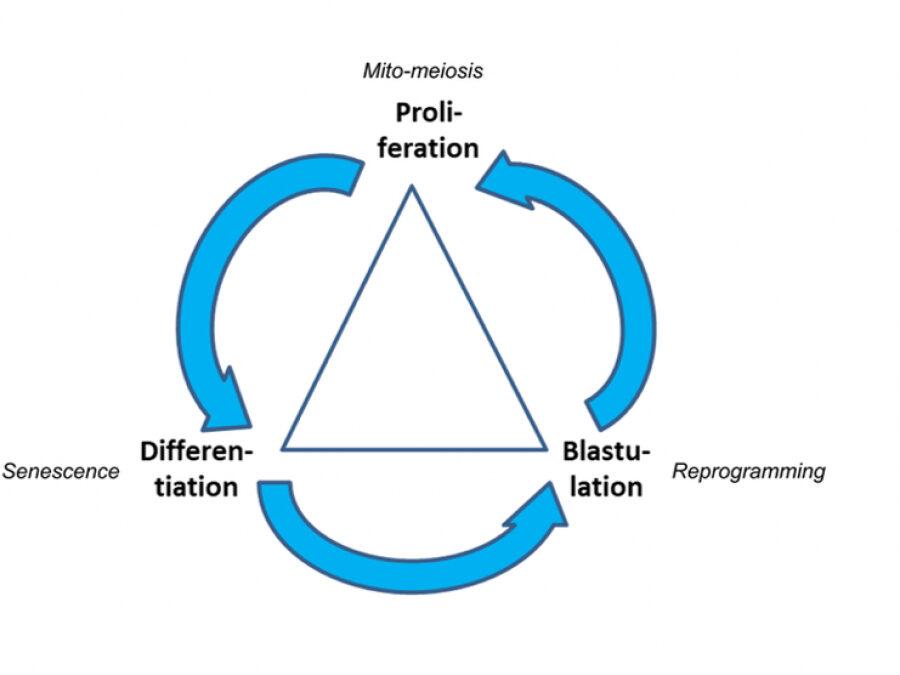
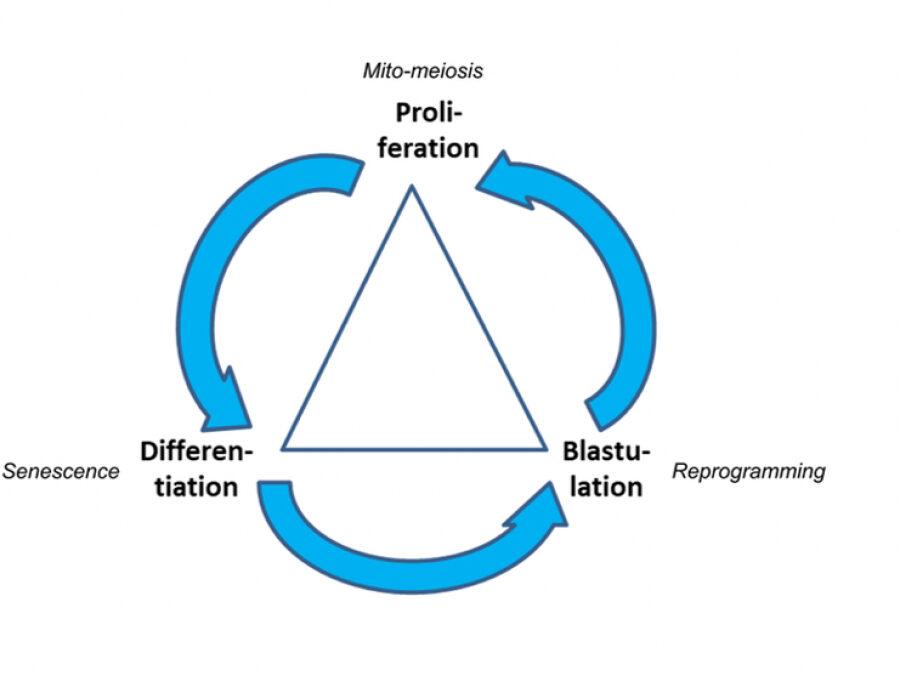
Using advanced microscopy techniques, including live-cell imaging, and bioinformatics to analyze melanoma gene expression before VEM treatment and after three weeks—when a small fraction of cells survives and resumes proliferation—the study reveals a previously unknown three-step circular process regulating cell fate (illustrated in the figure).
The article is available at: https://doi.org/10.1016/j.canlet.2026.218430
The paper received positive evaluations from two internationally renowned experts:
Prof. Kenneth Pienta (Johns Hopkins University Hospital, Baltimore, USA):
“Congratulations on a beautiful contribution to our understanding of cancer!”
Prof. Alessandro Giuliani (Istituto Superiore di Sanità, Rome, Italy):
“Great paper! Here you achieve an almost perfect consilience among different approaches, generating a coherent picture and shedding light on the untenability of simplistic deterministic ways of thinking when dealing with complex systems…”