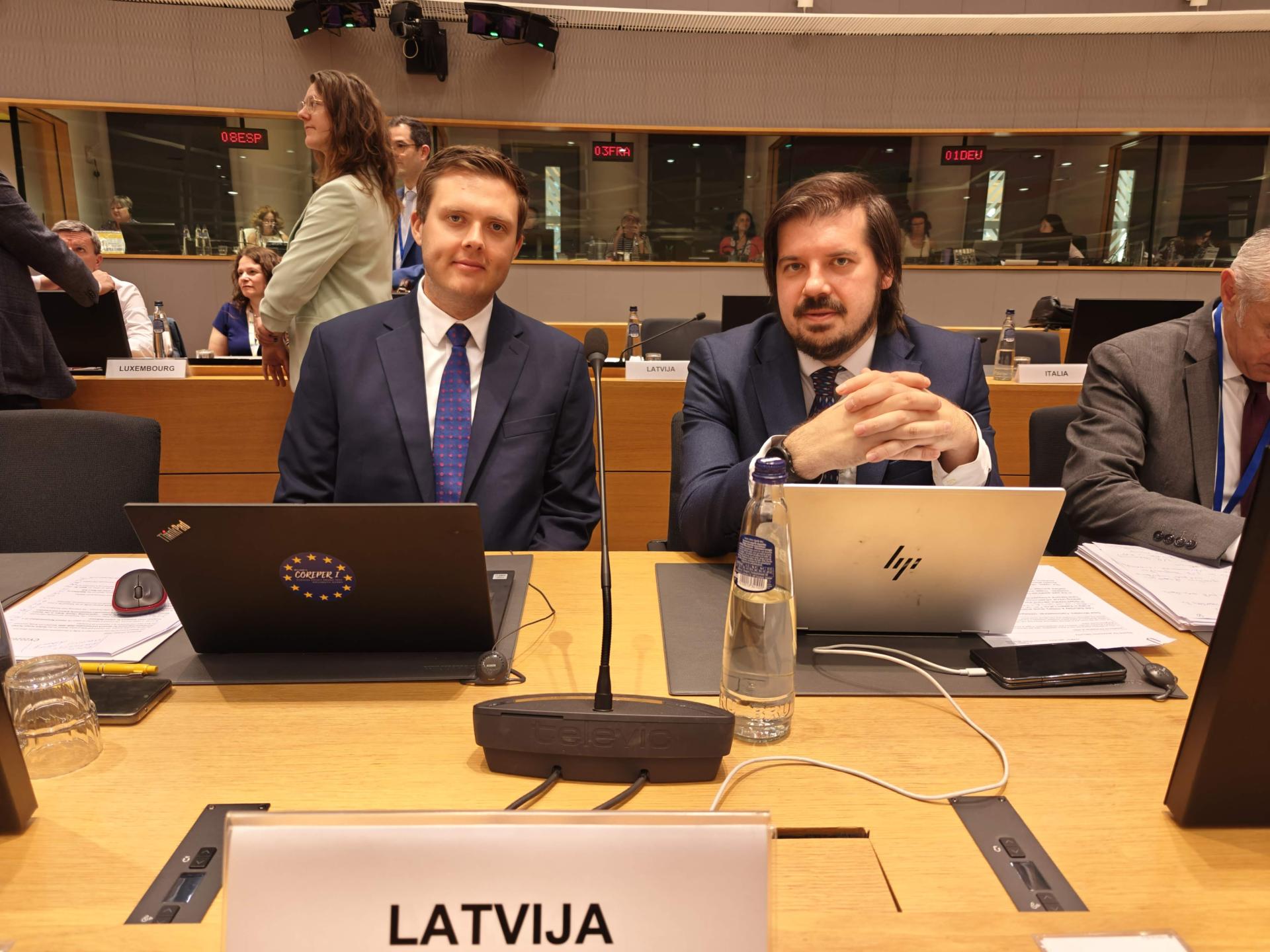
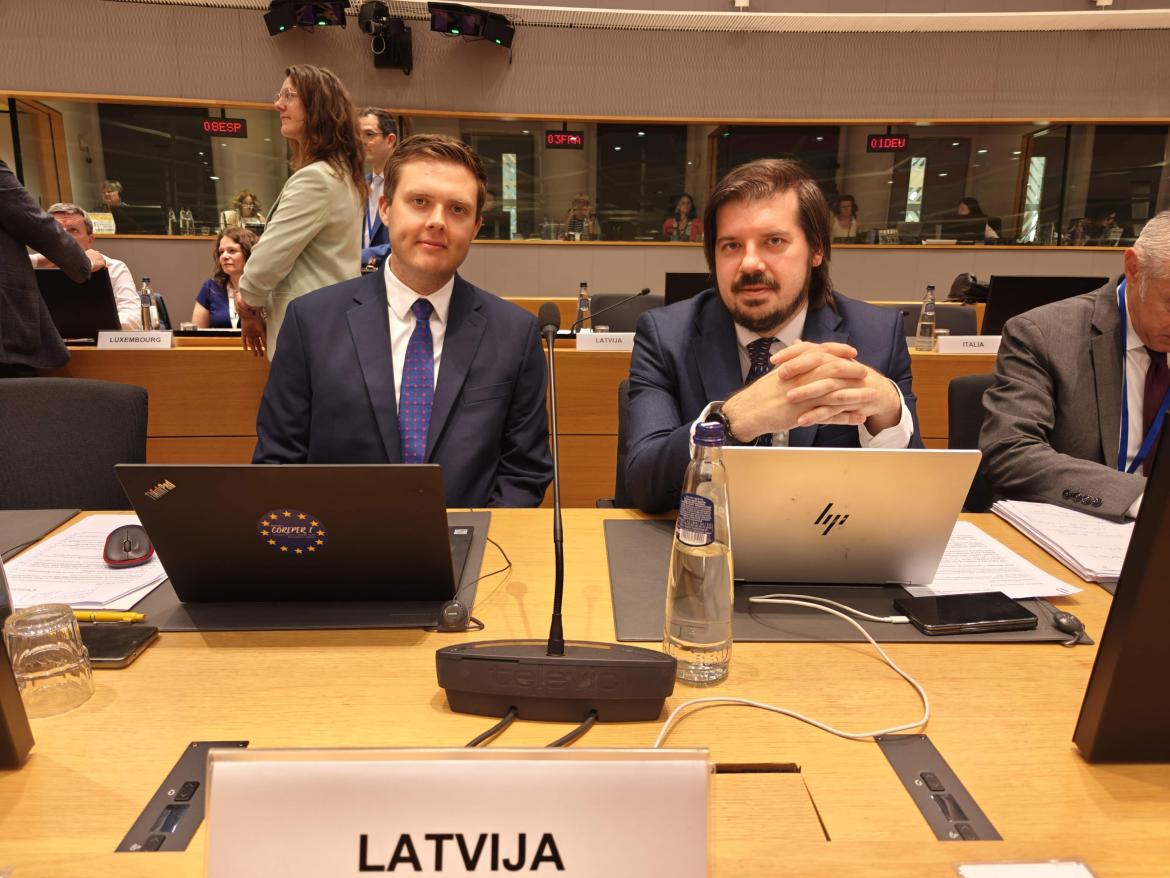
On Friday, 29 May, the State Secretary of the Ministry of Education and Science (MoES), Jānis Paiders, represented Latvia at the European Union Competitiveness Council in Brussels. At the meeting, the EU Member States discussed issues related to the implementation of the research and innovation programme “Horizon Europe” after 2027, adopted the Council recommendation on the framework for science diplomacy, and discussed the development of the space sector in the European Union.
“A large share of Latvian research – the development of new medical solutions, technologies and products – is carried out using EU funding. Latvian institutions have attracted support amounting to nearly EUR 120 million in the calls of the current “Horizon Europe” programme, which for Latvia means jobs, knowledge and economic value. It is essential to ensure the continuity and accessibility of this funding,” emphasises Jānis Paiders, State Secretary of the Ministry of Education and Science.
In light of current events and security threats, the issue of support for security research and dual-use technologies in the next EU research programme came to the forefront during the meeting. During the meeting, the Baltic States and Poland also called for the urgent strengthening of the resilience of the Galileo satellite navigation system of the EU Space Programme against radio frequency interference.
The delegations of the Baltic States expressed solidarity with Romania in connection with the incident that occurred during the night of 28 to 29 May, in which an unmanned aerial vehicle crashed into a multi-storey residential building. Deliberate interference with positioning, navigation and timing (PNT) signals creates significant security risks, including the possibility of intentionally redirecting armed unmanned aerial vehicles towards the territory of EU Member States. Interference with navigation signals also endangers other critically important sectors, including civil aviation.
In addition to the current security issues, the Council also addressed the issue of the tenth EU Framework Programme for Research and Innovation for 2028–2034, which the European Commission has proposed to establish with a budget of EUR 175 billion as part of the next EU Multiannual Financial Framework. The conditions of the programme will also determine how accessible EU research support will be for Latvian scientists and companies in the coming years. Latvia argued in favour of continuing the widening participation instrument: EU funding intended for countries that attract less EU research funding, including Latvia. Latvia also pointed to the need to ensure a balance between fundamental and applied research so that scientific results are transformed into real products and services. More information about the meeting and its agenda is available on the website of the Council of the EU. Information about the “Horizon Europe” programme is available here.