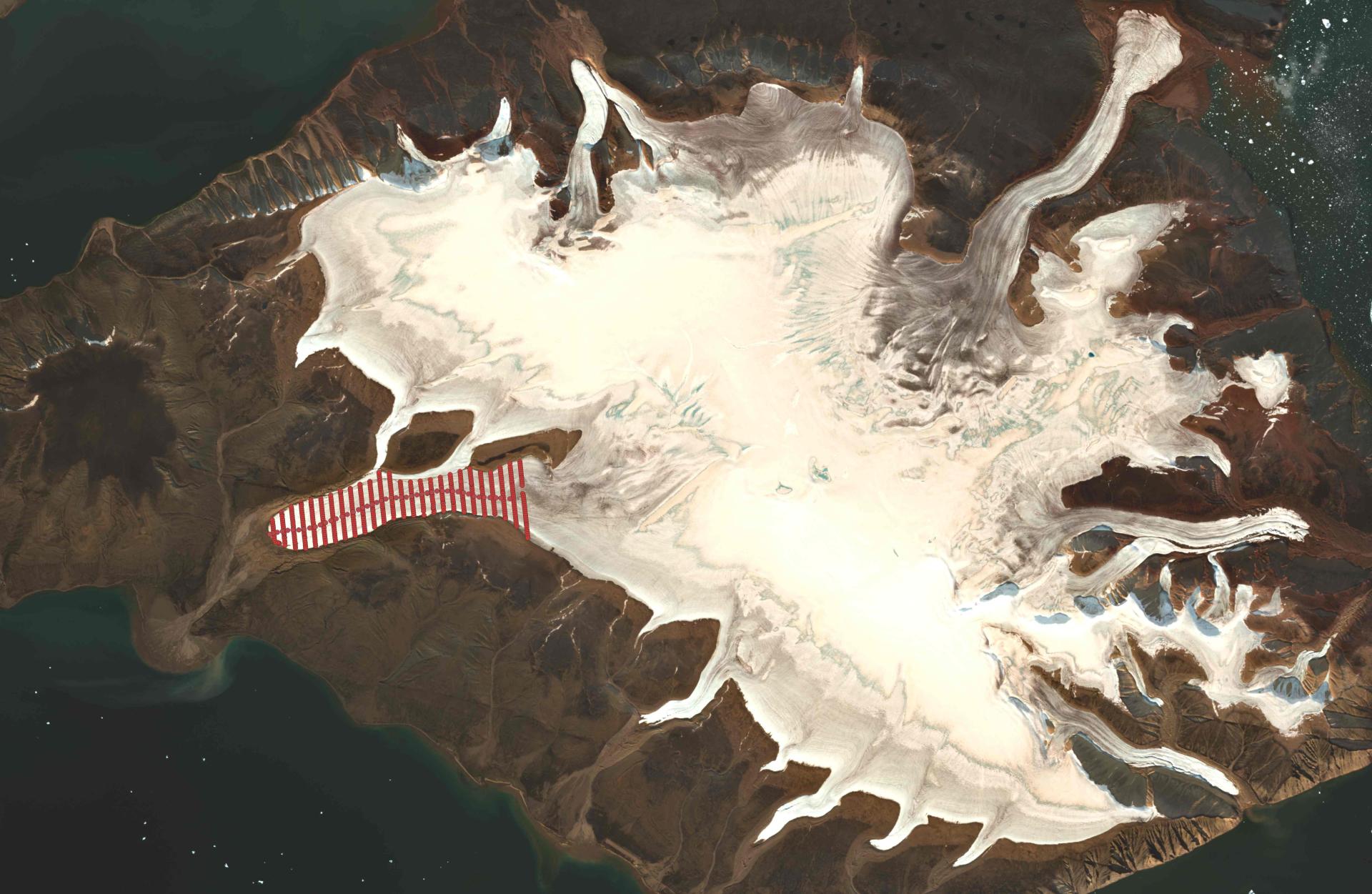
In August this year, scientists from the Department of Geology at the Faculty of Science and Technology (FST) of the University of Latvia (UL) conducted research on the Fan outlet glacier of the Qaanaaq Ice Cap. During the month-long expedition in north-western Greenland, carried out with support from the Fundamental and Applied Research Projects (FLPP) programme of the Latvian Council of Science, the glacier’s thermal structure was studied and data on surface elevation and ice thickness were obtained. For the first time, measurements were carried out using passive seismic sensors.
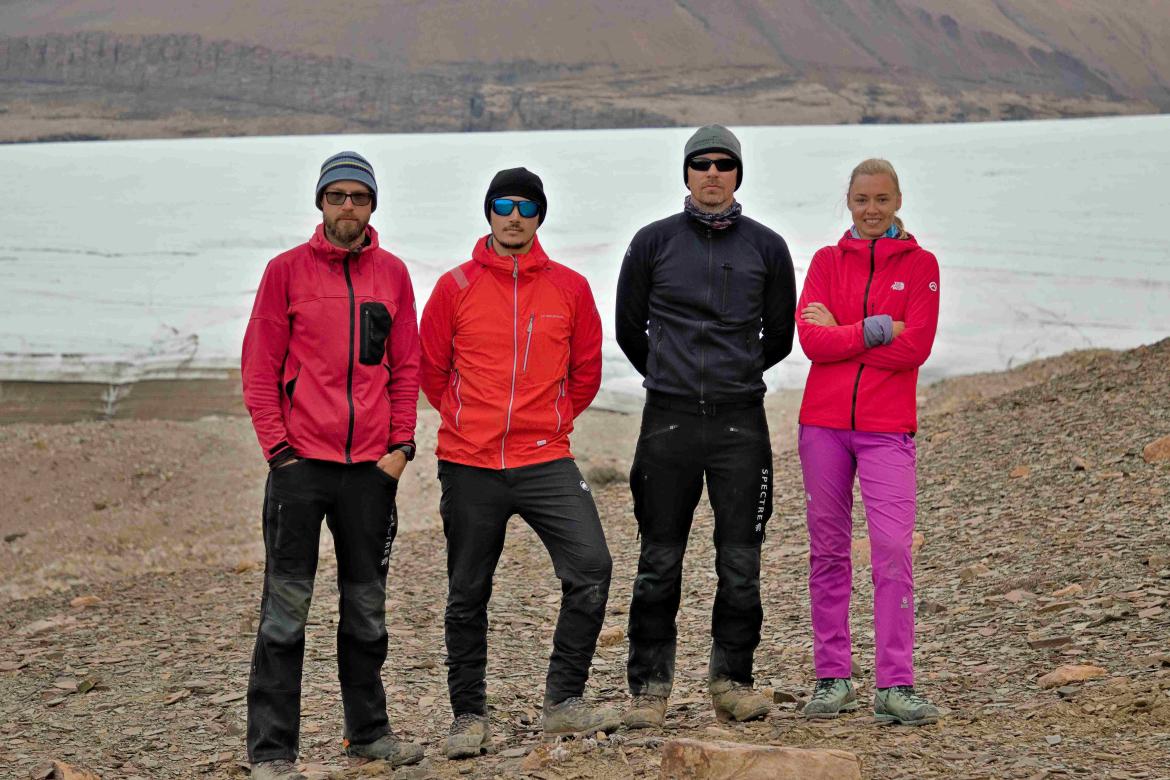
During the expedition, measurements covering approximately 35 km were obtained using ground-penetrating radar, and it was demonstrated that, contrary to previous assumptions, the glacier is composed of “cold” ice that does not reach its melting temperature, despite the considerable ice thickness of up to 300 m. Until now, it had been assumed that glaciers of such thickness should be composed of “warm” ice. These findings on the markedly different thermal structure of glaciers must be taken into account in future projections of glacier development.
Previous data collected by Latvian polar researchers on glacier thermal structure and thickness, covering both smaller, cold glaciers in Greenland and “warm” glaciers in the Alps, have already been published and are available open access in the scientific journals “The Cryosphere” and “Earth Surface Processes and Landforms”.
Although this year’s expedition was successful, the researchers experienced variable and unusual weather conditions, including both warm and very rainy and windy days, which forced them to postpone planned fieldwork. The increased amount of precipitation at the beginning of August caused flooding, and in several places the road between Qaanaaq Airport and the town was completely washed away. The daily lives of local residents are entirely dependent on weather conditions, which are increasingly affecting their hunting practices. In recent years, climate change has also had a significant impact on sea ice formation, which is important not only for polar bears but also for Inuit hunting, which is still largely carried out using dog sleds.
The large volume of water affected the geologists’ ability to reach the glacier. As in Iceland and elsewhere in the world, glaciers are retreating and ice-dammed lakes are forming in front of them. These lakes increasingly prevent access to glaciers from their front margins. After rainfall, the amount of water in rivers flowing from the glacier also increases significantly, making them impossible to cross.
The Fan Glacier studied by University of Latvia geologists had also retreated from the sides of the valley in many places, with a steep rock cliff on one side and a steep glacier margin with a river on the other. This meant that every day the researchers had to travel a long distance through mountainous terrain to reach a place where it was possible to climb onto the glacier. Such places are narrow ice bridges beneath which a glacial meltwater river flows.
The biggest surprise of the expedition was several-metre-high fountains of pressurised glacial water, where meltwater emerged onto the surface of the glacier. Although the glacier is cold and frozen to its bed, ground-penetrating radar data also confirm the existence of tunnels close to the bottom of the glacier. This expedition, as well as previous ones, makes it possible to understand that glaciers are becoming increasingly inaccessible and their study increasingly challenging.
The expedition participants were supported by Latvian freeze-dried food producers “Good Mood Meals”, “Rīgas Miesnieks” and the specialised sock company “Karma Sock”.
The expedition was carried out with the support of the Latvian Council of Science FLPP project “Thermal structure of the outlet glaciers of the Qaanaaq Ice Cap in north-western Greenland (No. lzp-2025/1-0242)”, which is being implemented from 2016 to 2028.