An ambitious project has been launched in the Latvian scientific community, the aim of which is to develop a modern digital model, or a “digital twin”. This technological solution will enable more precise than ever prediction of the spread of various diseases and environmental pollution risks, using the latest generation of data processing capabilities.
RTU supercomputer and data capacity
The project is based on the supercomputer available at Riga Technical University (RTU). This computing capacity is critically important for processing huge volumes of data and performing complex simulations. The digital twin will function as a virtual environment in which various scenarios can be modeled and their potential impact on public health and the ecosystem can be assessed.
Wastewater monitoring as a data source
One of the sources of information for this model will be a wastewater monitoring system that covers the entire territory of Latvia. Wastewater analysis has proven to be one of the most effective methods for the early detection of disease outbreaks (for example, during the COVID‑19 pandemic). By integrating these data into the digital twin, scientists will be able to identify risks before they become a large‑scale problem.
From rivers to health
Similar principles have already been tested in practice. As an example serves the digital twin of the Ogre River, which successfully helps to predict ice jams and potential flood risks. Now this methodology is being expanded to include biological and chemical factors that affect the health of the population. This project marks a new phase in Latvian science, where data science and environmental monitoring are combined to create practical tools for crisis management and preventive measures.
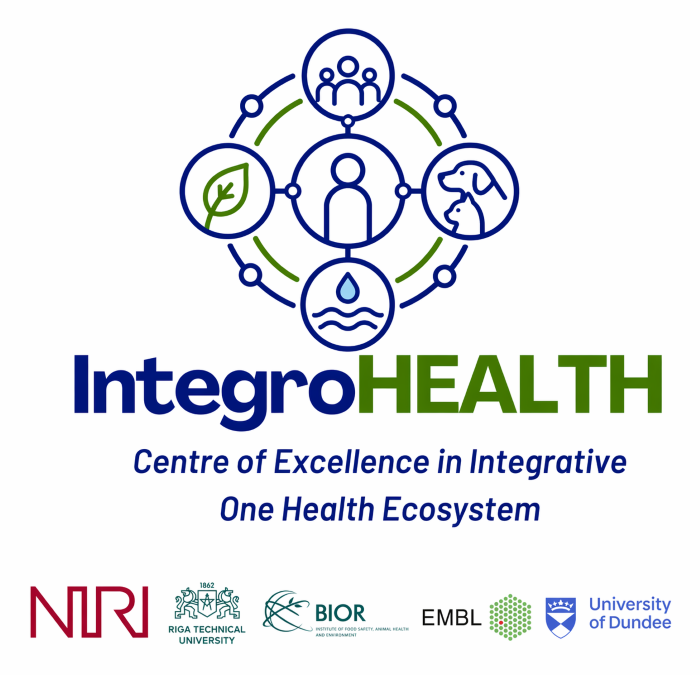
The IntegroHEALTH project has received thirty million euros. Half of the mentioned amount is provided by the European Union’s “Teaming for Excellence” project, while the remaining part is funded by the Latvian state budget. It is planned that the new digital health model will be ready in six years. Work on concluding the contract with the European Commission is currently underway.
The project will be implemented by leading Latvian and international scientific institutions
In the implementation of the project, the strongest players in the field have joined forces to jointly develop innovative solutions. The project will be led by three Latvian scientific institutions in close synergy with international partners.
Latvian partners:
- Latvian Biomedical Research and Study Centre – project coordinator (from May 31: National Research and Innovation Institute).
- Institute of Food Safety, Animal Health and Environment “BIOR”.
- Riga Technical University (RTU).
International cooperation: The successful implementation of the project and the exchange of knowledge will be ensured by high‑level partners from Germany and the United Kingdom:
- EMBL (European Molecular Biology Laboratory, Germany).
- University of Dundee (United Kingdom).
The aim of this international consortium is to combine local research capacity with world‑class expertise, ensuring the sustainability and excellence of the project.