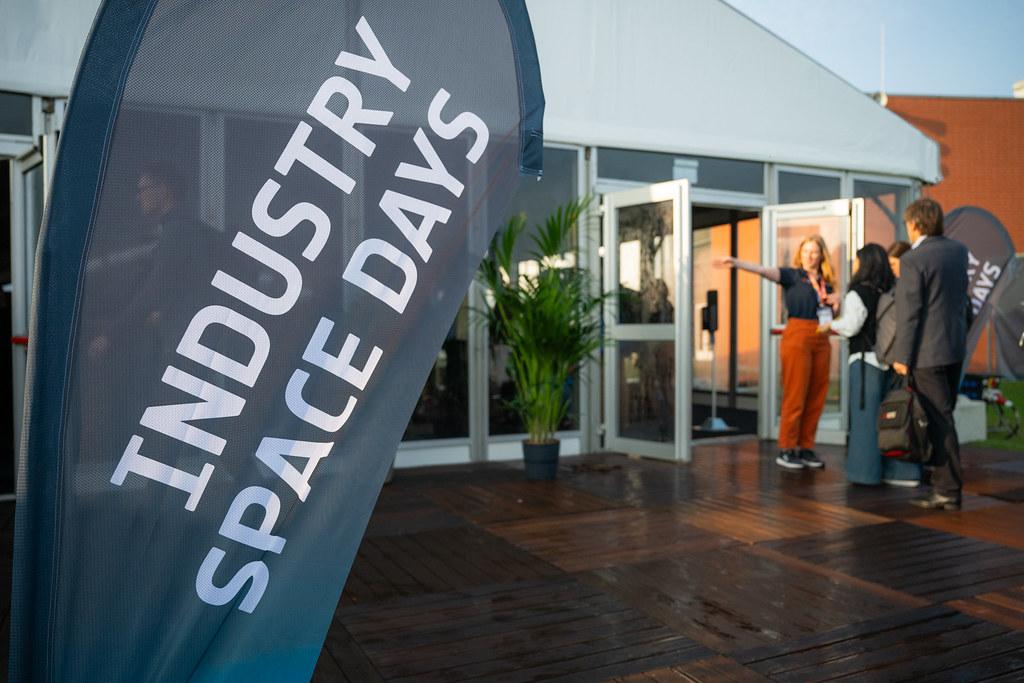
On 16 and 17 September, the European Space Agency’s (ESA) Industry Space Days (Industry Space Days 2026, ISD2026) took place at ESA’s ESTEC technology centre in the Netherlands. It is one of the most important events in the European space sector, where companies, research organisations and agencies seek cooperation partners, establish contacts and discuss opportunities to participate in future space projects.
The event was attended by 14 Latvian companies whose technologies are already being used both in European space missions and in various industries on Earth.
The Latvian delegation included a representative of the Ministry of Education and Science and head of the Latvian delegation to ESA, Kaspars Karolis, as well as Gatis Šneiders, Deputy Head of Mission at the Embassy of Latvia in the Netherlands. The national stand was organised by the Investment and Development Agency of Latvia (LIAA) in cooperation with the Latvian Space Industry Association (LAIK).
Over the course of two days, Latvian companies met with ESA experts, representatives of leading European space companies and investors to discuss cooperation opportunities and participation in future projects.
Several Latvian companies are already involved in significant space missions. Allatherm develops technologies for European space infrastructure projects, including lunar exploration programmes. The Ventspils-based company Bitlake Technologies has developed image-processing technology that will help ESA’s “Comet Interceptor” mission identify the comet’s nucleus. QuBalt has developed a quantum-safe system for updating satellite software, which is planned to be tested in orbit. Meanwhile, Deep Space Energy is developing energy sources for lunar and deep-space missions.
“In the six years since Latvia became an Associate Member State of ESA, our companies have reached a level where they are developing technologies for use in lunar missions and offering solutions that attract the interest of partners in Europe and around the world. We will continue to support companies so that their technologies become products and services used by customers worldwide. Events like this are an important step in that direction,” emphasises Kaspars Karolis.
Many solutions developed for the space sector are also useful in everyday life. Emy Solutions is working on solutions that would allow emergency alerts to be sent to residents via the European satellite navigation system “Galileo” even when terrestrial communication networks are not functioning. NRG Solutions uses satellite data to monitor Riga’s historic wooden buildings. ARKai helps identify risks in dams and hydroelectric power plants in a timely manner. ESA selected ARKai as one of the start-ups presented in the dedicated European start-up zone.
Baltic Satellite Service also works with satellite data, developing an Earth observation platform for institutions in the Baltic States. Language technology company Tilde has created an artificial intelligence assistant for ESA. Nanocraft is developing a satellite network for high-speed data transmission. Meanwhile, 2AM, Optonics and the Latgale-based company PicoTech are developing advanced materials, 3D printing and laser-processing technologies.
Baltic Satellite Service also works with satellite data, developing an Earth observation platform for institutions in the Baltic States. Language technology company Tilde has created an artificial intelligence assistant for ESA. Nanocraft is developing a satellite network for high-speed data transmission. Meanwhile, 2AM, Optonics and the Latgale-based company PicoTech are developing advanced materials, 3D printing and laser-processing technologies.
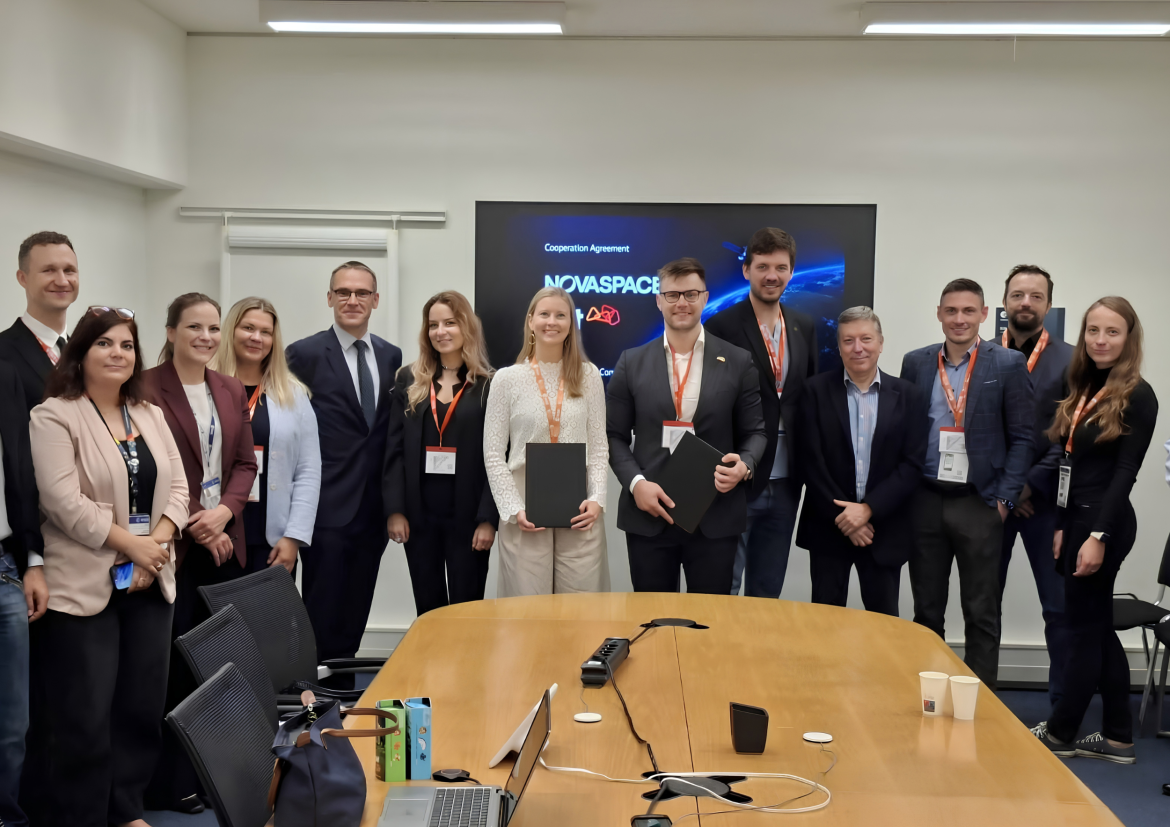
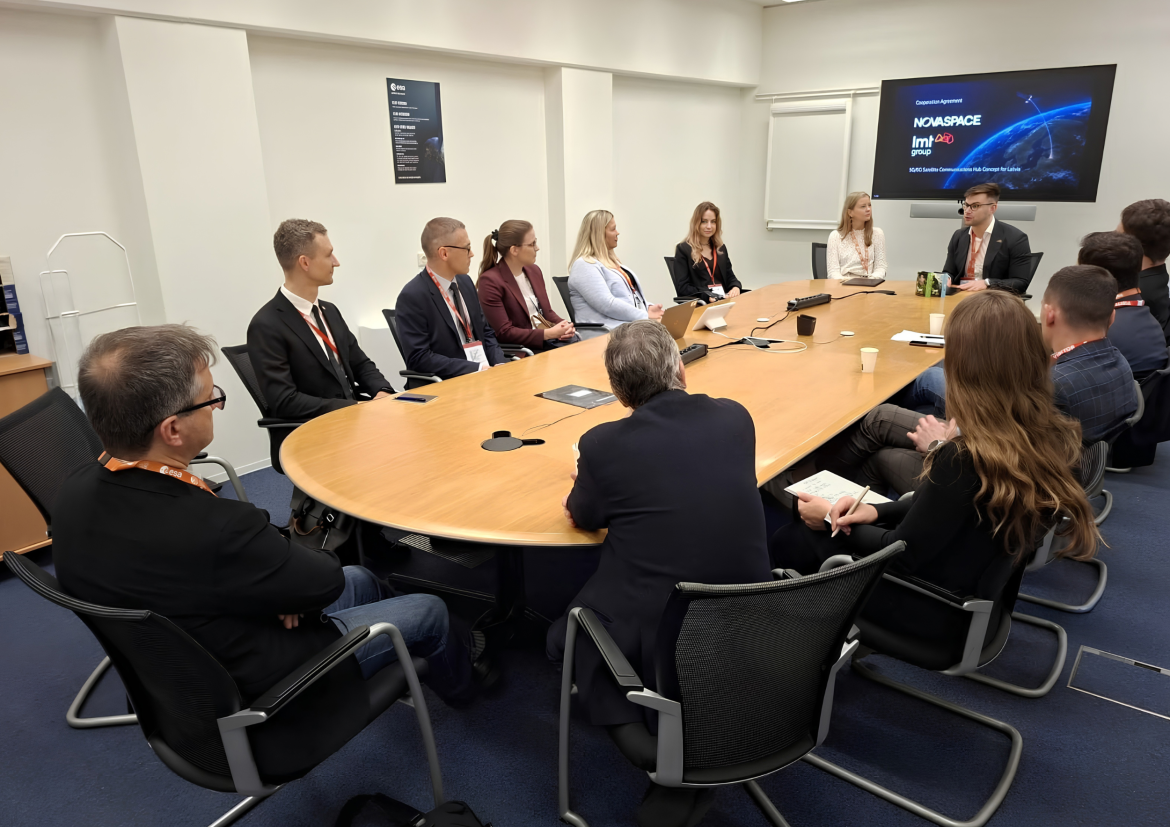
LMT is developing solutions for the integration of satellite and 5G/6G networks. During ESA Industry Space Days, LMT Group and the global space industry consulting company Novaspace signed a memorandum of cooperation on developing a strategy for a 5G/6G satellite communications innovation platform in Latvia. The aim of the initiative is to assess Latvia’s potential to become part of ESA’s 5G/6G Non-Terrestrial Networks innovation centre ecosystem and to strengthen the country’s position in the field of next-generation satellite communications.
Participation in ESA programmes also provides a tangible economic contribution. According to a study by Oxford Economics, from 2021 to mid-2025, every euro invested in the space sector generated approximately 1.4 euros in value for the Latvian economy. The experience gained through ESA projects has helped Latvian companies expand their export markets and attract new customers. During this period, the total value of commercial contracts concluded reached 15 million euros.