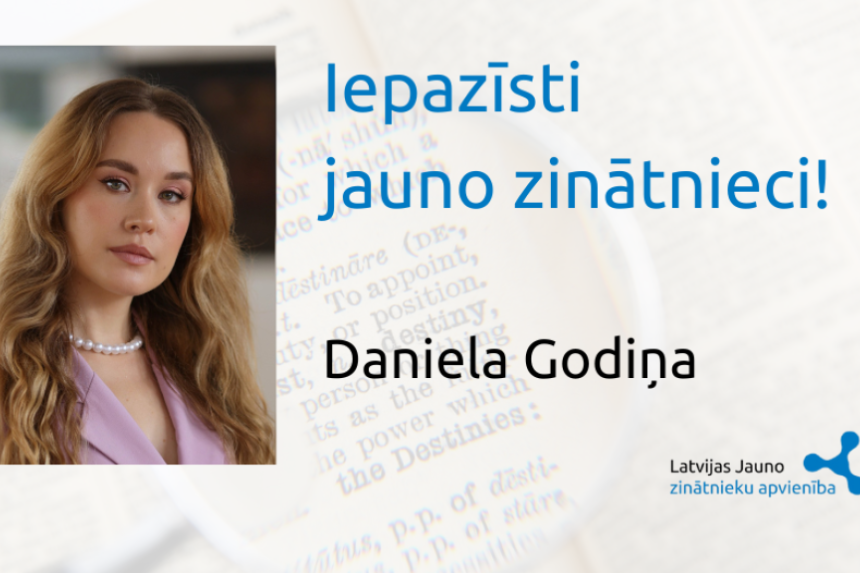
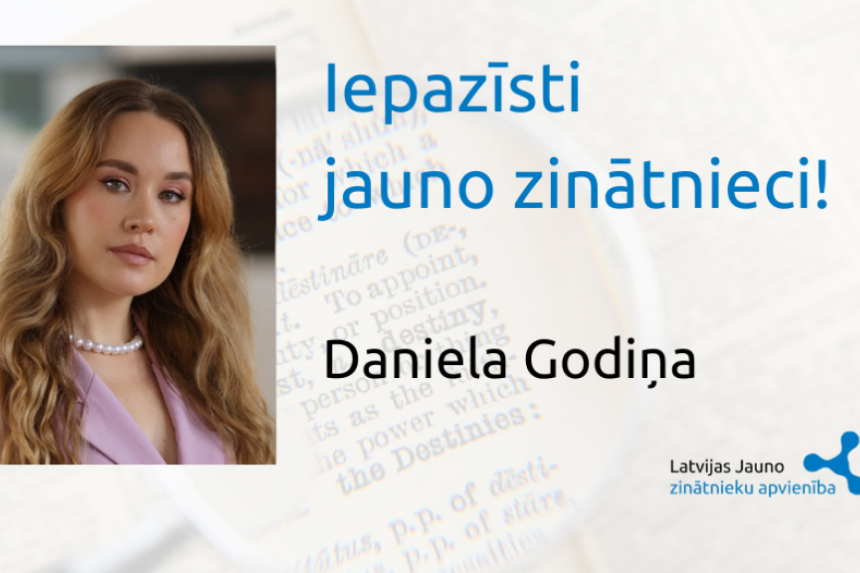
PhD researcher Daniela Godiņa is one of those scientists who combines fundamental chemical research with active public engagement through the Latvian Association of Young Researchers (LJZA) and science communication. The interview with her—originally published on the LJZA’s website as part of the “Meet a Young Scientist” series—is republished here to invite readers to learn more about Daniela’s journey in science, her work on developing bio-based materials, the societal importance of research, and her involvement in building the young scientists’ community at the Latvian State Institute of Wood Chemistry (LSIWC).
Your research field is related to natural products chemistry. How did you come to this topic?
My path in science began already in childhood, because I was always fascinated by nature. I have always wanted to understand the processes happening around us. Early on I realized that if I wanted answers to my questions, I needed to acquire the appropriate education. At school I was interested in chemistry and biology, but I was also strongly drawn to literature, art, and the French language. So I decided to apply to four universities, and choosing chemistry turned out to be a spontaneous decision. At the Faculty of Chemistry of the University of Latvia, I obtained my bachelor’s, master’s, and doctoral degrees. Alongside my master’s studies I began working at the LSIWC, and that is how my real connection with science started—by joining the Biorefinery Laboratory and participating in various projects and research activities.
How would you briefly explain why your research is important for society?
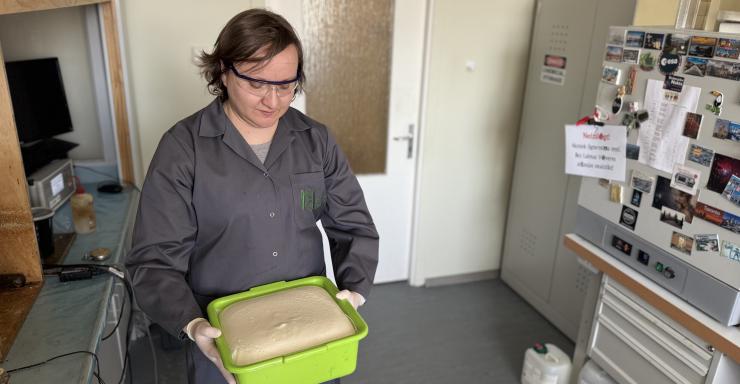
The research aligns with the overall direction of the Institute—innovations based on local, renewable resources. At the moment, people are not producing bio-based polymer sorbents from biomass, let alone specifically from birch bark. This makes it possible to replace materials currently derived from petroleum with biologically based alternatives. As a result, dependence on fossil resources is reduced, more sustainable technologies are developed, and added value is created for Latvia’s forest sector. This interdisciplinary project will generate valuable insights in environmental science and analytical chemistry, encourage collaboration, and promote sustainable development. The integration of new instrumental methods with improved sorbent synthesis will represent a significant step forward in evaluating birch bark components and developing new materials.
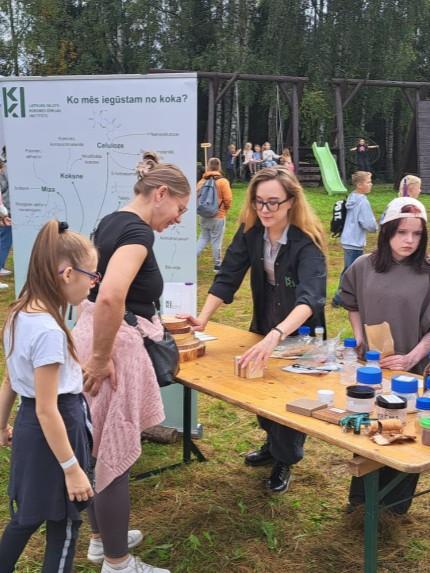
You are currently implementing a project within the PostDoc Latvia programme. What are the main benefits for young scientists of becoming leaders of their own projects?
First of all, it is an opportunity to prove yourself—to stand alongside professionals in the field and take responsibility for the entire research cycle. It provides space to advance new ideas, to develop both technical and emotional skills, and to face a healthy challenge that helps you understand whether this path is something you want to pursue in the long term. A PostDoc project represents growth both professionally and personally.
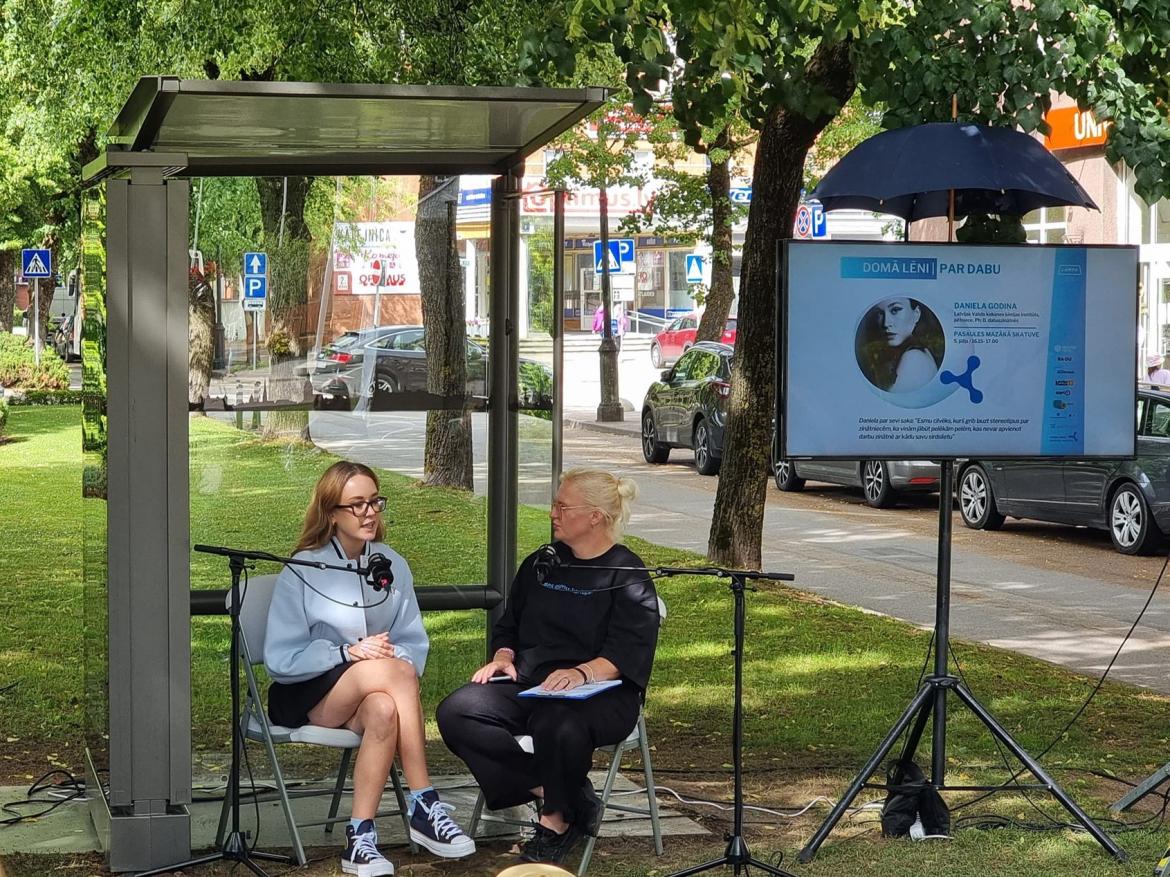
You have extensive experience participating in podcasts and interviews, and you have said that you want to encourage scientists to become more active in communicating with society. What are the benefits of science communication?
We are all familiar with the stereotypical image of a “scientist”—boring, withdrawn, buried in books. But in reality, science is creative, dynamic, and full of fascinating stories. Effective science communication helps society understand why research matters in the first place. It educates, inspires, and shows that scientists are very human—with their challenges, ideas, and sense of mission. And the more clearly we can explain our work, the greater the trust that develops in society.
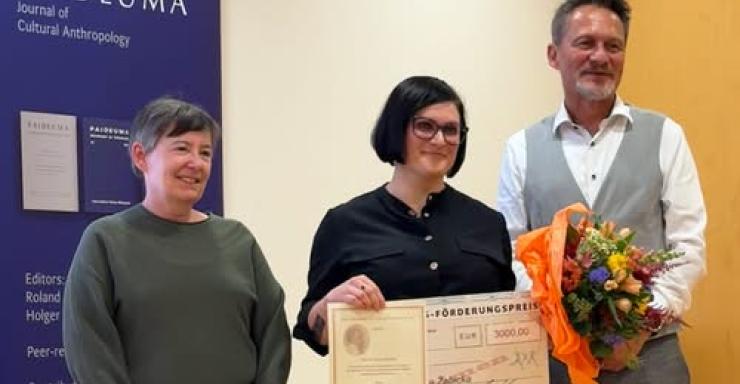
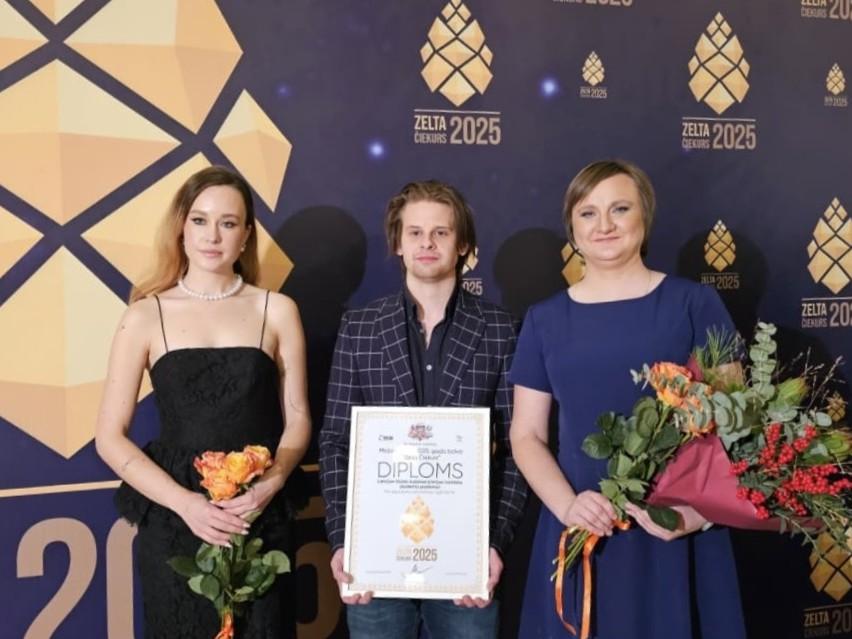
Together with your colleagues at the Institute — the Student Council — you received the forestry sector’s annual “Golden Cone” recognition diploma in late 2025 for your contribution to public education. What motivates you to organize events, visit schools, and educate young people?
It is important to me that life feels fulfilling. I have not yet defined a single “big life goal,” but right now I want to be where I can be useful. In informal events, people meet in a much more open way — scientists become very human there. And when a young person says after a lecture, “Hey, maybe I could become a scientist too,” that is a huge motivator
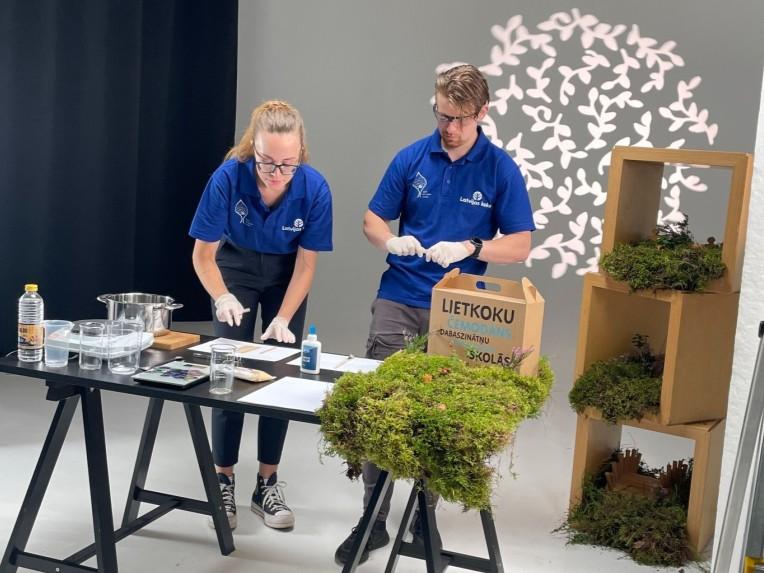
You are the founder and chair of the Institute’s Student Council. How did you come up with the idea of creating such a structure at your institute?
I have always enjoyed promoting science communication, which is why I created the Student Council — so that we young people could talk to other young people about science. We invite pupils and students to visit the institute so they can see our laboratories and the real everyday life of research. All of these additional activities and responsibilities give me great satisfaction and help me in my work as a scientist, so I never feel alone. I value that the institute encourages cohesion among young researchers, which is extremely important. We work as a team rather than as individuals. Often one person receives an award while the rest remain in the background, but behind that award there is a whole team supporting one another. I always tell students and schoolchildren that it is good to make mistakes — that is the path to growth. No one is perfect. There is a belief that scientists are flawless or even geniuses, but that is not true — we are just people. We need mutual support from society, which is why I try to encourage broader involvement. Even though science is complex, it is also a very exciting pursuit.
You have received the international UNESCO Baltic scholarship for women in science. What did receiving this award mean to you?
In 2024 I became a laureate of the Baltic States scholarship for women in science, and this recognition means much more to me than simply acknowledgment — it is also a responsibility to be visible, to share my experience, and to inspire other women in science.
Last year you became a member of the LJZA board. What are your priorities in this role?
It is an important platform that not only promotes collaboration and professional development among researchers, but also helps strengthen the role of science in the country’s development. It is important to me to advocate for a sustainable, open, and inclusive scientific environment in Latvia.
Name the most interesting scientific fact you have learned recently!
I like this one: Japanese scientists have discovered that humans might potentially be able to regrow teeth for a third time—after baby teeth and permanent teeth, yet another set. It sounds almost unbelievable, but science loves to surprise.
What would you like to wish or recommend to students who are currently considering entering doctoral studies?
No door is truly closed — you just have to find the right keys. In doctoral studies there will be several keys: one that begins with yourself, unlocking your belief that you can do it; another that opens up new knowledge gained during this exciting phase; the next that leads to self-discovery and to new boundaries you did not know you could cross; and finally the one that opens the door to the finished work, beautifully printed and bound, which you hold in your hands with a smile on your face and tears in your eyes, because in your heart you feel proud that you did not give up and that you believed in yourself.